
 Seibi-en
「places of scenic beauty」カテゴリーアーカイブ
places of scenic beauty
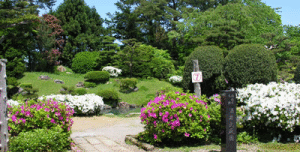
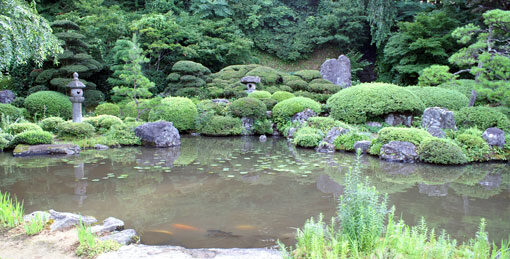
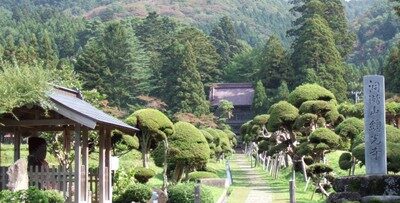
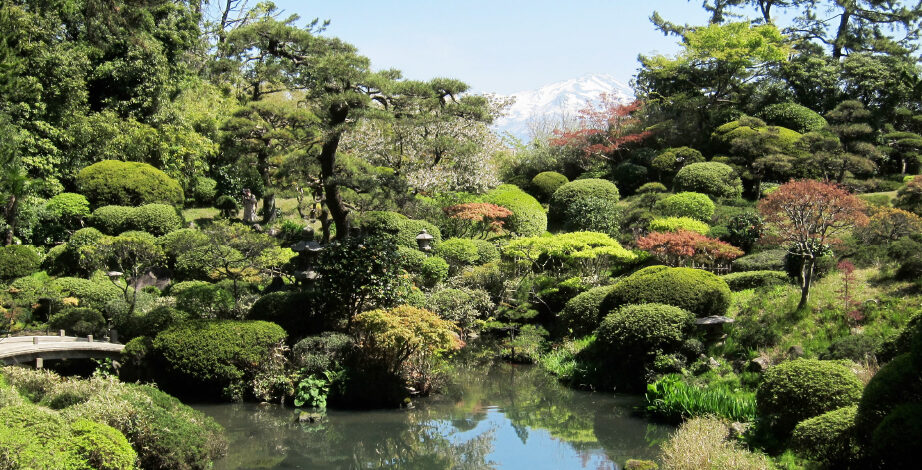
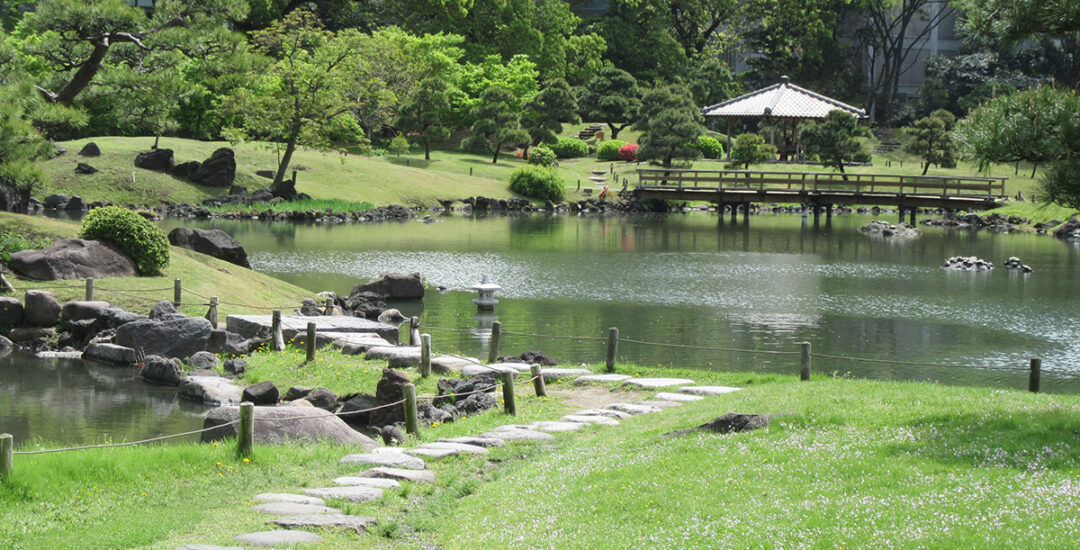
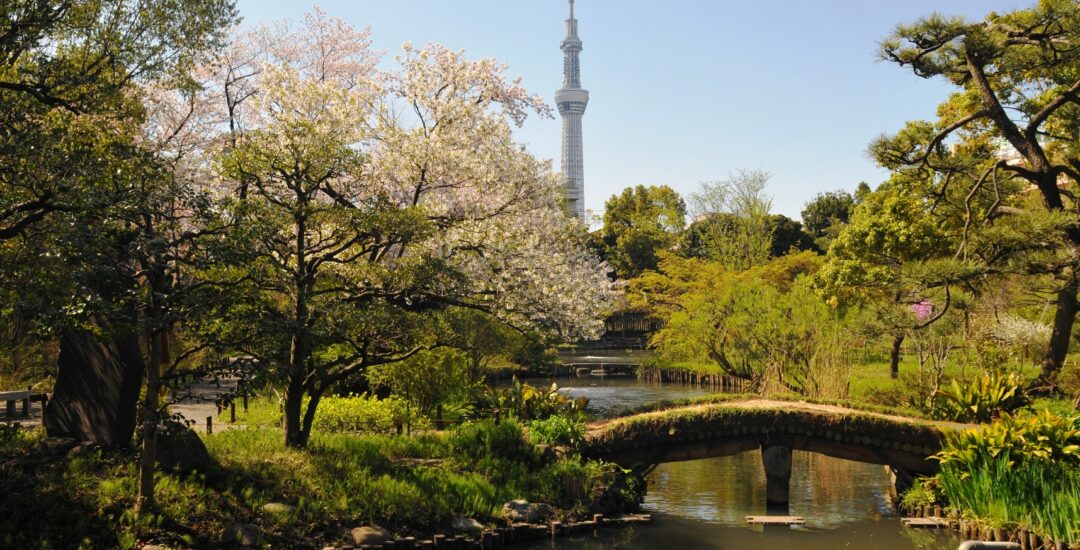
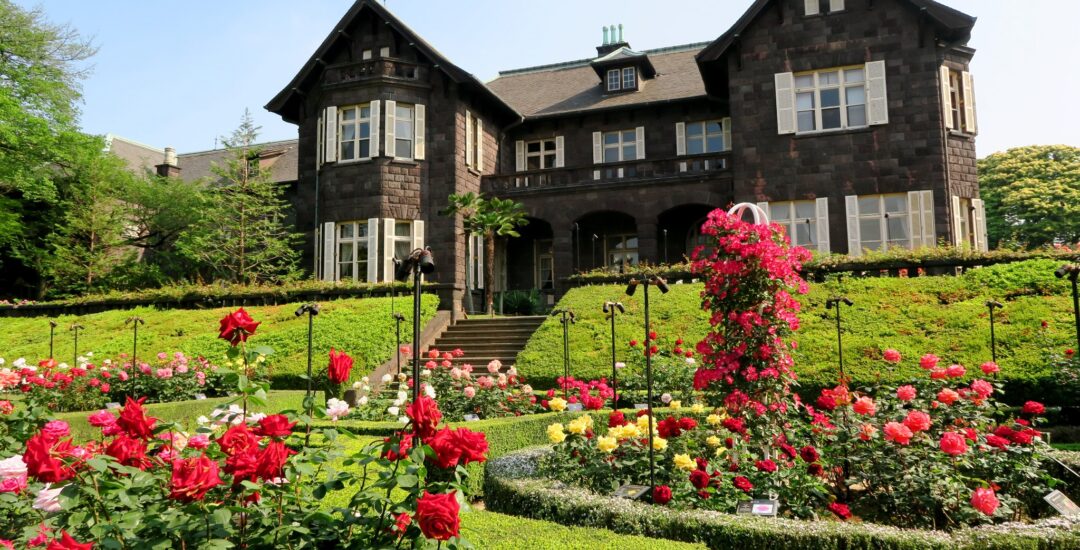
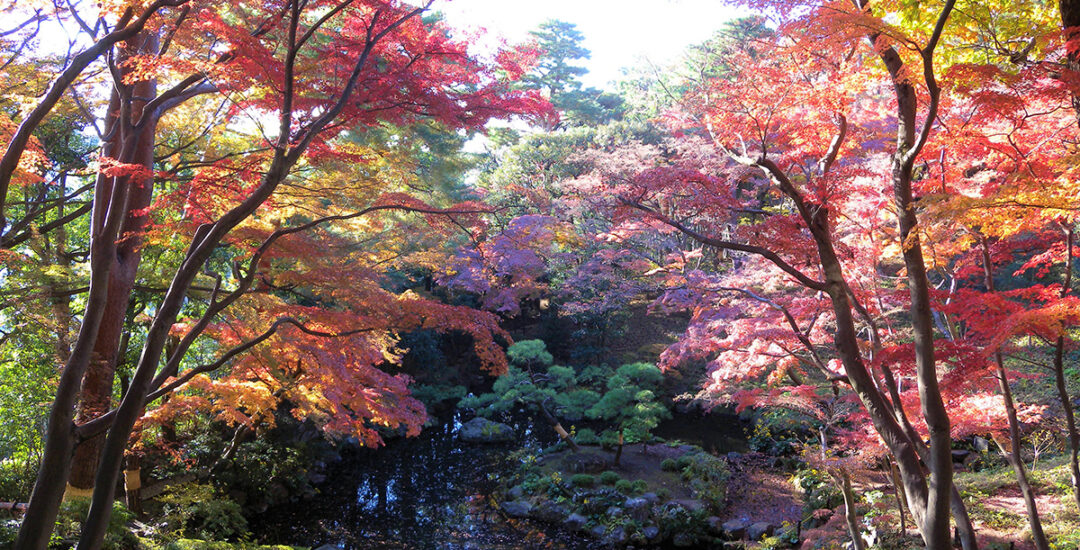
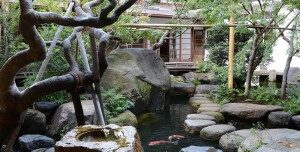
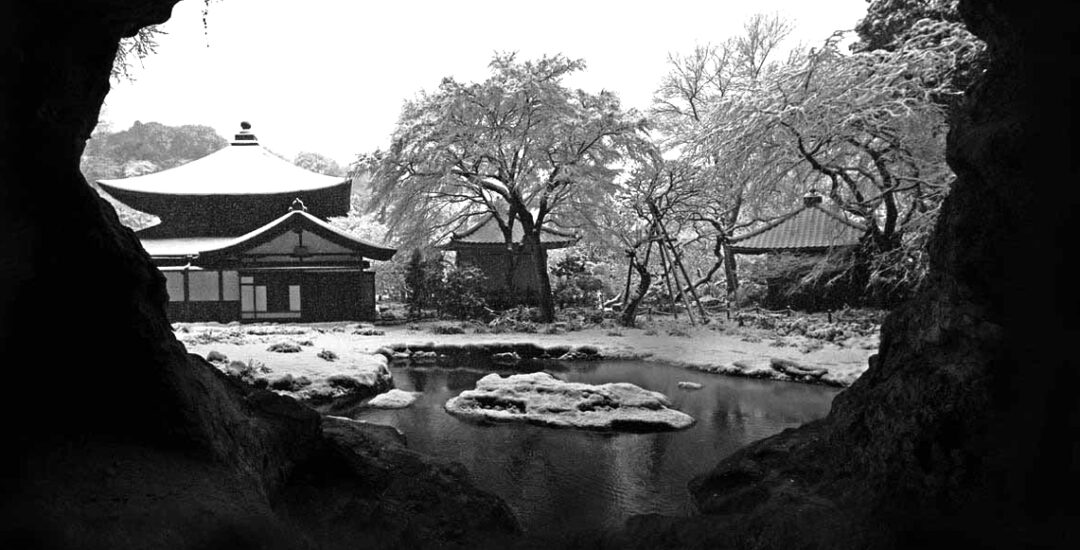
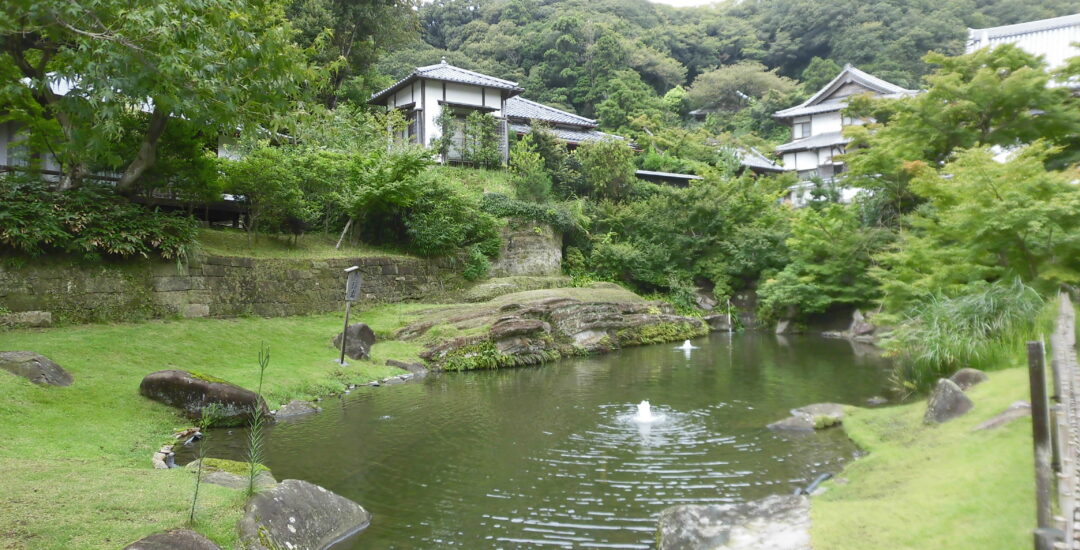
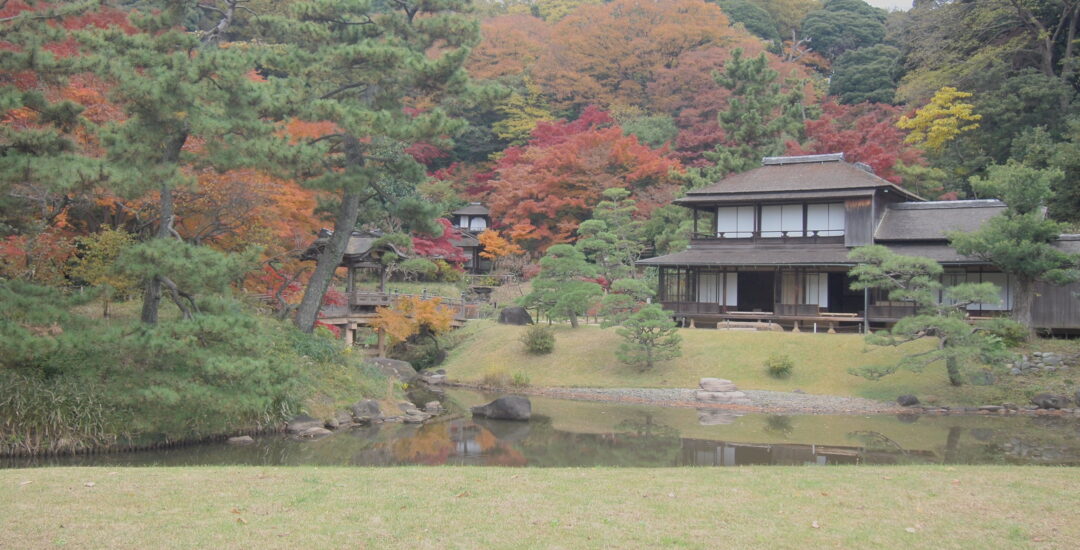
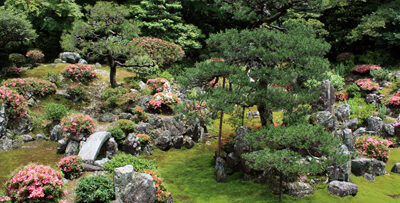
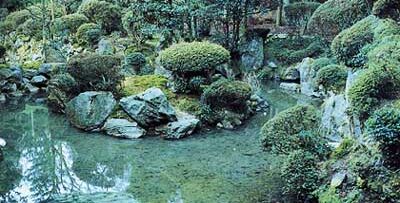
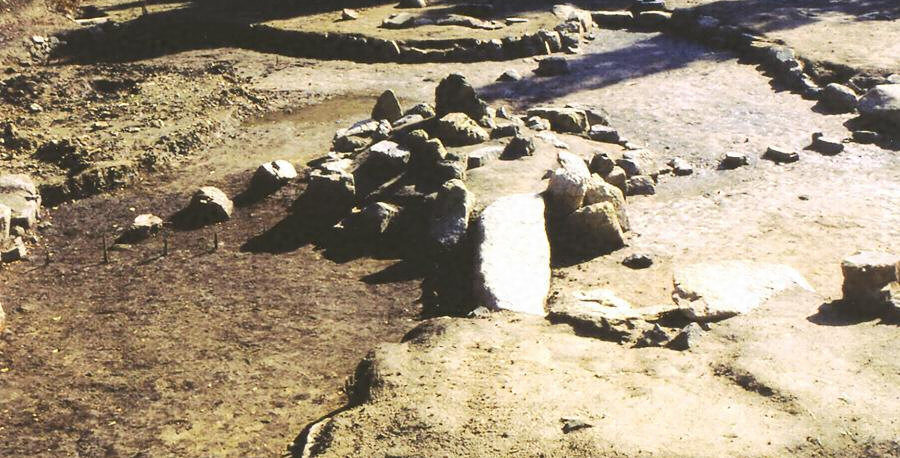
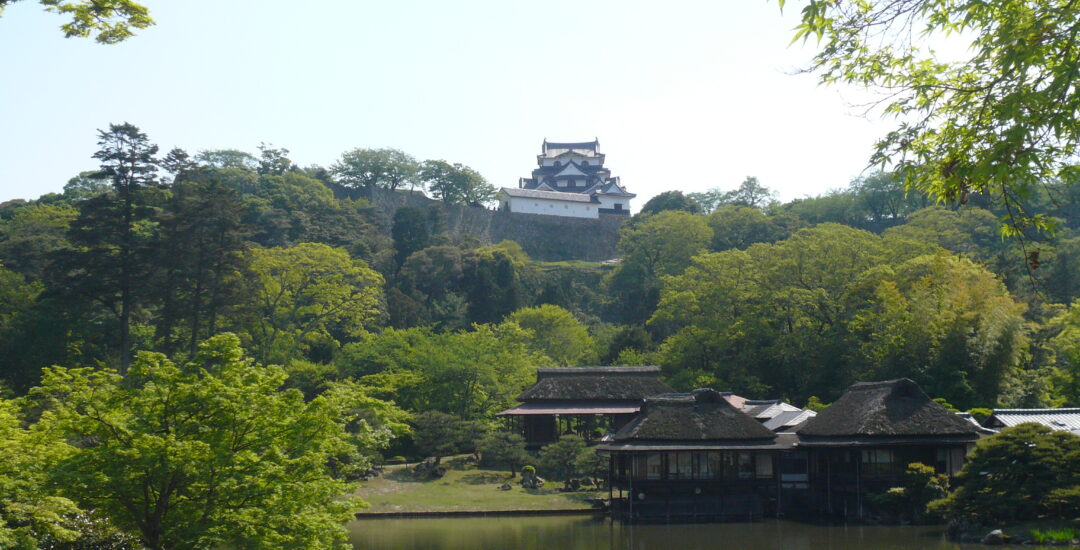
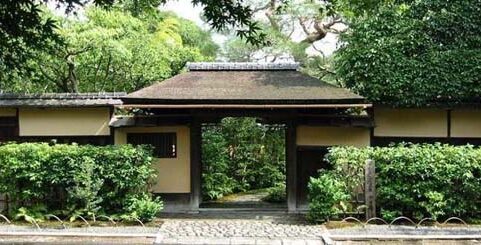
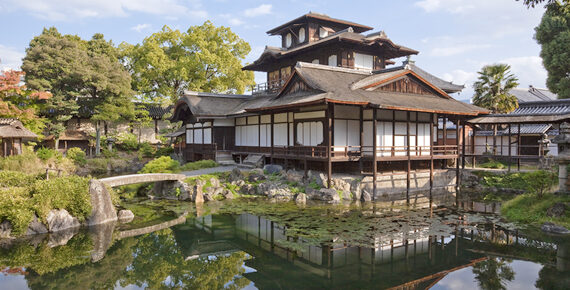
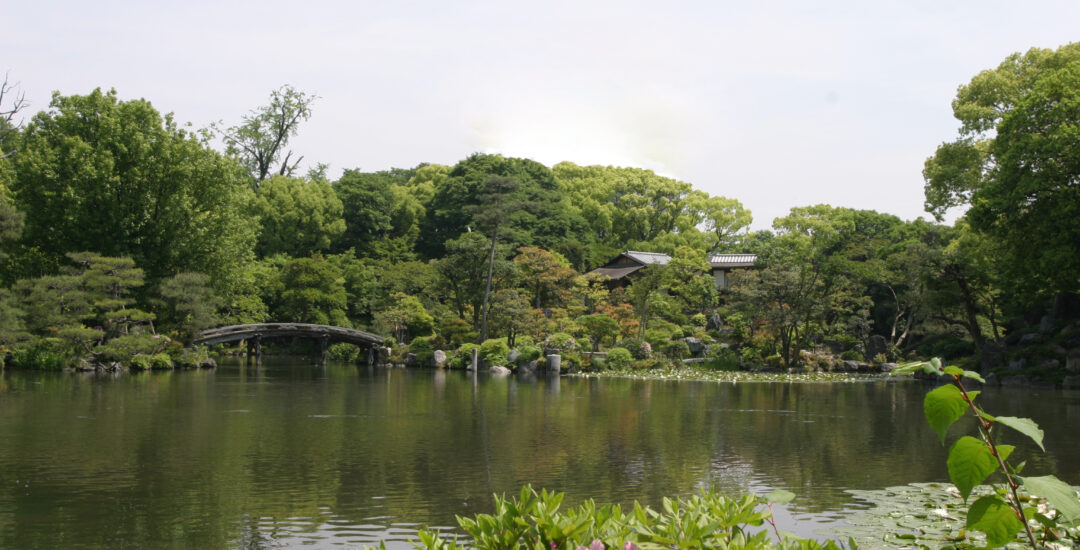
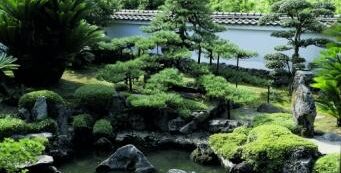
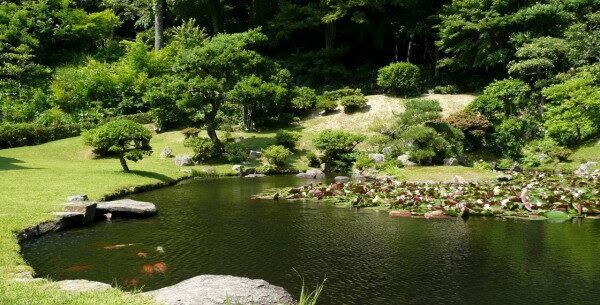
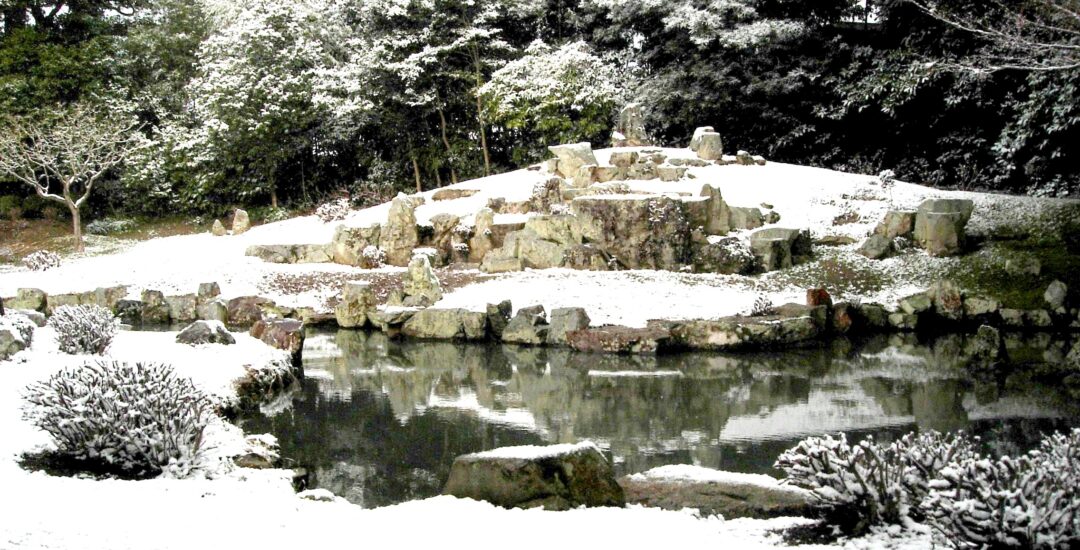
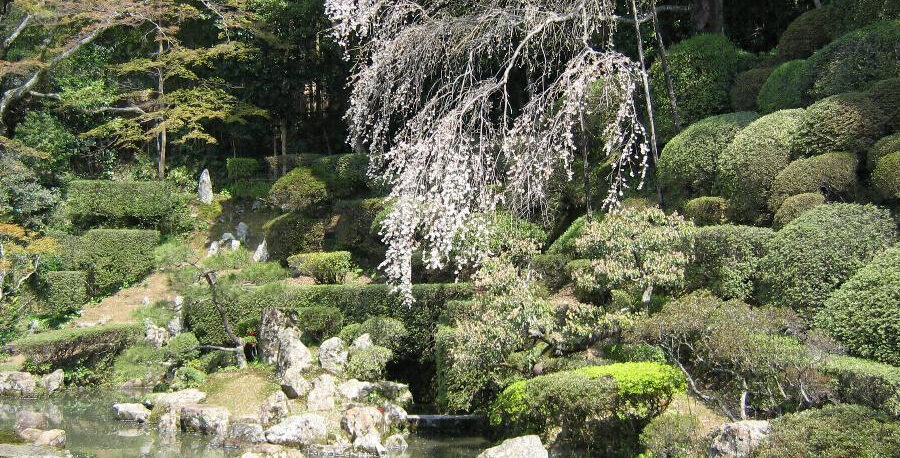
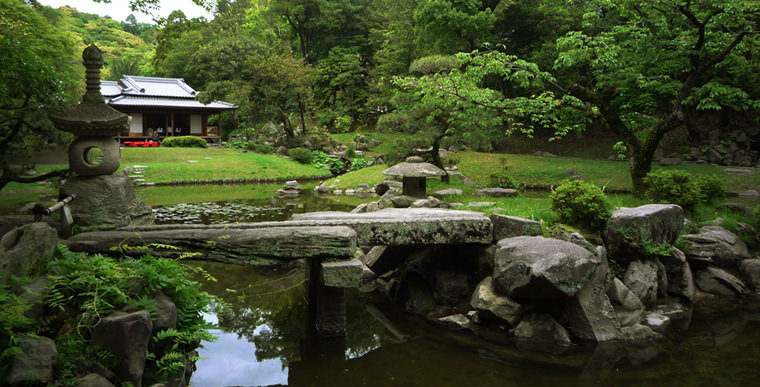
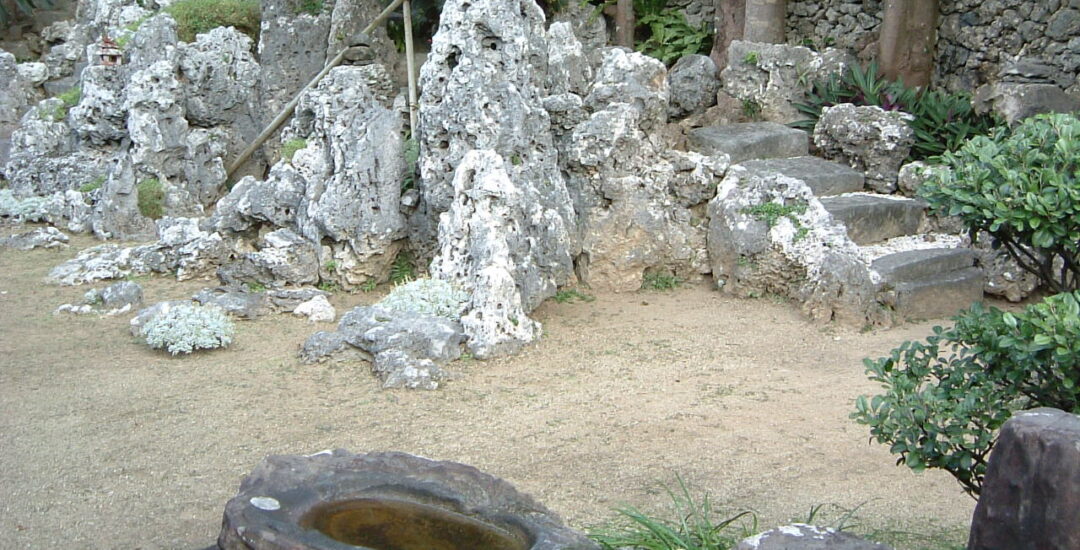
Seibi-en
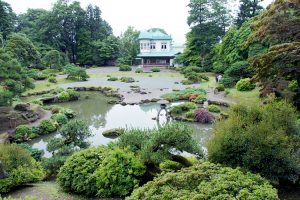
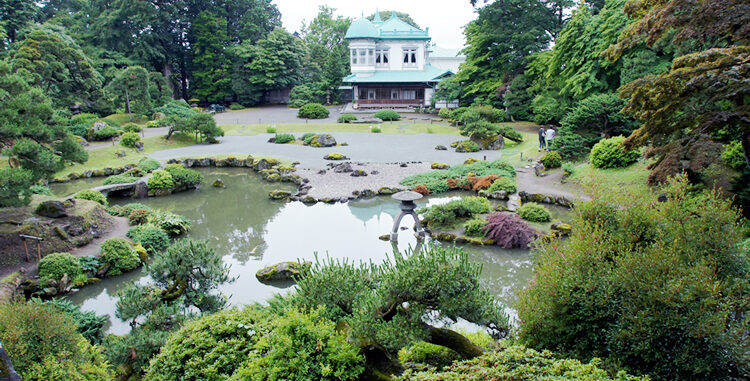
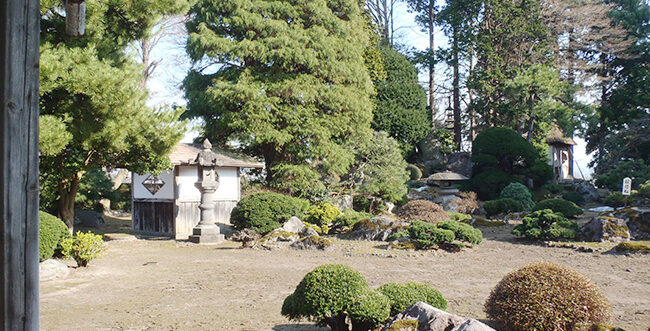
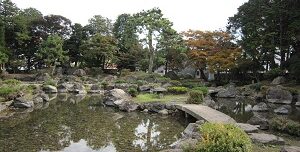
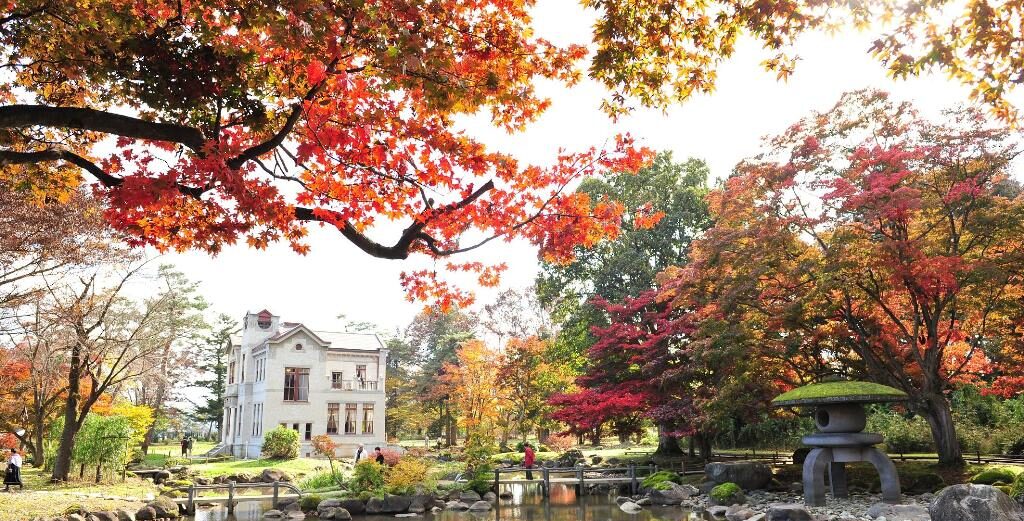
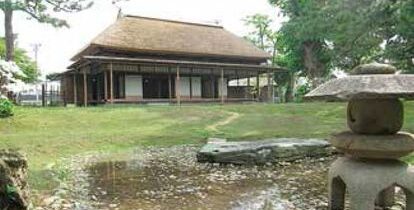
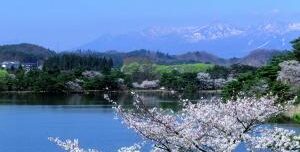
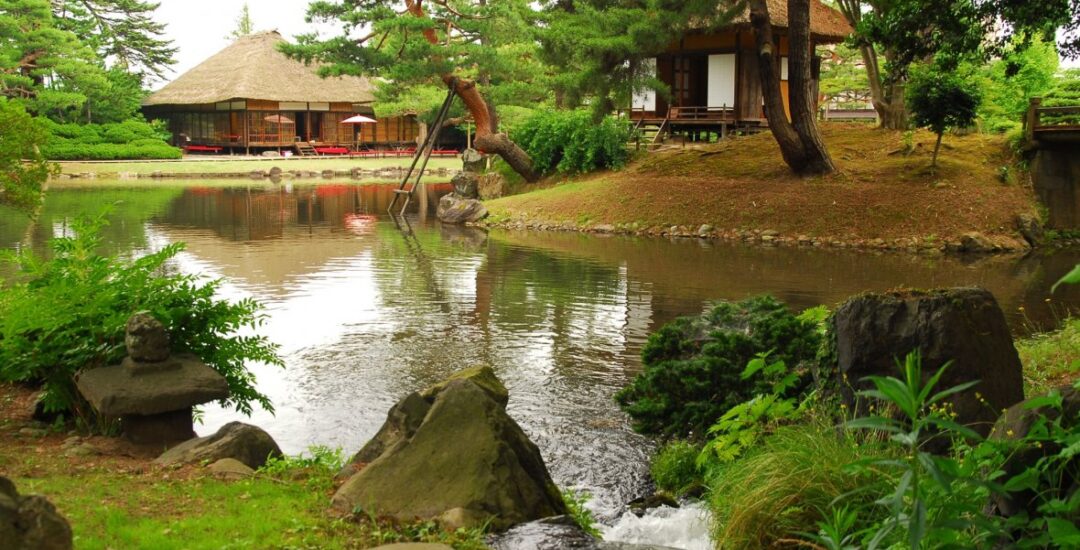
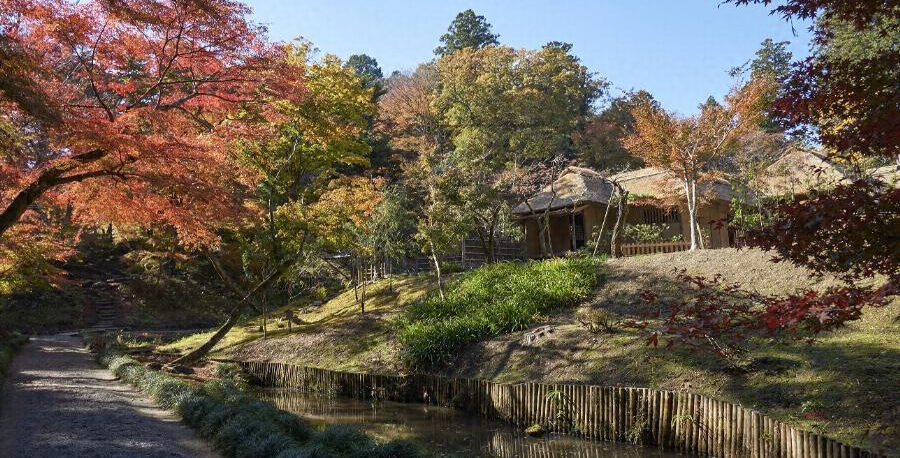
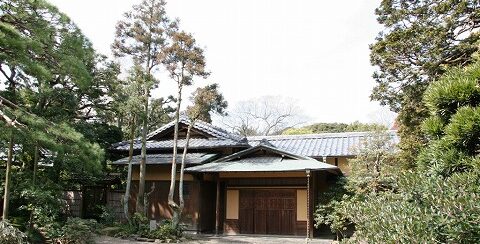
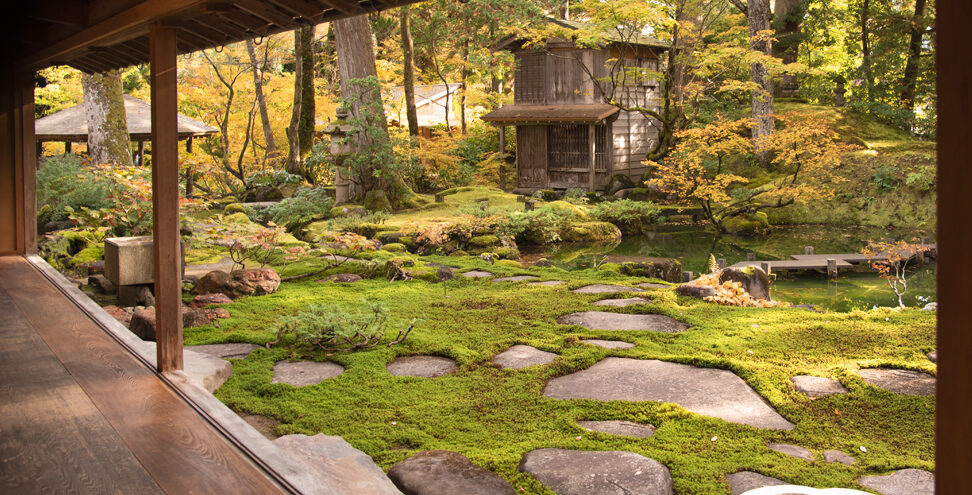
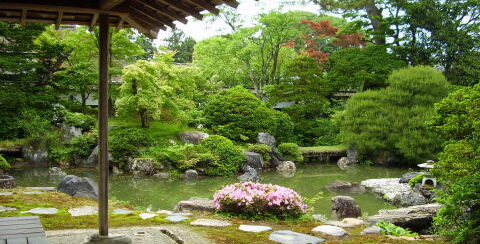
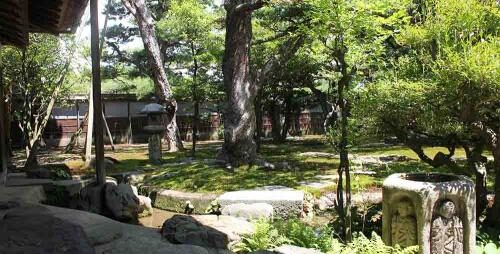
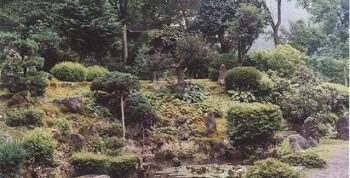
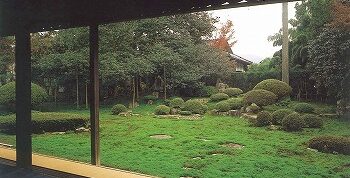
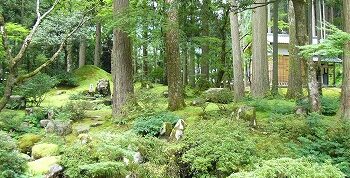
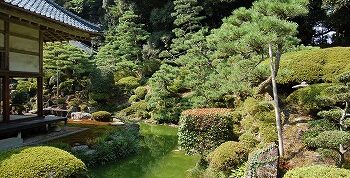
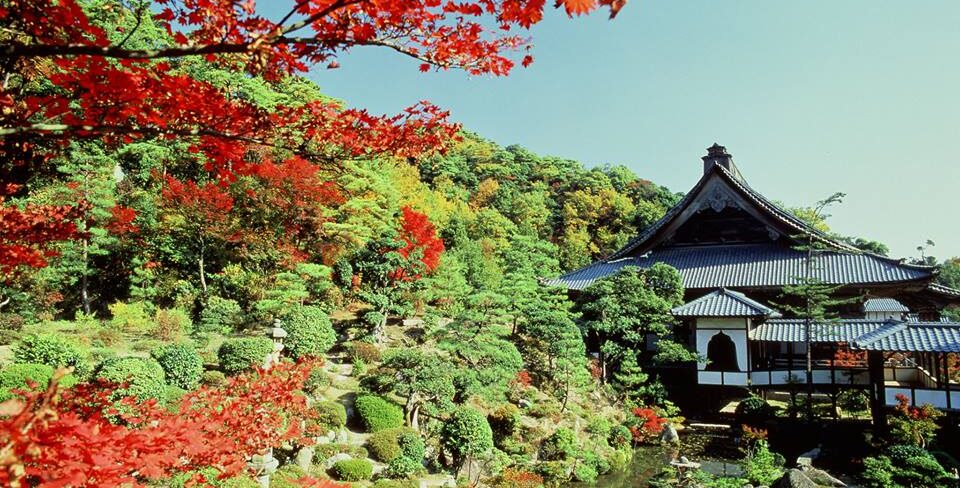
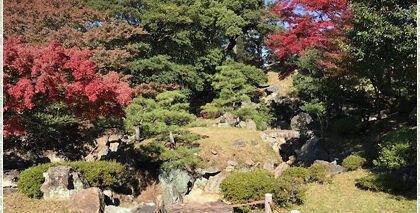
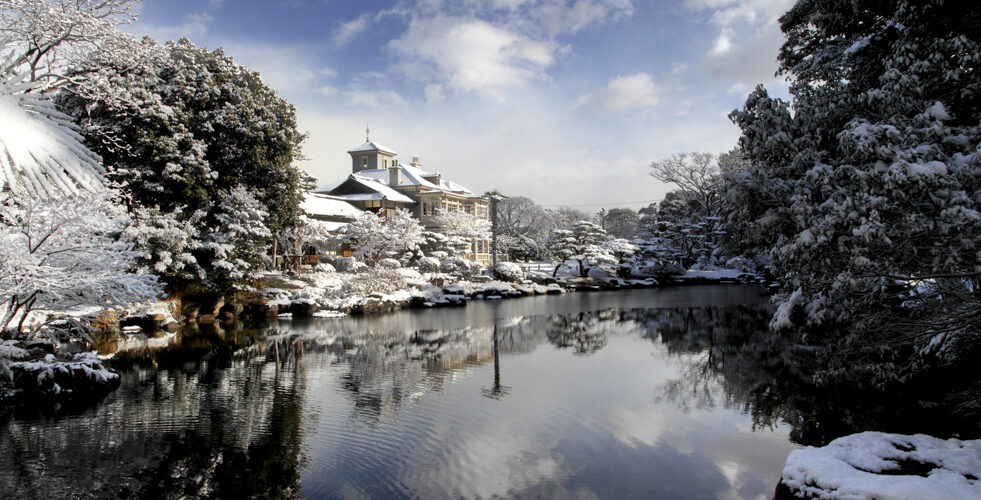
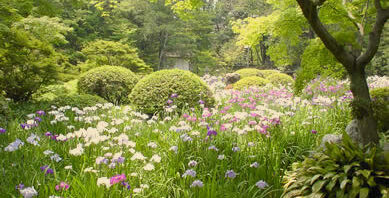
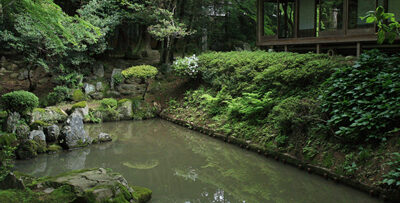
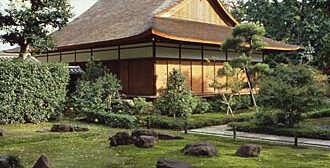
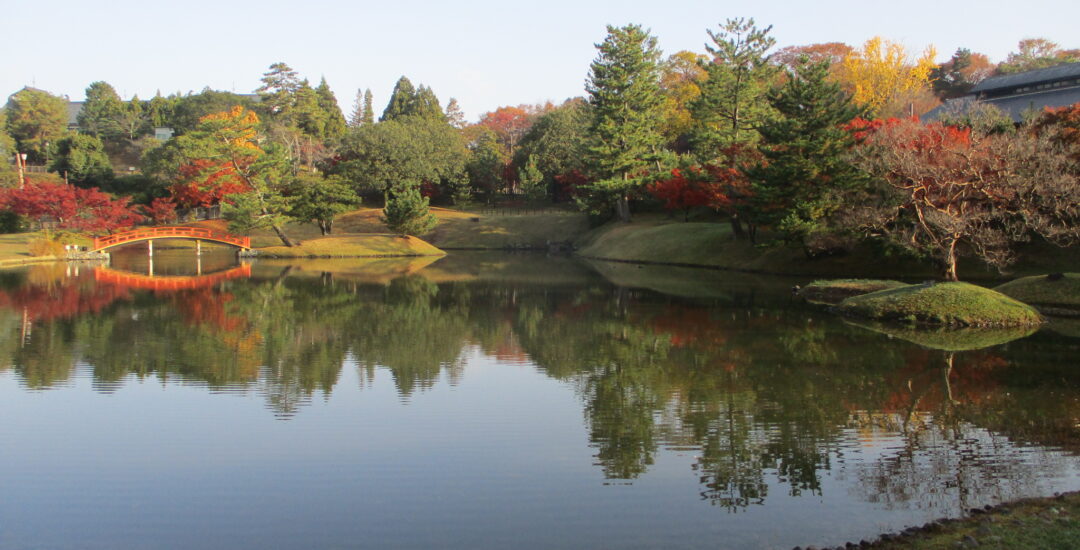
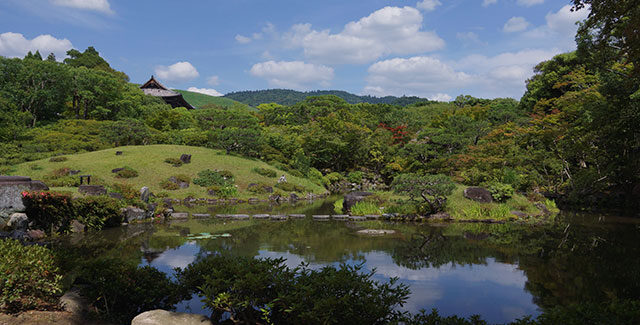
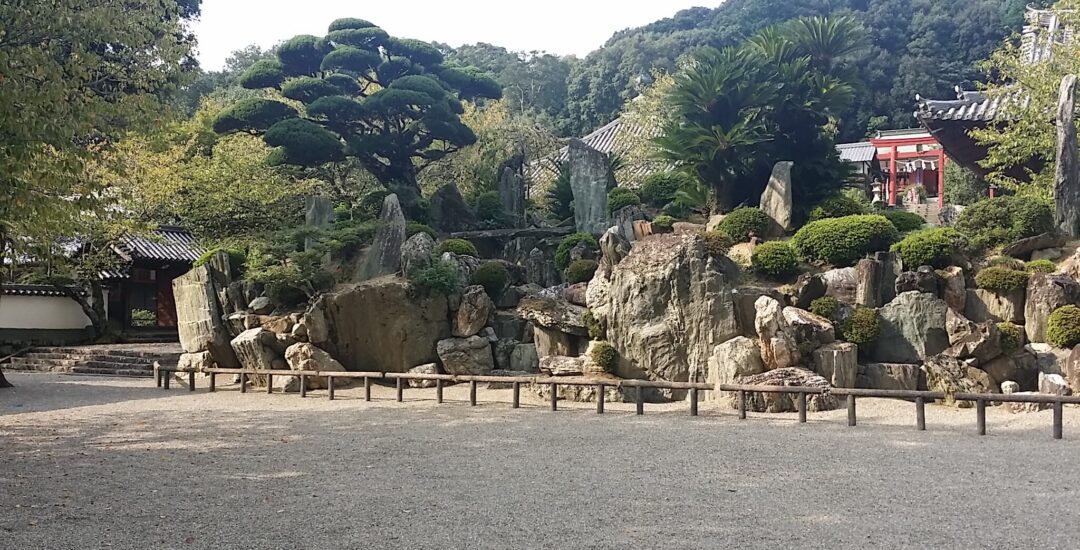
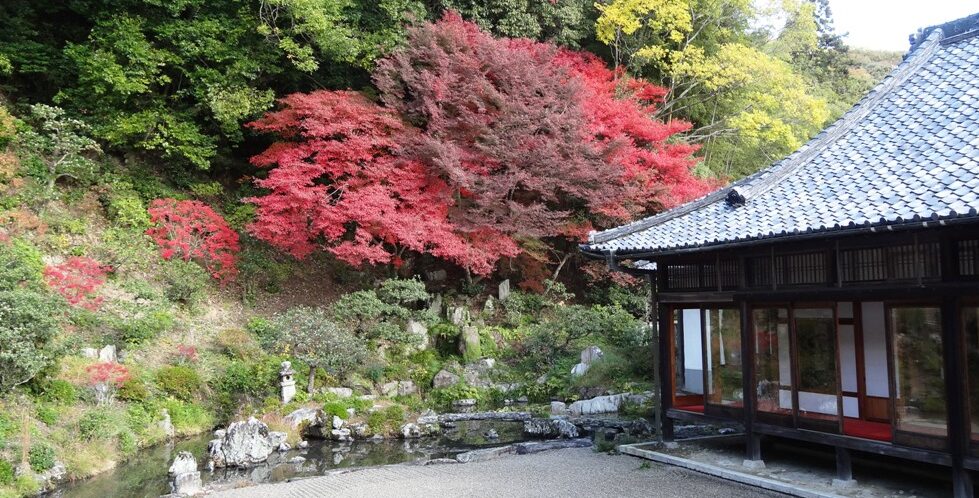
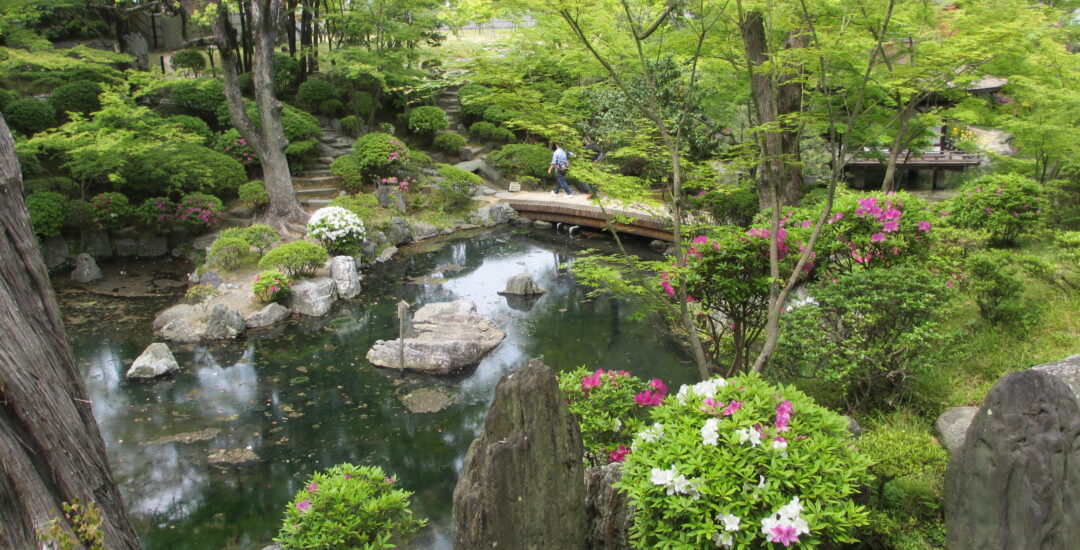
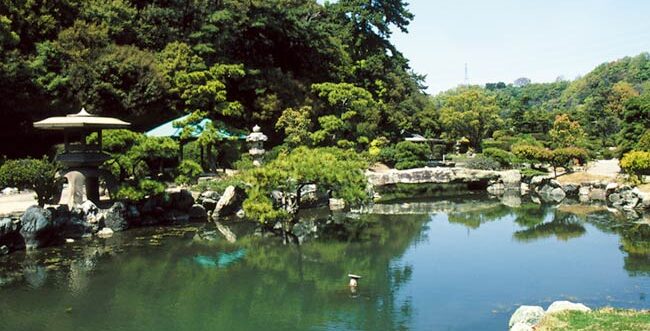
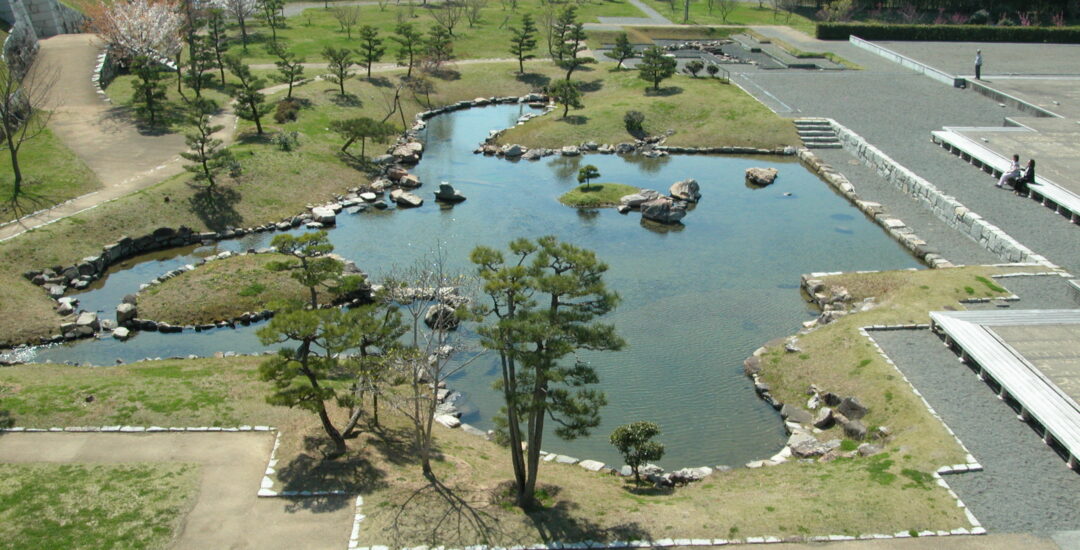
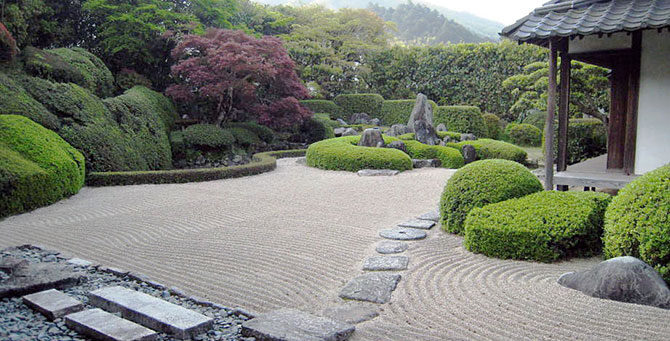
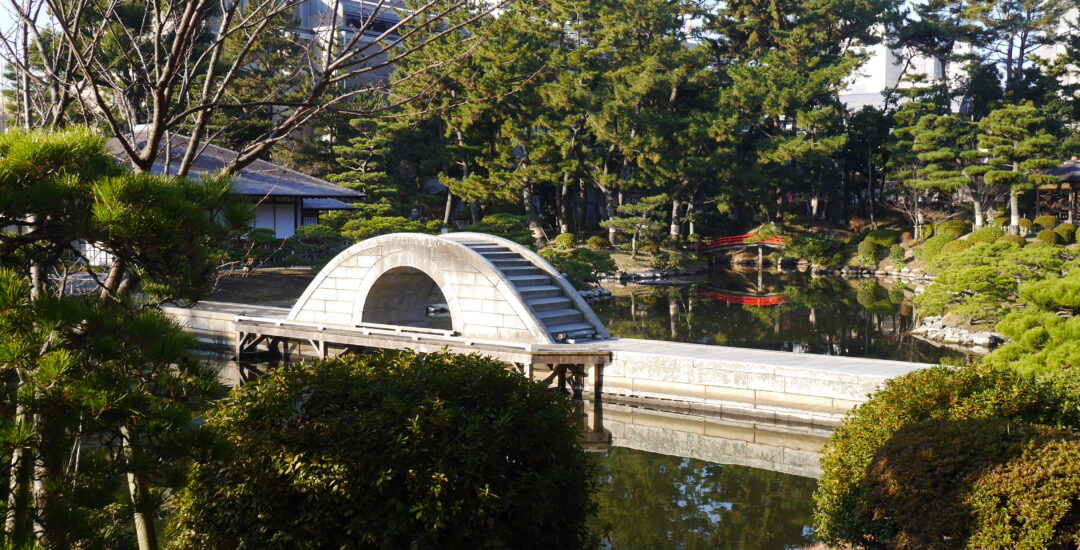
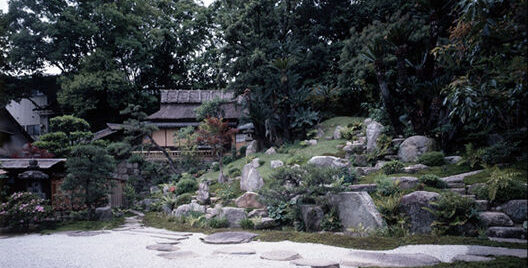
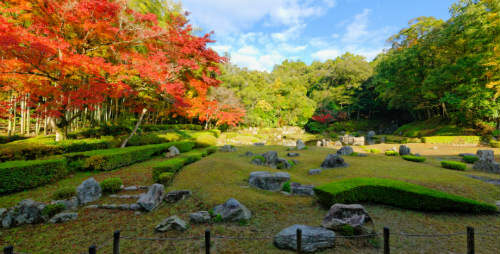
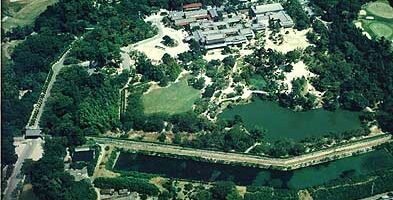
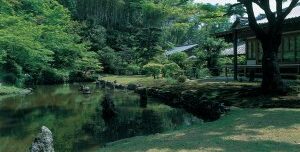
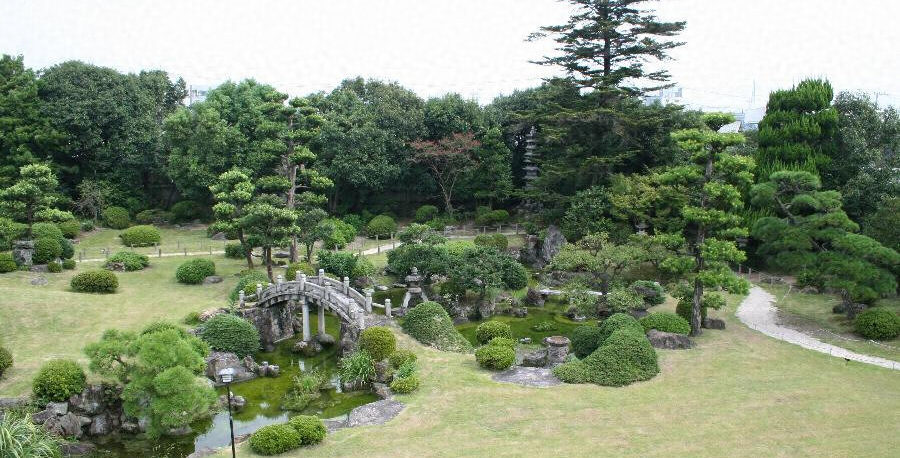
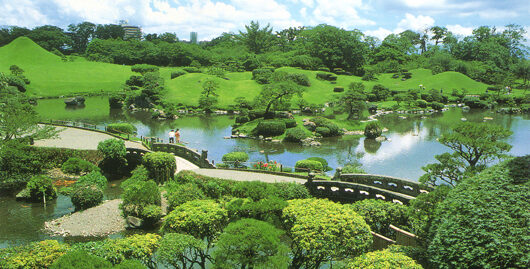
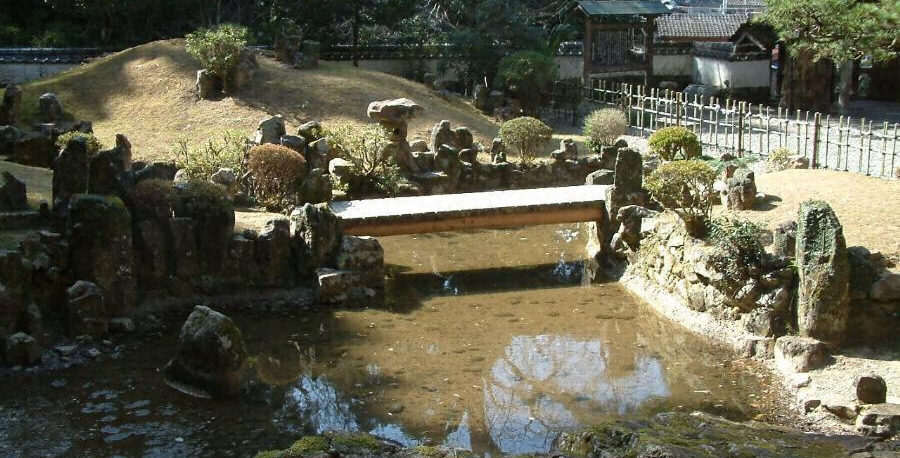
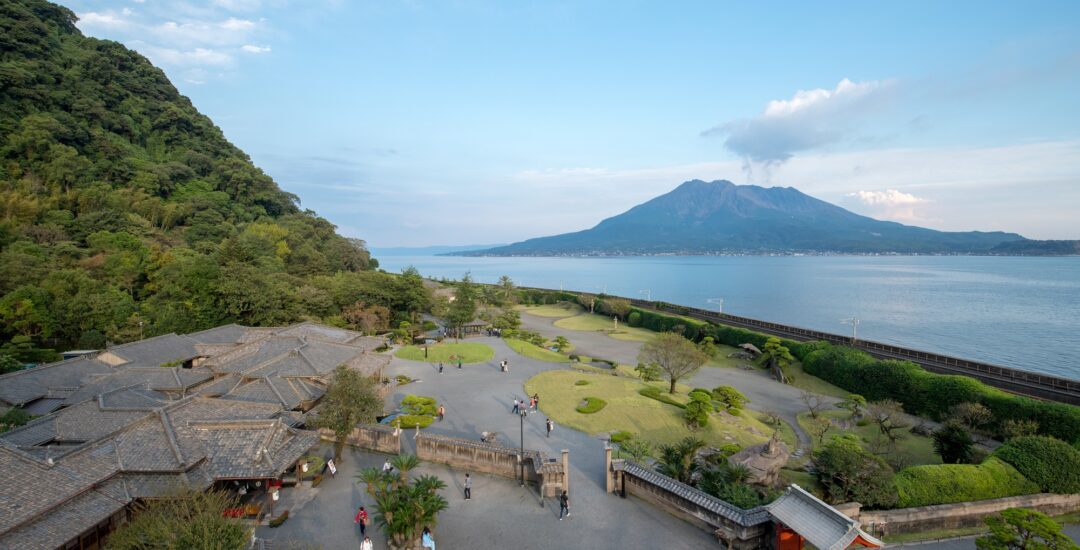
This garden was created by Seito Moriyoshi, the 24th head of the Seito Family, who served as Dai Shoya (a village official) in the Meiji Era. The garden is one of the three outstanding gardens of the Meiji Era (1868 – 1912). The garden has a pond at its center, featuring Tsukiyama representing “shin” (formal) and another Tsukiyama representing “gyo” (semiformal). “So” (informal), is a flat garden. A Western-style building commands a great view of the countryside of the Tsugaru plain with distant mountains as borrowed scenery.
cultural property:historic sites and places of scenic beauty as natural monuments
type:places of scenic beauty
1, Sarukaisibayashi, Hirakawa-shi, Aomori-ken 036-0242
Tel:0172-57-2020
Home page:www.seibien.jp
Seito Moriyoshi, the 24th head of the Seito Family, a wealthy farmer in the Tsugaru region, invited Master Obata Teiju to create the garden. It was completed in 1902, after nine years of work. It features a pond at its center, consisting of three levels classified by formality: “shin” (formal), “gyo” (semiformal), and “so” (informal).
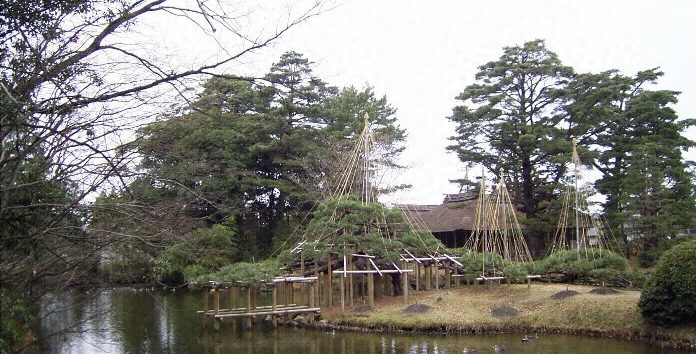
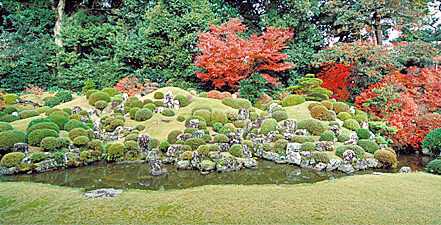
There is a dry pond in front of the Seibi-kan building, and a pond at a lower level. The pond features Shinsen-to and Ni-to islands, where pines representing Horai (Mount Penglai) pines are planted. Two Tsukiyamas (artificial hills) are created on both sides of the pond, representing “shin” and “gyo” respectively. “So” is a flat garden located at the south side of the Tsukiyama of “gyo” and the northeast side of the Seibi-kan building, featuring a splendid pruned Japanese yew (Taxus cuspidata).
The Seibi-kan building commands distant seasonal views of the countryside of the Tsugaru Plain and mountains as borrowed scenery. Seibi-en is an outstanding example of the Oishi Bugaku gardening school. The Oishi Bugaku gardening school is one of the garden schools primarily developed in the Tsugaru Domain in the late Edo period (1850s – 1868). It is said that the school originated when court nobles who left Kyoto (the ancient capital city of Japan) combined Kyoto-style Buddhist culture and ancient Shinto culture in the region. The name of the school comes from Oishi Bugaku, who is believed to be the founder of the school.
Zuiraku-en
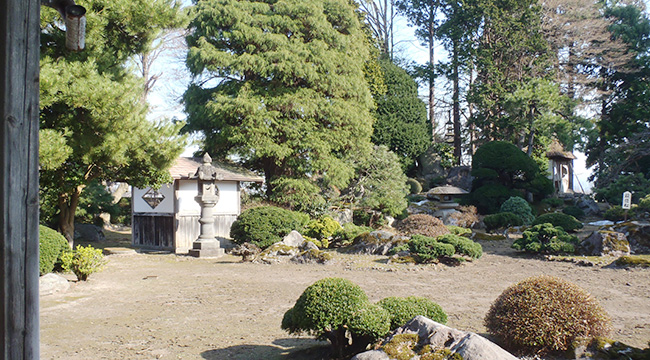
This garden is a good reflection of the gardening techniques of the Oishi Bugaku gardening school that have been handed down in the Tsugaru region, such as creating Tsukiyama (artificial hills), arranging large rocks, a dry waterfall, a dry pond, and a stone bridge across the pond. Sketches drawn when creating the garden, and an inscription describing the modification work are archived at the garden. Visitors can learn about the history of the garden creation and its transitions afterwards.
cultural property : historic sites and places of scenic beauty as natural monuments
type : places of scenic beauty
26-2, Ooaza Miyadate Aza Miyadate Sawa, Hirosaki-shi, Aomori-ken 036-8384
Tel:0172-82-1642
Home page : http://zuirakuen.com/
This is the garden of a wealthy farming family in the Miyadate area, the Tsushima Family. The Tsushima family ran Dai Shoya (a village official) for generations during the era of Tsugaru Domain. It is a Karesansui (dry landscape) garden occupying a wide space in front of the south side of the building.
The garden includes an arrangement of two paths of large stepping stones, a worship stone, and a water basin. Further inside, the garden features a dry waterfall, a dry pond, and a stone bridge across the pond. A low miniature hill sits at the far back on the right (west) side and a taller hill at the left (east) side, along with spontaneously arranged large rocks. A small arbor and stone lantern are placed in between.
Takahashi Teizan started building the garden in 1890 and worked on it for the following 15 years. Later his two apprentices, Ikeda Teigetsu and Tonosaki Teiyo, resumed addition and modification work at the beginning of the Showa Period. It was finally completed in 1936. There is a description of the origin of the garden on the back of a Tateishi (standing rock) in front of an Inari (goddess of rice) shrine at the right back of the garden. Design drawings created during the addition and modification work are archived. This is one of the outstanding gardens displaying the gardening techniques of the Oishi Bugaku gardening school that have been handed down in the Tsugaru region.
Kanehiranari-en
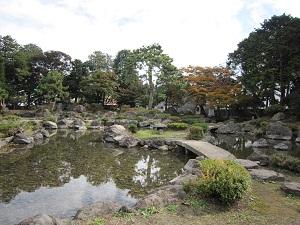
Kanehiranari-en is recognized as an important garden that perfectly conveys the unique style of the Oishi Bugaku gardening school that dominated the Tsugaru region from the end of the Edo Period (approx. 1750 – 1850) through modern times. The overall premises, including the main building and garden, are all preserved in good condition. The garden was designated as a Historic Site, Place of Scenic Beauty, and Natural Monument on January 26, 2006.
cultural property : historic sites and places of scenic beauty as natural monuments
type : places of scenic beauty
2−1, Uchimachi, Kuroishi-shi, Aomori-ken 036-0306
Tel:0172-52-2111
City of Kuroishi Board of education Cultural properties section
The third Takahashi Teizan was invited by Kato Uhei, a politician and business man, to create this garden in 1882. He died before completing the garden. His apprentices, Obata Teijyu and Ikeda Teigetsu, succeeded him in the work and completed the garden in 1902. The garden is also known as “Sawanari-en” because of the first trade name of “Sawaya Narinosuke” in the sake-brewing industry, which was Uhei’s family business.
“Kanehiranari-en” was started by Kato Uhei as one of his measures against unemployment. In the spirit of his belief that “money should be distributed to all people, leading to a peaceful society,” the garden was named “Kanehiranari-en (money peace-making garden).” The garden has a large pond located at the far back on the east side of the main building. The shape of the premises gives depth to this garden, with its three ponds whose shorelines are created with intricate stone arrangements, Tsukiyama behind the shorelines, and a dry waterfall created by dynamic stone arrangements. The style of the “Oishi Bugaku gardening school” can be seen in the unique usage of stones and detailed design. It is one of the great gardens that convey the unique style of the “Oishi Bugaku gardening school,” which dominated the Tsugaru region from the end of the Edo period (approx. 1750 – 1850) and modern times.
Kyu Ikeda Family Gardens
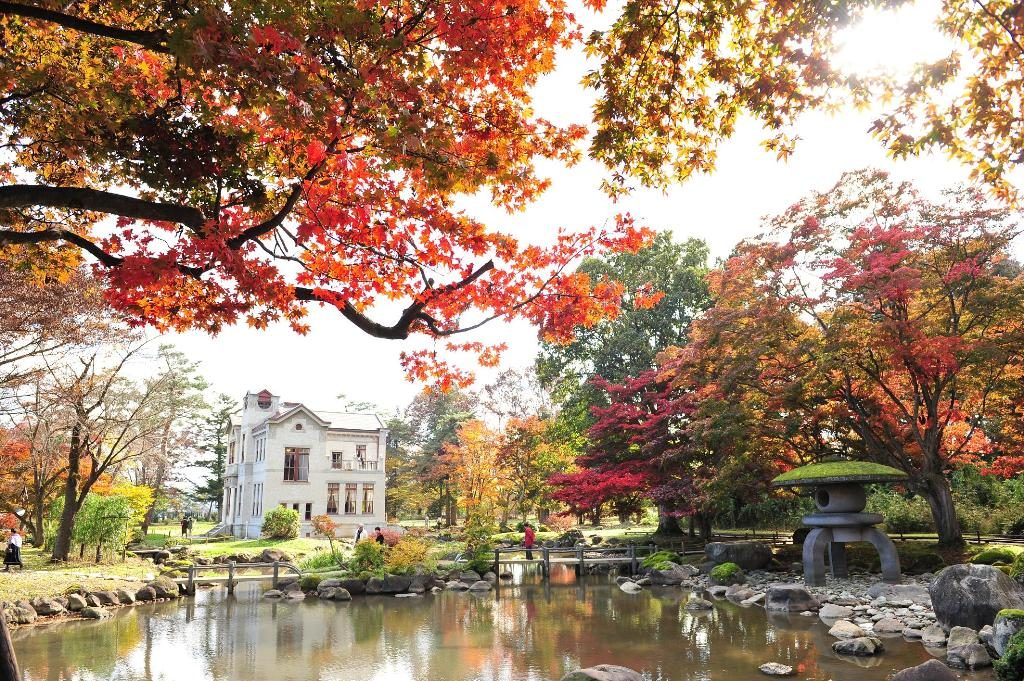
This garden is located in the countryside of Yokote Basin. Its premises are shaped like a floating island. This garden is regarded to have exceptionally high visual and academic value as a garden designed by Nagaoka Yasuhei, a pioneer of modern landscaping and was designated as the first National Place of Scenic Beauty in Akita Prefecture in February 2004.
cultural property : historic sites and places of scenic beauty as natural monuments
type : places of scenic beauty
1, Takanashi Aza Ooshima, Daisen-shi, Akita-ken 014-0805
Tel:0187-62-6257
The Ikeda Family was the village head of Takanashi, Daisen City, Akita Prefecture, from the mid-Meiji Era until World War II. The family has been known as one of the Three Major Landowners of the Tohoku Region, along with the Honma Family of Yamagata Prefecture and Saito Family of Miyagi Prefecture. When the residence built by the 13th head of the Ikeda Family, Buntaro, collapsed during the earthquake in 1896, the family consolidated and organized their land in cooperation with the government’s farmland consolidation and expanded their residence site. The garden was created with the help of Nagaoka Yasuhei, the founder of modern landscaping, which was completed for the most part during the Taisho Era.
The garden is located in the central section of the Senhoku Plain, surrounded by vast countryside with the Ou Mountains to the east, Mt. Jingu-ji-dake to the west, and Mt. Chokai to the southwest, all of which are visible in the distance from the garden. The main part of the garden has an island at the center and a shallow garden pond with a large Yukimi-doro (legged stone lantern) on its western shore, and water flows around these features to create unique layout of the garden site.
The enormous lantern, 4m high and approximately 4m wide at its top, makes it an impressive main scenic component.
Kyu Villa of Mr.Satake,Akita Domain (Joshi-tei) Garden
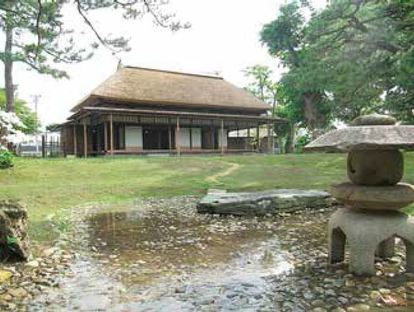
Joshi-tei was originally part of the villa of Satake Yoshizumi, the third lord of the Akita Domain in the Genroku period (1688 – 1704). It is positioned next to the Karamete-mon gate (back gateway) of the Satake Family’s Kubota-jyo Castle. The garden is located in a scenic site, commanding a distant view of the Taihei cordillera. It was designated as a National Place of Scenic Beauty in 2007. It has been restored and improved based on ruins and historical sources since 2014, and was opened to the public in October 2017.
cultural property : historic sites and places of scenic beauty as natural monuments
type : places of scenic beauty
2-73, Asahikawaminamimachi, Akita-shi, Akita-ken 010-0834
Tel:018-834-6300
Home page : https://www.city.akita.lg.jp/kanko/kanrenshisetsu/1002685/1013885/1002284.html
This garden was created in a scenic area of the countryside of the Tohoku region during the mid-Edo period. A Tsukiyama (artificial hill) in the garden blends in with the surrounding mountains, creating its own natural features.
The garden was created with the north as its front, commanding a distant view of Shin Shiroyama mountain and the Taihei cordillera. Kankodai, the tallest artificial hill in the garden is located in the northeast of the garden, from which three artificial hills to the south and one to the west continue. A “Gyokukanchi,” a garden pond with shallow streams, is located at the center of the garden premises, featuring Nakajima (the central island) made of a three-meter boulder, “Kyogoto,” at the center of the pond. Water flowing out of the valley of an eastern artificial hill forms a Tsutai-ochi (water flowing on slopes) waterfall, “Jingensen,” reaches the pond, and again flows out of the pond from its western side, forming a stream. The stream flows along the south side of an ornamental stone, “Kakkoseki,” goes under a stone bridge, “Seikikyo,” forms a mountain stream, and reaches the tea garden of a tearoom, “Seion-tei,” located on a lower level. The stream from the east to the west flows continuously, and the structure of the “15 views in the garden” along with the name of Joshi-tei are unique and are considered to hold high artistic value.
Sakai Family Garden
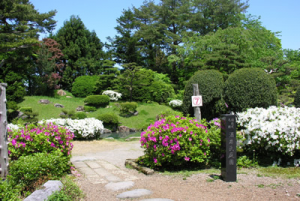
This is a Tsukiyama (artificial hill) and pond garden in the north of the old Goinden building for Sakai, the lord of Shonai and it is located inside the Chido Museum. It preserves a style and technique of gardens with a study which were popular during the mid-Edo Period. It was designated as a National Place of Scenic Beauty in 1976 because of its importance as an exemplary garden with a study which is very rare in the Tohoku region.
cultural property : historic sites and places of scenic beauty as natural monuments
type : places of scenic beauty
10-18 Kachūshinmachi, Tsuruoka-shi, Yamagata-ken 997-0036
Chido Museum
Tel:0235-22-1199
Home page : http://www.chido.jp/
It is currently located inside the Chido Museum premises. This is a Tsukiyama (artificial hill) and pond garden in the north of the old Goinden building for Sakai, the lord of Shonai. There is a Tsukiyama on the opposite shore of the pond. A stone standing in the middle of the Tsukiyama is the center of the garden and other landscaping elements are positioned around it.
A dry waterfall is assembled on the left side of the garden in order to create scenery simulating a valley. The area under the waterfall is landscaped to look like a rough seashore. A pine tree with overhanging branches is planted on the peninsula on the right side of the garden. In front of the pine tree, slightly to the left, there is a Tateishi (standing rock) made of silicified wood, which is shaped like a turtle head, in the water. A deep cove is created in the back in order to create a serene scene with trees for shade.
When it was originally built, Mt. Chokai in the far distance was used as borrowed scenery behind the Tsukiyama.
It preserves a style and technique of gardens with a study which were popular during the mid-Edo Period, and this garden is considered to be an exemplary garden with a study which is very rare in the Tohoku region.
Gyokusen-ji Garden
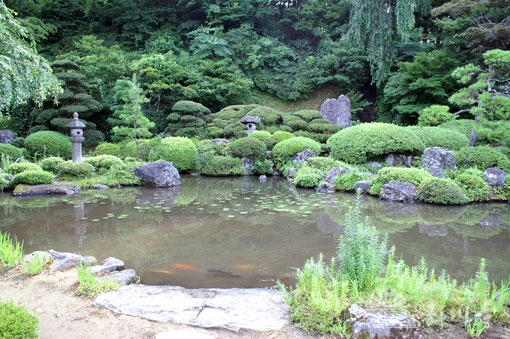
The Gyokusen-ji Garden was created in the 1450s and improved in the 1650s. This is a Horai-style garden with a path around a large pond in the middle. There is a waterfall which flows from a natural mountain. Pure stands of Japanese primrose (Primula japonica) grow in the garden, which are very rare, even in Japan. It was designated as a Cultural Property and Scenic Site of Japan in 1987.
cultural property : historic sites and places of scenic beauty as natural monuments
type : places of scenic beauty
35, Haguromachi Tamagawa, Tsuruoka-shi, Yamagata-ken 997-0121
Tel:0235-62-2746
Gyokusen-ji is located at the northwest base of the Three Mountains of Dewa and it is told that it was founded in 1251 during the Kamakura Period by Ryonen Homyo, a Zen monk who was the leading pupil of Dogen Zenji (a Zen master) who was a founder of the Soto sect. The garden was created in 1450 during the Muromachi Period and improved in 1650 during the Edo Period. This is a Horai-style garden with a path around a large pond in the middle. The waterfall is designed to flow into the garden from a natural mountain. There are many stone arrangements around the pond and shrubs that are trimmed in a round shape are planted without any gaps between the stones. The soil around the stepping stones is mossy which adds elegance to the garden’s scenery. This garden is also called the “temple of Japanese primrose” because of its pure stands, which are very rare, even in Japan.
Soko-ji Garden
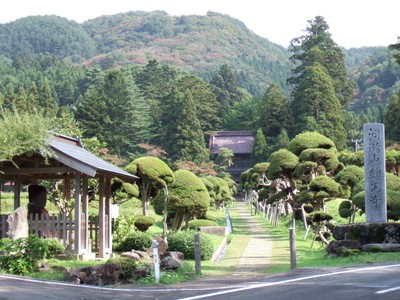
A Tsukiyama garden with grove and pond. The Tsukiyama and the pond can be viewed from the main temple and the Kuri study. In the distance you can see “Mine no Yakushi-do” at the top, and “Naka no Yakushi-do” at the middle of the mountain to the east. Pure water from the Furou no Taki waterfall pours into the pond passing through the Namiwake-ishi (wave-dividing stone). It is called the “Hourai-en” garden and was designated as a Scenic Site of Japan in 1996.
cultural property : historic sites and places of scenic beauty as natural
type : places of scenic beauty
8,Sokojisawa, Sakata-shi, Yamagata-ken 999-6831
Tel:0234-62-2170
Home page : www.sokoji-sakata.com
Soko-ji is a Zen temple of the Soto Zen sect and it is told that it was founded by the venerable Zen monk, Getsuan Ryoin, during the period of the Northern and Southern Dynasties by enshrining a statue of Yakushi (the healing Buddha) on the summit of the mountain. The front of the precinct is facing west and the garden is landscaped in the Tsukiyama (artificial hill) garden style with the grove and pond behind the main temple and the Kuri building (living quarters for monks). The view of the garden from the study is comprised of a Taki-ishigumi (a waterfall with assembled rocks) on the top left side. The water coming down from that waterfall flows next to the Tsukiyama in the middle and pours into the pond. There is a flat Nakajima (central island) in the pond and the water from the pond falls by the Kuri from the southwest corner. If you go out to the garden from the study, you can walk to the central island from the retaining stone of the pond via water-crossing stones made with five millstones. There are large stones on both the south and north sides of the central island. It is narrow between the central island and the eastern shore of the pond and there is a bridge made of a single stone. After crossing to the opposite shore, you will find sparsely-positioned stepping stones in a diagonally upward direction and that is also a path leading to the grassland in the heart of the Tsukiyama on the left.
This is a typical Japanese garden perfected in the second half of the Edo Period which is an elegant Zen temple garden.
Villa of Mr. Honma (Kakubu-en) Garden
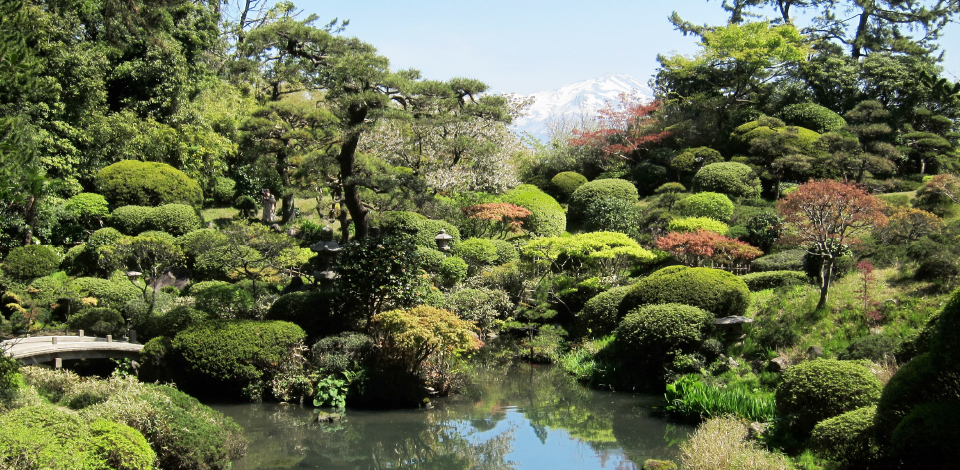
The garden was created by the fourth head of the Honma Family, Kodo, and it is in a style of Japanese garden with a path around the central pond. A complete view of the pond garden with a rich variety of landscape and Mt. Chokai as borrowed scenery can be enjoyed. The lord Sakai named the building overlooking graceful Mt. Chokai as “Seien-kaku” as well as “Kakubu-en” because a crane flew toward a pine tree on the central island of the pond.
cultural property : historic sites and places of scenic beauty as natural monuments
type : places of scenic beauty
7-7 Onarichō, Sakata-shi, Yamagata-ken 998-0024
Public interest foundation, Homma Museum of Art
Tel:0234-24-4311
Home page : www.homma-museum.or.jp
The Honma Family is known as one of the three major landowners in the Tohoku region. They became wealthy merchants mainly due to the shipping business in the Japan Sea from the second half of early modern times to recent modern times. Originally, the garden started out as a villa which was built in 1813 (the Edo Period) by the fourth head of the Honma Family, Honma Kodo. It was created as a rest area for the lord of Shonai, Sakai Tadakata, prior to the lord’s inspection trip to his territory. It was constructed by using the labor of stevedores during the winter time. The stevedores in the early modern period supported the seaport city, Sakata. The garden is in a style of Japanese garden with a path around the main building and a pond and colorful ornamental stones of red and blue are used. A complete view of the pond garden with a rich variety of landscape and Mt. Chokai as borrowed scenery can be enjoyed from the second floor of Seien-kaku. The lord Sakai Tadakata, who visited the garden during his inspection trip, named the building overlooking Mt. Chokai as “Seien-kaku”.
Also, it is said that the garden is named “Kakubu-en (a garden with a dancing crane)” because a crane landed on a pine tree on Nakajima (the central island) of the pond.
Nanko Park
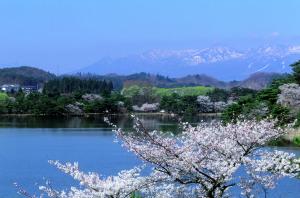
The Japanese park system was established in 1873, at the beginning of the Meiji Era. This park was created prior to that, at the end of the Edo Period, by Matsudaira Sadanobu, the 12th lord of the Shirakawa domain, with an idea of “samurai and commoners sharing a joy” and the public being able to take a rest regardless of their social status. It was constructed in 1801 with elements of gardens and designated as a National Historic Site/Place of Scenic Beauty in 1924.
cultural property : historic sites and places of scenic beauty as natural monuments
type : places of scenic beauty, historic sites
1 hoka, Nanko, Shirakawa-shi, Fukushima-ken 961-0812
Shirakawa-city Construction department Cultural Property Division
Tel:0248-27-2310
Home page : http://www.city.shirakawa.fukushima.jp/page/page001385.html
This park was constructed by Matsudaira Sadanobu, who is known for the Kansei Reforms during the Edo Period. Sadanobu intended to create a place without a wall where anybody can take a rest regardless of their social status and visit anytime. It is said to be the oldest place called “park” in Japan.
There are gently sloping hills in the north of the park and a pond (Nanko) in the south, and both create an expansive view around the park. There are various kinds of trees among lush pine trees on the hills. Visitors can enjoy a wide variety of seasonal flowering plants in the forest.
The island in the middle of the pond is also covered with trees and flowers. There are fish and birds in the pond that are a pleasure to the eyes of visitors.
Among scenic spots that are created for nature outings, there are only a few of them that are landscaped with a pond as a center piece. The park was named after a lakeside park described in the old Chinese book, “Famous Gardens of Luoyang,” as it tried to replicate the essence of the Chinese park.
Garden for the lord of Aizu, Matsudaira (Oyaku-en)
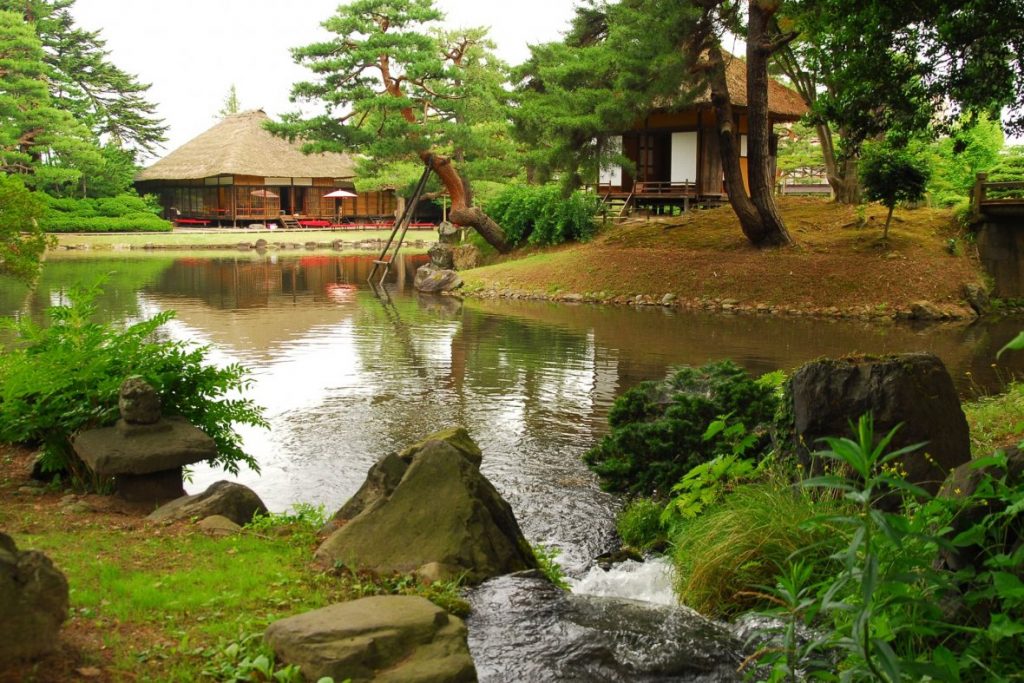
It is said that the garden started out as a villa built by a lord of Aizu about 600 years ago. This is in a style of Japanese garden with a path around a pond, which is in the middle, shaped like the character for “heart (Kokoro).” It was named “Oyaku-en (a herb garden)” because various medicinal herbs were cultivated here. It was designated as a National Place of Scenic Beauty in 1932.
cultural property : historic sites and places of scenic beauty as natural monuments
type : places of scenic beauty
8-1 Hanaharumachi, Aizuwakamatsu-shi, Fukushima-ken 965-0804
Tel:0242-27-2472
Home page : http://www.tsurugajo.com/oyakuen/
The garden has borrowed scenery with the mountains on the east side of the garden and it is considered to be an exemplary Daimyo garden during the Edo Period with a path around a pond. Originally, it was a villa built by Ashina Morihisa during the Muromachi Period. It is said that he built the villa because there was a spring with miraculous powers. It later became a villa for the lord of Aizu, Matsudaira, and started to be called “Oyaku-en” because various medicinal herbs were planted. It is said that it was built around the mid-Edo Period, but an actual date is unknown.
There is a pond shaped like the Chinese character for “heart (Kokoro)” in the middle of the garden with an island at the center. There is a bridge to the island, and a gazebo called “Rakuju-tei” is on the island.
There is a waterfall on the southeast edge of the pond and a path paved with stones on the south side. There are some stones arranged along the waterside. Large trees such as Japanese firs (Abies firma), Japanese cedars (Cryptomeria japonica) and pines are spread in the south and east part of the garden. There are Japanese red pines (Pinus densiflora) here and there in the north side.
It was used as a sanatorium for the new government forces during the Boshin War, thus it was preserved without being destroyed.
Kairaku-en
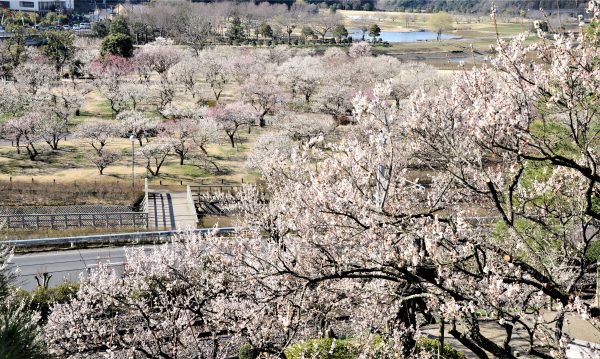
This is one of the Three Great Gardens of Japan along with Kenroku-en in Kanazawa and Koraku-en in Okayama. It was built by the 9th lord of Mito, Tokugawa Nariaki, in 1842. An area of the entire park including Kairaku-en and Senba Park is about 300 hectare and this is the 2nd largest urban park in the world after Central Park in New York City, USA.
cultural property : historic sites and places of scenic beauty as natural monuments, Tangible cultural property
type : places of scenic beauty, historic sites
1-3-3, Tokiwacho, Mito-shi, Ibaraki-ken 310-0033
Tel:029-244-5454
The 9th lord of Mito, Tokugawa Nariaki, built this park to enjoy it with the people in his domain. It is one of the Three Great Gardens of Japan. It is also known as a “plum garden” because there are about 3,000 plum trees of about 100 different varieties.
A vast grove of moso bamboos (Phyllostachys edulis) can be seen when entered from the front gate which is located in the north of the premise. Going down the slope with the large Japanese cedar (Cryptomeria japonica) grove to the right, visitors will find a spring called “Dogyoku-sen.” If they continue to go towards the overlook, they will reach the “Kobun-tei” house. They can see Lake Senba, which is in the southeast of the premise, and surrounding forests from the overlook where the “Kobun-tei” is. The garden is famous for its plum trees but visitors can also enjoy flowers and blossoms all year round as there are azaleas, bush clovers (Lespedeza), and winter cherry blossoms (Cerasus×parvifolia ‘Parvifolia’).
“Kairaku-en” was named after a segment from “The Mencius,” a Chinese classical literature. It reads “elites in ancient times enjoyed with their subjects, therefore their enjoyment was greater.”
Nishiyama-goten-ato historic sites (Seizan-so)
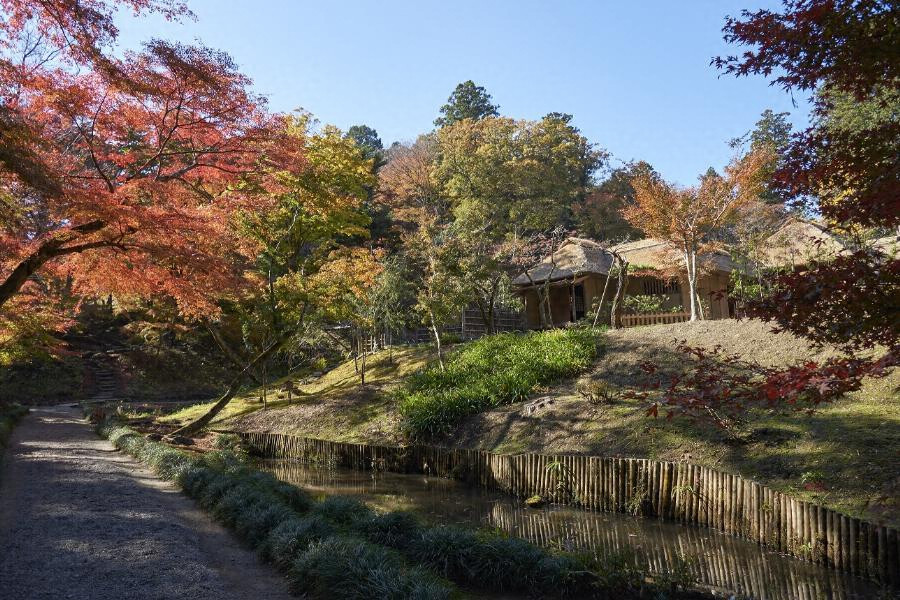
Seizan-so was created inside a residence of the retired 2nd lord of Mito, Tokugawa Mitsukuni, and it is located at the deepest part of the valley of the Genji River in the Kuji River system. It is known that many medicinal plants such as Chinese quince, plum and Veitch’s bamboo were planted according to “Nishiyama-zu” which is a drawing of the entire premise in “Togen-iji” compiled after the death of Mitsukuni.
cultural property : historic sites and places of scenic beauty as natural monuments
type : places of scenic beauty, historic sites
590 Arajukuchō, Hitachiōta-shi, Ibaraki-ken 313-0007
0294-72-1538
The 2nd lord of Mito, Tokugawa Mitsukuni, retired in 1690 and moved into this mansion. The wooden one-story house is in a Sukiya style with a thatched roof. Roof irises (Iris tectorum) are planted on the ridge of the roof. In old times, roof irises were often planted on the thatched roof because people believed that it would protect the house against the strong wind. According to “Togen-iji”, roof irises were also planted when Mitsukuni resided there.
The garden is located in the south of the mansion. There are the Byakuren-ike pond and the Guren-ike pond and they are connected with a stream. The Byakuren-ike pond is in the southwest part of the mansion and the water flows into the Guren-ike pond which is in the east. There is a remnant of a small waterfall called Ontaki and the water used to flow into the stream between the ponds. A tunnel-shape conduit made of a bored rock was created for Ontaki during the renovation in 1968 and a structure that draws water from Sakurayatsu to the top of the waterfall was confirmed, but currently no water is flowing. A Tsukiyama (artificial hill) called Kangetsuzan is created on the top part of Ontaki and it is said that Mitsukuni held banquets for the moon viewing there.
Garden of the Takanashi Family
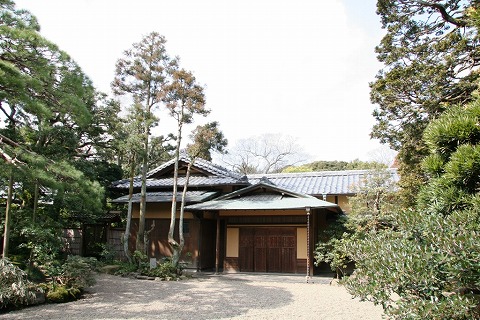
This is a residence and garden of the Takanashi Family who was a head of the village of Kamihanawa throughout the Edo Period. The mansion is considered part of the cultural property as it conveys what the house of a wealthy farmer, who created his fortune by manufacturing soy sauce in the Shimousa region, would have been in that time period. There were renovations in the beginning of the Showa Era and the garden has a unique design mixed with modern tastes. It was designated as the first National Place of Scenic Beauty in the Chiba Prefecture in 2001.
cultural property : historic sites and places of scenic beauty as natural monuments
type : places of scenic beauty
507 Kamihanawa, Noda-shi, Chiba-ken 278-0033
Tel:04-7122-2070
This garden is inside a mansion of a wealthy farmer from the Edo Period in Noda City, Chiba Prefecture. The Takanashi Family was a head of the village of Kamihanawa (current Noda City) throughout the Edo Period and involved in the soy sauce brewery from early on. They made a fortune with the manufacture of soy sauce in the second half of the Edo Period because they had a transportation advantage being close to the Edo River. This garden was created with the wealth coming from the soy sauce business.
During the Edo Period, the garden was originally centered with streams and a pond in front of a study, but the current design only uses stepping stones in a wide grass field. It is because the main building and tearoom of the garden underwent renovations from the Meiji Era to the beginning of the Showa Era and modern designs have been incorporated to the garden. However, a canal and stone walls are placed according to the original landscape based on the layout from the Edo Period, and modern designs are masterfully blended.
Kyu-Shiba-rikyu Gardens
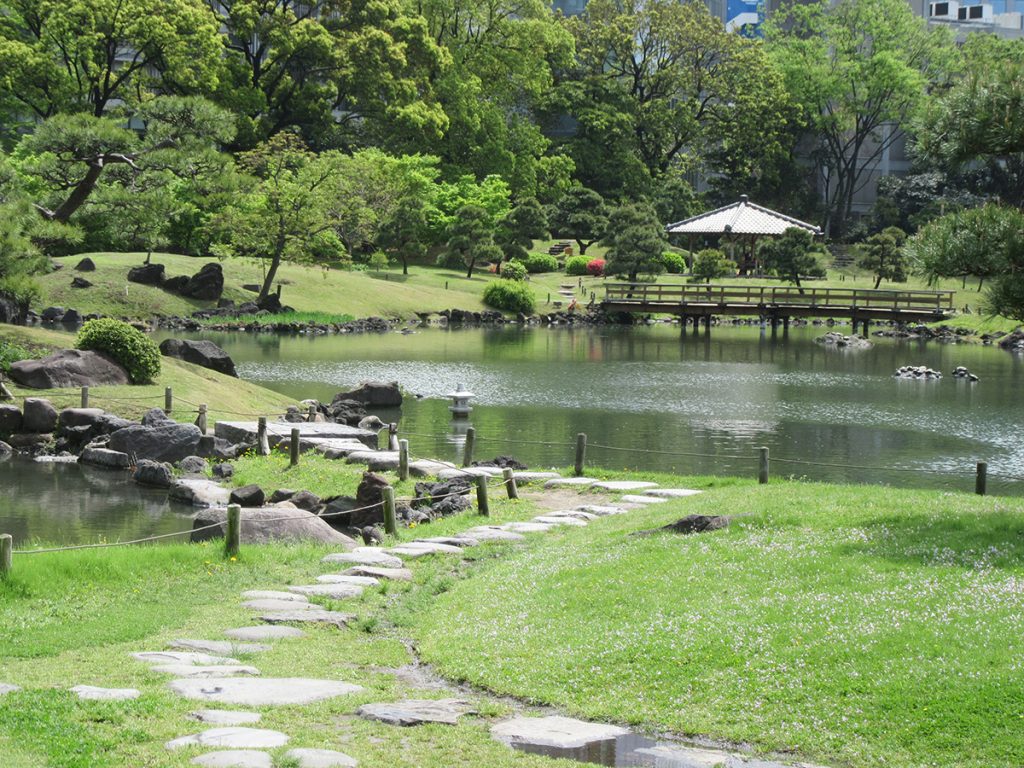
This is one of the Daimyo gardens from the early Edo Period along with Koishikawa Koraku-en. It was created when the first house in Edo for the Okubo Family, who was a lord of the Odawara Domain, was constructed during the Genroku Era. It was taken over by the Shimizu Family, then by the Kishu Tokugawa Family. The Department of the Imperial Household owned the garden in 1875 and it became Shiba Rikyu (the Imperial villa in Shiba) the following year. It was designated as a National Place of Scenic Beauty by the Cultural Properties Protection Law in 1979.
cultural property : historic sites and places of scenic beauty as natural monuments
type : places of scenic beauty
1-chōme-4-1 Kaigan, Minato-ku, Tōkyō-to 105-0022
Tel:03-3434-4029
Home page : https://www.tokyo-park.or.jp/park/kyu-shiba-rikyu/index.html
Okubo Tadatomo, a lord of Odawara and a member of the Shogun’s Council of Elders, received a reclaimed land by the ocean from the Tokugawa Shogunate in 1678. The garden was constructed along with the first house in Edo for the Odawara Domain on that land during the Genroku Era. Gardeners were summoned from Odawara to create a garden in the house and it was named “Rakuju-en.” The owners changed several times from the end of the Edo Period to the beginning of the Meiji Era. The Department of the Imperial Household owned the garden in 1875 and it became Shiba Rikyu (the Imperial villa in Shiba) the following year.
The main portion of the garden is a large pond with winding shorelines including capes and coves. There is an island in the middle of the pond and there are bridges on both the east and west sides of the island. Traditional landscaping methods are used in various ways such as stone arrangements simulating the Horai mountain on Nakajima (the central island), landscape with a Tsukiyama (artificial hill), and the ways the stones are arranged and the bridges are built.
This is one of the remarkable gardens that demonstrate the landscaping methods of Daimyo gardens from the Edo Period.
Mukojima-Hyakka-en
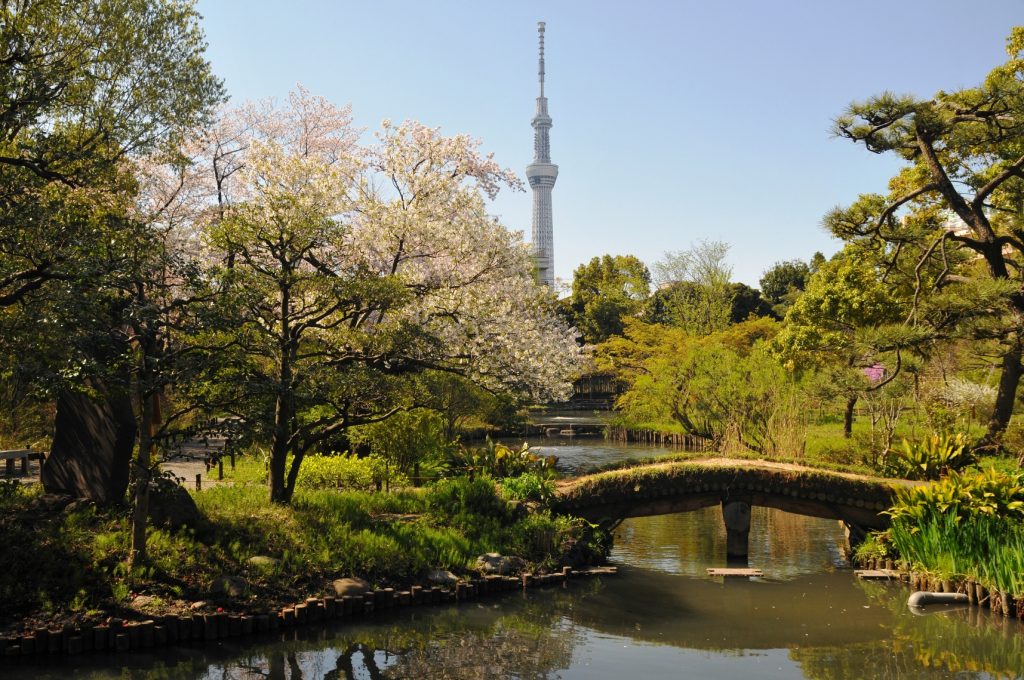
It was created in 1805 during the Bunka Bunsei Era in the Edo Period. The garden mainly constituted of plum trees when it was first opened, but later many herbaceous plants, that were noted in connection with poetries, were planted based on the ideas from the garden owners and intellectuals. This is a folksy garden different from the Daimyo gardens such as Koishikawa Koraku-en and Rikugi-en, yet it also has plenty of tasteful elements from intellectuals’ ideas.
cultural property : historic sites and places of scenic beauty as natural monuments
type : places of scenic beauty, historic sites
3-18-3 Higashimukōjima, Sumida-ku, Tōkyō-to 131-0032
Tel:03-3611-8705
Home page : https://www.tokyo-park.or.jp/park/mukojima-hyakkaen/index.html
Sawara Kiku, who was an antique dealer, created this garden in the house he purchased from a direct retainer of the Shogun in Muko-jima in the Bunka Bunsei Era, when the merchant class culture flourished. It is a privately owned flower garden which was created by common people when they became richer financially and culturally around the end of the Edo Period. It was called the “New plum mansion” because more than 300 plum trees were planted when it was first open. It was also called “Hyakka-en (a garden with a hundred flowers)” because there were always flowers and blossoms all year around. Many herbaceous plants, that were noted in connection with the Manyo-shu and poetries, were planted based on intellectuals’ ideas. The layout that includes the building, pond, paths, and more than 30 stone monuments is remarkable and it is one of a few remnants of intellectuals’ gardens from the Edo Period. The building from the Edo Period burnt down in 1945, but the landscape still has the elegance of the time and it has a different type of beauty from other remaining Daimyo gardens.
Kyu-Furukawa Gardens
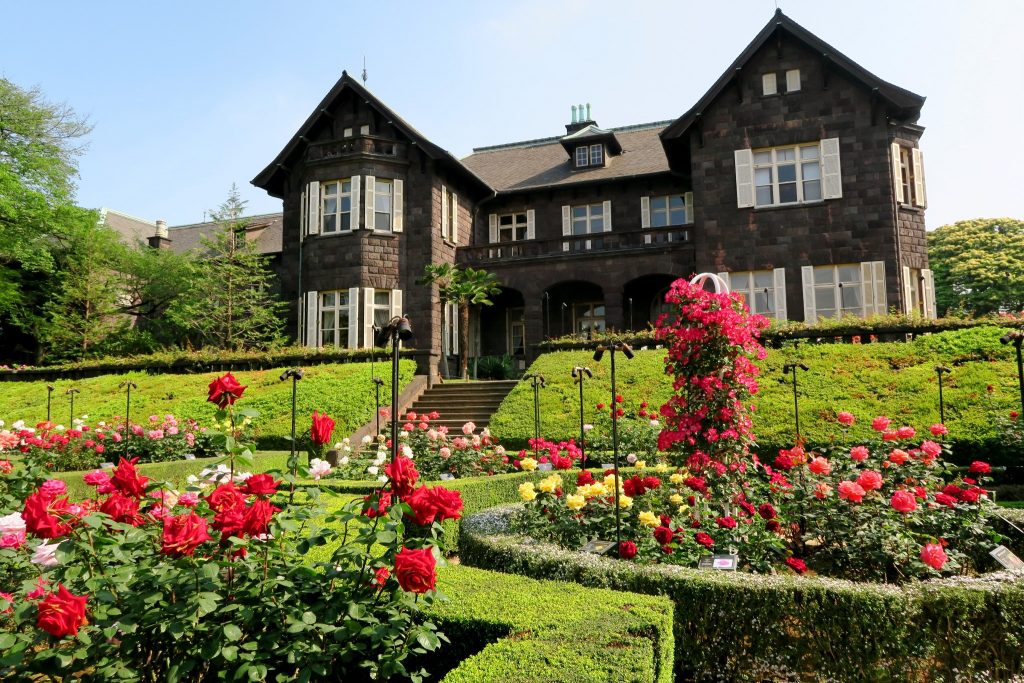
The garden uses the southeast plateau of Mt. Asuka and a slope that is part of the southern plateau. The construction started in 1917 (the Taisho Era) and it took two years to complete the stroll garden with a path on the slope at the bottom of the plateau and the lowland. It is considered to be a typical garden in modern Tokyo as it maximizes the natural geography of Tokyo such as plateau, slope and lowland.
cultural property : historic sites and places of scenic beauty as natural monuments
type : places of scenic beauty
1-27-39 Nishigahara, Kita-ku, Tōkyō-to 114-0024
Tel:03-3910-0394
Home page : https://www.tokyo-park.or.jp/park/kyu-furukawa/index.html
This is a garden created by Furukawa Toranosuke in the Taisho Era. It is located in the southeast of Mt. Asuka which is in the eastern edge of the Musashino Plateau and it skillfully uses the plateau, the slope in the south and the lowland in the garden. There is a Western-style formal garden with a European-style main building on the plateau in the north of the premises. A stroll garden is landscaped on the slope of the plateau and the lowland in the south. There are a tearoom and its tea garden in the east of the premises, thus, there are 3 elements in this garden, namely a Western garden, Japanese garden and tea garden.
The Western garden and the main building were designed by Josiah Conder and constructed in 1917. Ogawa Jihei VII (also known as Ueji) of Kyoto designed the Japanese garden. It was designed to maximize characteristic geographies of Tokyo and exhibits an amazing harmony of Japanese and Western styles by incorporating traditional methods and modern techniques. This is a valuable garden which retains original features created in the modern Tokyo.
Tonogayato Garden
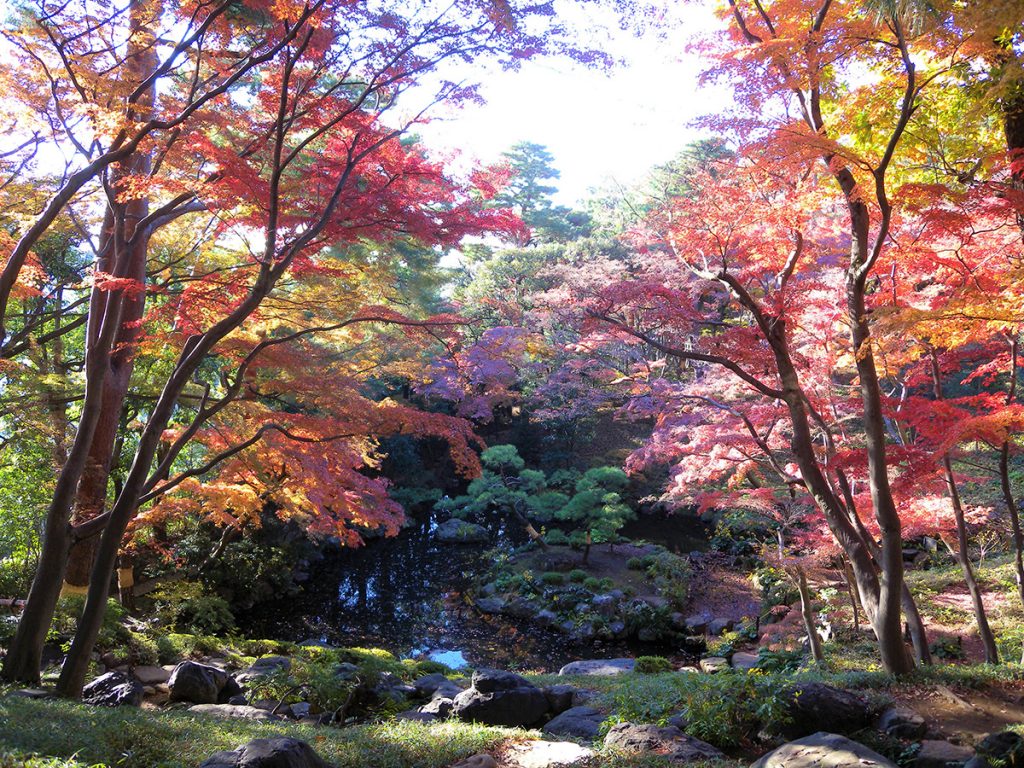
It is a stroll garden with grove and pond, and it optimizes abundant natural surroundings such as the slope in the south of the Kokubunji cliff line, a spring on the edge of the cliff line and a growth of miscellaneous trees on the slope. The “Jiro Benten” pond inside the garden is also selected as one of the Famous 57 Springs in Tokyo. It was designated as a National Place of Scenic Beauty in 2011.
cultural property : historic sites and places of scenic beauty as natural monuments
type : places of scenic beauty
2-16 Minamichō, Kokubunji-shi, Tōkyō-to 185-0021
Tel:042-324-7991
Home page : https://www.tokyo-park.or.jp/park/tonogayato/index.html
There is a terrace cliff on the southern edge of the Musashino Plateau, which runs from east to west, called “Kokubunji Gaisen.” Small valleys carve the terrace here and there and spring water seeps out from gravel around the bottom of the cliff line, which is called “Hake”. The Tonogayato garden was built in a modern villa. It uses the landform of the cliff line, the springs, and tasteful growth of miscellaneous trees such as Japanese red pines (Pinus densiflora) and sawtooth oaks (Quercus acutissima), which are native to Musashino. The premises are on the east side of the plateau which extends towards the south. It covers the area from the flat ground on top of the plateau to the area with springs in the lowland, and there is a sloping ground along the cliff in the middle with an elevation difference of more than 10 meters.
There are four areas in this garden: a Western garden with a large open grass field on top of the plateau located in the southeast of the main building and a carriage drive that connects the gate to a roundabout in front of the entrance which is in the west of the main building; forests of Japanese red pines, Japanese maples and bamboos; a sloping ground along the cliff covered with Veitch’s bamboos (Sasa veitchii); and a Japanese garden centered around the Jiro Benten pond which uses the water from the spring at the bottom of the cliff. They are all connected with paths, stone steps and Nobedan pavements, etc.
Former ASAKURA Fumio Garden
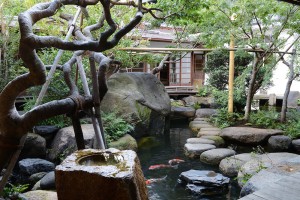
This was used as a residence and studio of ASAKURA Fumio who was a master of Japanese modern sculptures. There is a rooftop garden on the art studio building which was used for his creative work and teaching younger artists. This is a valuable example of green rooftop gardens on ferroconcrete buildings which started around the beginning of the Showa Era. The entire premises, including the buildings, received recognition as a National_designated Place of Scenic Beauty.
cultural property : historic sites and places of scenic beauty as natural monuments
type : places of scenic beauty
7-18-10 Yanaka, Taitō-ku, Tōkyō-to 110-0001
Tel:03-3821-4549
Home page : www.taitocity.net/zaidan/asakura/
ASAKURA Fumio was a master of Japanese modern sculptures and this garden is in his old residence and studio in the residential area of Yanaka, Tokyo. He lived there and used the studio for his own creative work and teaching younger artists until his death in 1964.
The current art studio and Sukiya-style residential building were constructed when the house was renovated in 1935. The courtyard is surrounded by buildings on all four sides. It is quite small (10 m long from north to south and 14 m long from east to west) and a pond (water surface) occupies most of it. Some stones are arranged in the pond and visitors can enjoy deutzia in spring and Japanese maples in fall. Various ornamental stones and plants create a profound waterscape. The rooftop garden on the art studio building is also a valuable example of green rooftop gardens on ferroconcrete buildings which started around the beginning of the Showa Era.
ASAKURA opened the ASAKURA School of Sculpture using his house and studio. The rooftop was used daily by Asakura’s students to grow vegetables and learn about gardening.
Zuisen-ji Garden
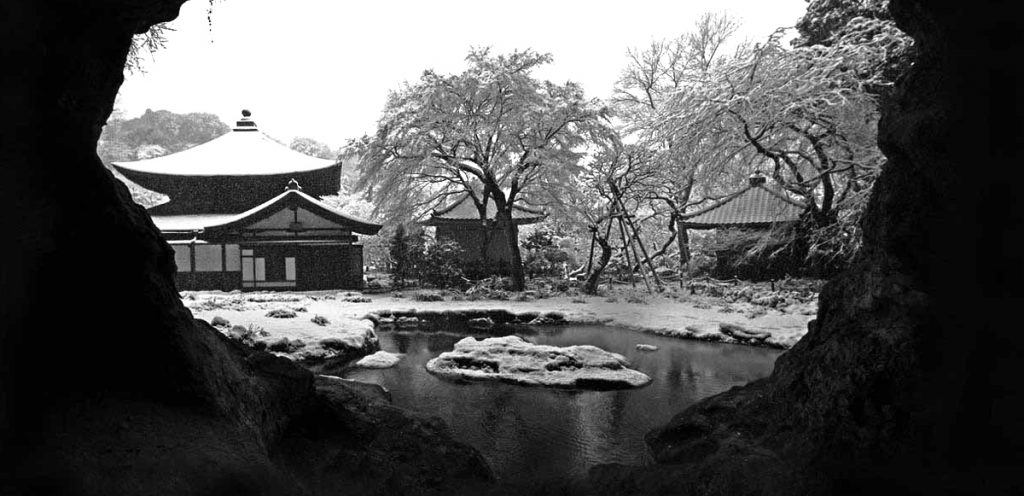
This stone garden was created when Muso Soseki started Zuisen-ji at the end of the Kamakura Period. The entire garden including the pond was buried and dilapidated, but it was excavated and recovered from 1969 to 1970. This garden has an old foundation of Muso Soseki’s early landscaping work and it is considered to be a starting point of gardens with a study. It is the only garden from the Kamakura Period in Kamakura.
cultural property : historic sites and places of scenic beauty as natural monuments
type : places of scenic beauty
710 Nikaidō, Kamakura-shi, Kanagawa-ken 248-0002
Tel:0467-22-1191
Muso Soseki created this garden when he started Zuisen-ji at the end of the Kamakura Period. A pond that can be seen from the precinct is made with bored tuff rocks and it is very unique. If visitors go up the steep slope from this pond garden, they will reach a gazebo on the top. This gazebo is called Henkai Ichiran-tei. “Henkai” means the entire world and visitors can enjoy a sweeping view of the surroundings from the top of the hill.
The entire temple was buried and dilapidated during the Edo Period, but it was excavated and recovered from 1969 to 1970. This is an early garden work by Muso Soseki who is a well-known monk and gardener. It is a very important garden as this is the only one from the Kamakura Period in Kamakura and is considered to be a starting point of gardens with a study.
Kencho-ji Garden
According to the copper monument dated 1692, the current garden was either created or renovated in the beginning of the Tokugawa Shogunate. There is a garden with a pond shaped like the character for “heart (Kokoro)” in the middle, which is located behind the abbot’s chamber, and the Daikakuike garden in Kaishun-in. The Daikakuike pond was created when the temple was built as a regulating reservoir in order to protect the precincts of the temple from flooding.
cultural property : historic sites and places of scenic beauty as natural monuments
type : places of scenic beauty, historic sites
8 Yamanouchi, Kamakura-shi, Kanagawa-ken 247-0062
Tel:0467-22-0981
This is the head temple of the Kencho-ji school of the Rinzai sect and founded by Hojo Tokiyori in 1253, the fifth year of the Kencho Era. The precincts are symmetrically arranged and Chinese junipers (Juniperus chinensis) are planted in a row in the garden in front of the Buddhist sanctum. The style of gardens with a study can be seen in drawings from 1678. According to the copper monument dated 1692 in the garden, it is presumed that it was either created or renovated in the beginning of the Edo Period. There is a hill running from the east to the north of the garden and a curved pond is at the bottom of the hill. There is a bridge to walk across to Nakajima (the central island) in the pond. Some stones are arranged on the central island here and there along with a lantern. There are dwarf conifer trees such as pines and yew plum pines (Podocarpus macrophyllus) as well as azaleas. A large Japanese black pine (Pinus thunbergii) is towering in the middle of the garden and lush Japanese zelkova (Zelkova serrata) and maple trees can be seen on top of the hill. The garden is simple yet elegant.
Engaku-ji Garden
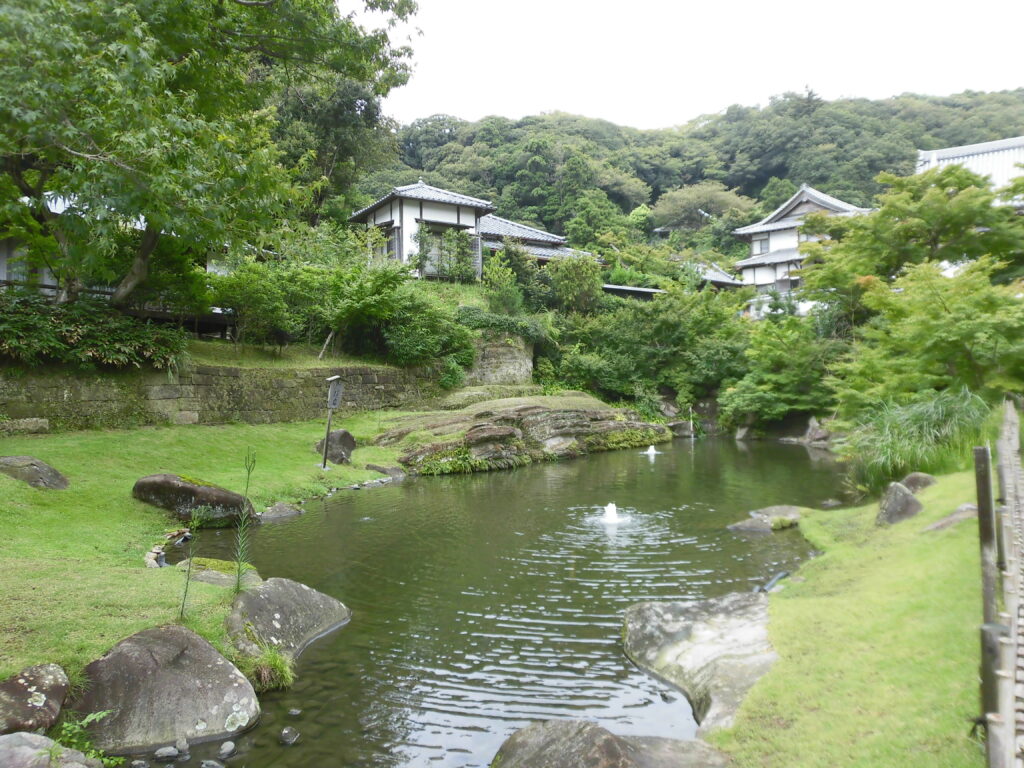
The pond called Byakurochi is on a path leading to the main gate and the natural landscape around the pond changes every season. There is also an old Chinese juniper (Juniperus chinensis) in front of the Buddhist sanctum. There is a garden near the abbot’s chamber and it is centered around a pond called Myokochi, which is shaped like the character for “heart (Kokoro).” All these places were designated as a National Place of Scenic Beauty in 1932.
cultural property : historic sites and places of scenic beauty as natural monuments
type : places of scenic beauty, historic sites
409 Yamanouchi, Kamakura-shi, Kanagawa-ken 247-0062
Tel:0467-22-0478
There is a ceremonial release pond called Myokochi at the bottom of the plateau for the reliquary hall behind the Buddhist sanctum. It is said that the garden with Hojo with a pond in the middle was created by Muso Soseki of the Rinzai sect in 1335.
The pond is made of a bored bedrock. A portion of the rock on the north edge of the pond, towards the mountain, is eroded as though waves carved it and it is called “Kotogan (Tiger head rock).”
The original landscape of the garden was lost when the Yokosuka rail line was built and a prefectural highway opened during the Meiji Era, so the plaza is no longer in a square shape but a symmetrical square pond still remains on the other side of the railway in front of the main gate. This pond is called “Byakurochi” and the stone bridge over the pond is called “Komabashi.” The stone bridge is connected to the straight path leading to the main gate. The path is surrounded by a thick forest of aged Japanese cedars (Cryptomeria japonica) which preserve the appearance of the old days.
Sankei-en
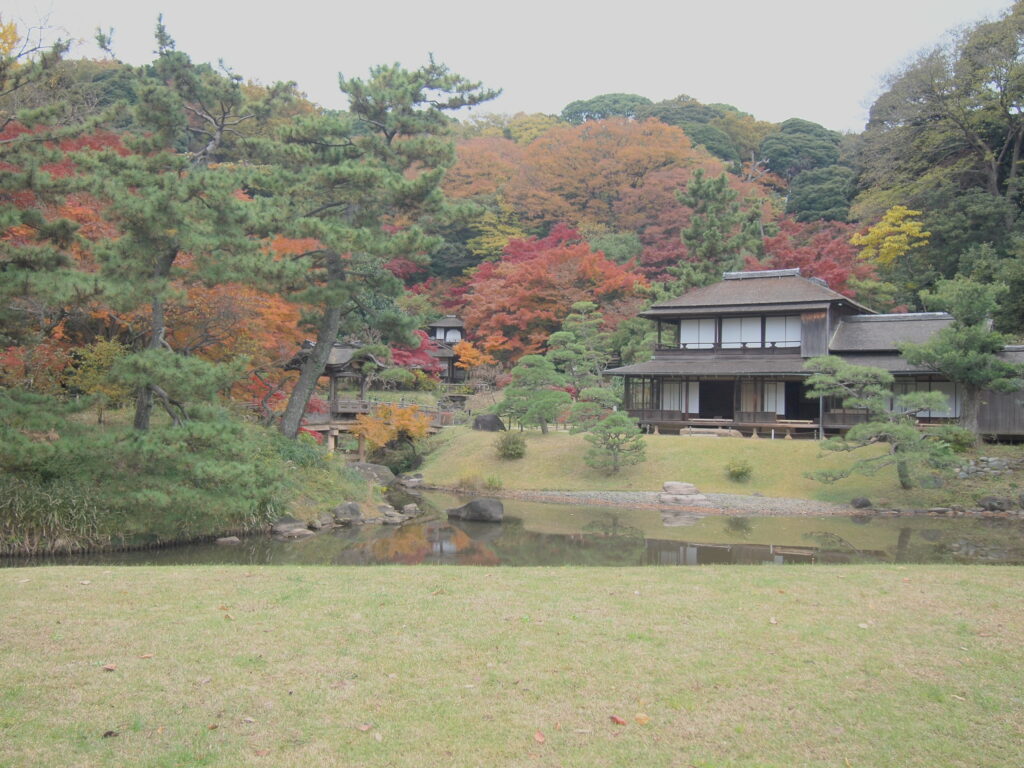
This garden was made in the valley called San’notani which faces the Tokyo Bay by Hara Sankei, Yokohama’s number-one businessman in modern times. There is an outer garden which opened to the public in 1906 and an inner garden which was used as a private garden. It is famous for an amazing harmony of historical buildings collected from Kyoto and Kamakura and the natural view from season to season.
cultural property : historic sites and places of scenic beauty as natural monuments
type : places of scenic beauty
58-1 Honmokusannotani, Naka-ku, Yokohama-shi, Kanagawa-ken 231-0824
Tel:045-621-0634
Home page : www.sankeien.or.jp
The garden was made in the area with a varied topography with hills and valleys in the southeast of Yokohama City by Hara Sankei (born Tomitaro), Yokohama’s number-one businessman in modern times. Sankei inherited the family estate in 1899 and started the construction with his own ideas shortly thereafter. In 1902, Kakusho-kaku was newly added, and Kyu Tenzui-ji Juto Oido (a protective structure for the old Tenzui-ji grave tablet) and Kangetsu-an, a tearoom, were relocated. Their gardener was sent to various gardens in the Kansai region to observe and study in 1905. The outer garden, which we can see today, was completed in the following year and opened to the public in May 1906. It was a landmark effort to open a private garden publicly at that time. The construction continued even after the opening and was finally completed in 1922 with a relocation of Choshu-kaku. It is very rare for a large garden in a big city to have the urban characteristics of the modernized city in the surrounding area mostly invisible from the garden.
Some of the most scenic spots in this garden are: a large pond, Rinshun-kaku and Choshu-kaku. On the opposite side of the large pond, there is a three-storied pagoda of former Tomyo-ji on top of the hill. There is a pond in front of Rinshun-kaku and the reflection of the building with a green hill in its background is beautiful. An exquisite contrast of Choshu-kaku and a stream bordered by lush foliage is also remarkable.
Teikan-en
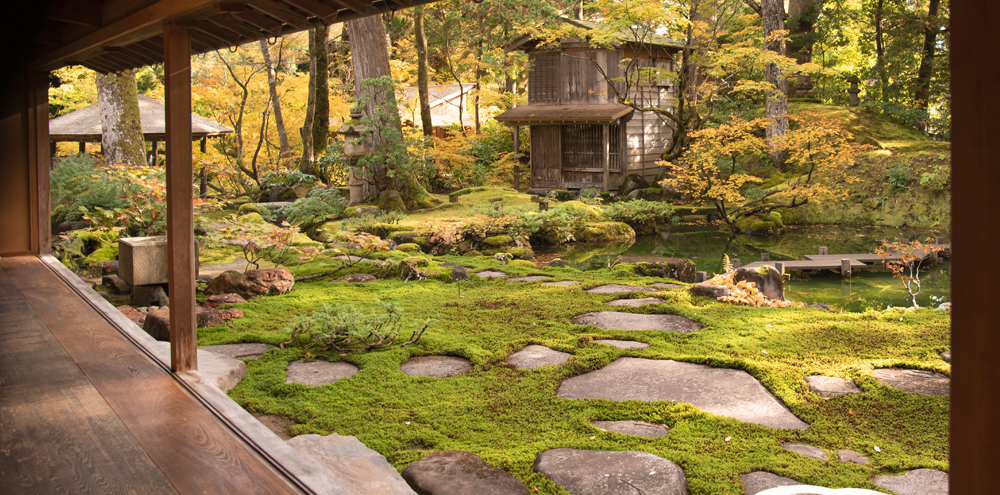
This is a garden with a grove and pond created in the mid-Edo Period. The landscaping method is from Kyoto, but local characteristics, such as an ample usage of Sado’s Akadama (red ball earth), can be seen in the garden. There are more than one hundred varieties of moss such as haircap moss (Polytrichum) and great scented liverwort (Conocephalum conicum) in the garden, and it is truly a rare moss garden only after Saiho-ji in Kyoto, which is famous for its moss garden.
cultural property : historic sites and places of scenic beauty as natural monuments
type : places of scenic beauty, historic sites
593 Takayanagichō Okanomachi, Kashiwazaki-shi, Niigata-ken 945-1502
Tel:0257-41-2100
Home page : www.teikanen.jp/
This is a garden with a grove and pond from the mid-Edo Period. This was a garden of the Murayama Family, who was a powerful village headman. Kameishi, the 8th head of the family, invited Kudan Niemon and Fujii Tomonoshin, who were the gardeners retained by the Shogunate, to work on the landscape.
In 1843, Aizawa Nanjo, a Confucian scholar from Echigo, named the garden after a segment of a poetry by Xie Lingyun, who was a poet from the Six Dynasties of China. It reads “he leaves a traditional formal court dress behind and admires beautiful scenery of hills and valleys.” It is said that Xie Lingyun was a poet who often created poetries to admire the beauty of mountains and water with delicate expressions. There is a pond with waterfalls in front of a hall called Teikan-do. There are buildings such as tearooms called Kanbaku-tei, Yotsutoki-an, Hogetsu-ro and Kansui-ken, as well as numerous garden stones around the garden. It is in a Kyoto style of gardening as the Kobori Enshu style was implemented and it was modeled after the Katsura-rikyu palace, but the garden also has a local flavor such as an ample usage of Sado’s Akadama (red ball earth). There are more than one hundred varieties of moss such as haircap moss (Polytrichum) and great scented liverwort (Conocephalum conicum) in the garden, and it is truly a rare moss garden only after Saiho-ji in Kyoto, which is famous for its moss garden.
Garden of the Watanabe Family
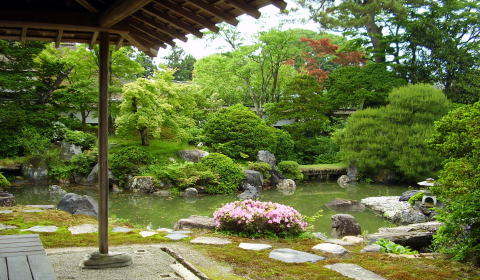
It is said that it was built around the mid-Edo Period, but an actual date is unknown. A gardener of the Enshu-ryu style was invited from Kyoto to participate in the landscaping. The landscape of the garden from the mid-Edo Period is very well preserved and there is a pond shaped like the character for “heart (Kokoro).” The garden has a beautiful arrangement of Tsukiyama (artificial hills), dry waterfall, sandy beach, and stone lanterns around the pond, as well as an enclosure of the well in the north.
cultural property : historic sites and places of scenic beauty as natural monuments
type : places of scenic beauty
904 Shimoseki, Sekikawa-mura, Iwafune-gun, Niigata-ken 959-3265
Tel:0254-64-1002
Home page : www.watanabetei.com
This was a garden in the residence of the Watanabe Family, who was a wealthy merchant, farmer and village headman in Echigo Shimonoseki. The garden is open to the east and there is a pond shaped like the character for “heart (Kokoro).” There is a writing with ink from 1769 on a ridge pole in the South Garden, thus it is presumed that the garden was made around that time. There are three Tsukiyama (artificial hills) in the west of the pond, named Ichinoyama (First Hill), Ninoyama (Second Hill) and Sannoyama (Third Hill). There is a stone of Fudo on Ichinoyama and it represents a dry waterfall. On the opposite side of the pond, in the east, there is a beach of round stones with numerous garden stones. Many stepping stones as well as some plants, that are liken to a crane and turtle, are also arranged. Visitors can enjoy views from season to season; white plum blossoms in spring, Japanese irises (Iris laevigata) in summer, Japanese maple in fall and a snowscape in winter.
The garden’s layout is the so-called Kyoto style as a stone lantern and enclosure of the well are tastefully arranged to add elegance to the garden.
The landscape of the garden from the mid-Edo Period is very well preserved and it is considered to be very important in the history of Japanese gardens as this is an example of the culture spreading from a large city to the countryside.
Kyu Shibata-han villa of the Mizoguchi Family(Shimizudani Palace)Daimyo garden
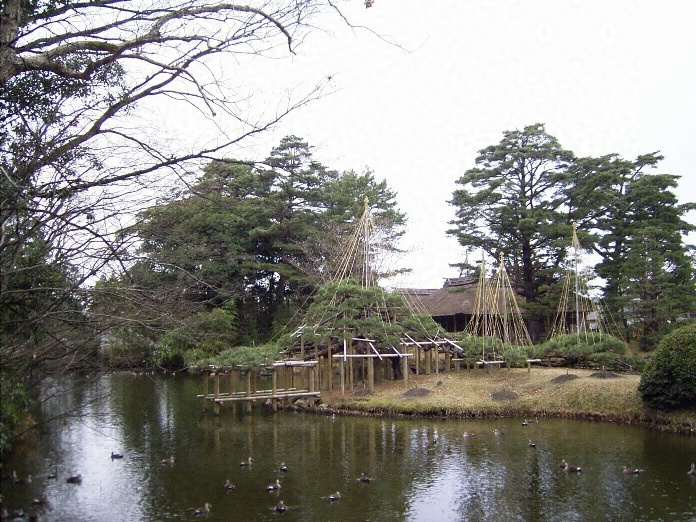
This is a Daimyo garden that represents Echigo (Niigata). It was built in the Genroku Era (1688-1704), as part of the Shimizudani Palace, a villa of the Mizoguchi Family. The villa itself was built in 1658 in the early Edo Period. Shimizudani Garden and nearby Ijimino-ochaya well preserve uniquely different gardens. They are valuable in the sense that they were built under the instructions of a leader of Buke Sado (the art of the tea ceremony of samurai families), who visited the sites frequently.
cultural property : historic sites and places of scenic beauty as natural monuments
type : places of scenic beauty
7-9-32 Daieichō, Shibata-shi, Niigata-ken 957-0056
0254-22-2659
his garden was built at a villa of the Mizoguchi Family, who controlled the Kanbara Plain. The construction started in 1598, and the garden continued to evolve well into the Edo Period.
After building the Shimizudani Palace, the family invited Agata Sochi, a tea ceremony master of the Shogunate, to receive instructions for garden design, and completed Shimizudani and Ijimino Gardens as well as a garden at Hokke-ji during the Genroku Era (1688-1704). Shimizudani Garden is a stroll garden with a large pond at the center. A Tsukiyama (artificial hill) is located at the southern-most point of the garden, and the pond meanders at both sides to broaden the water surface. There are Suhama (a sandy beach) to the left and a stone arrangement representing a steep cape to the right at the pond shore. Large and small Nakajima (central islands) are placed in the pond, where an arbor is built in such a way that part of the structure overcasts the water surface. The pond is narrower in the middle, which has the effect of broadening the front and back portions of the water surface. This is a good example of the layout of a Daimyo garden from the past.
Ijimino-ochaya is a villa of the lord, where he and his group made preparations for the alternate attendance in Edo. It was also open to senior statesmen as an amusement facility, such as a tea room. The garden places its focus on viewing plants, such as Japanese cedars (Cryptomeria japonica) and pines around the pond and on a gently-sloped Tsukiyama (artificial hill), Japanese white pines (Pinus parviflora) on Dejima (peninsula), and plum trees near the tea house. The garden is designed spaciously by placing only a few stone arrangements.
Seison-kaku Garden
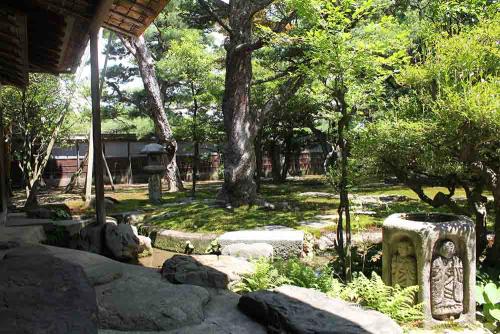
It was built at the south of Kenroku-en as the main garden of Tatsumi Palace in 1863 (the Bunkyu Era of the Edo Period). From the end of the Shogunate throughout the Meiji and Taisho Eras to the Showa Era, the garden continued to be improved by adding a Tsukiyama (artificial hill) and rebuilding the waterway. It is a flat garden that has outstanding harmony with a clean stream.
cultural property : historic sites and places of scenic beauty as natural monuments
type : places of scenic beauty
1-2 Kenrokumachi, Kanazawa-shi, Ishikawa-ken 920-0936
Tel:076-221-0580
Home page : www.seisonkaku.com
Seison-kaku Garden is adjacent to the south of Kenroku-en, a Special Place of Scenic Beauty. It originated in Tatsumi Palace and its main garden was built as a retirement villa for Shinryuin, mother of the 13th lord of the Kaga Domain, Maeda Nariyasu in 1863.
The main garden Hikaku-tei is a serene flat garden with a stream, facing Seika-ken with a study, a tea room and Mizuya (a washing place for a tea ceremony).
Tatsumi Palace was renamed to Seison-kaku in 1874. Around this time, water was drawn from the main garden to create a stream flowing through a courtyard facing the veranda of the “Corridor of Omoto (Japanese sacred lily),” and a Tsukiyama (artificial hill) was placed to create a serene landscape.
In 1909 (the Meiji Era), when Togu (Taisho Emperor) visited the Hokuriku area, a main gate, a carriage driveway, and an entrance were added to the front garden. Also, in the courtyard facing the veranda of the “Tsukushi-no Corridor,” the existing Noh stage was removed and the waterway from the main garden was changed from a straight line to a curve to create a simple landscape.
It is said that the current Seison-kaku layout consisting of the main garden, courtyard, and front yard was completed in 1949. It is a flat garden that has evolved over time to create outstanding harmony with a clean stream.
Kuri at Natadera temple Garden
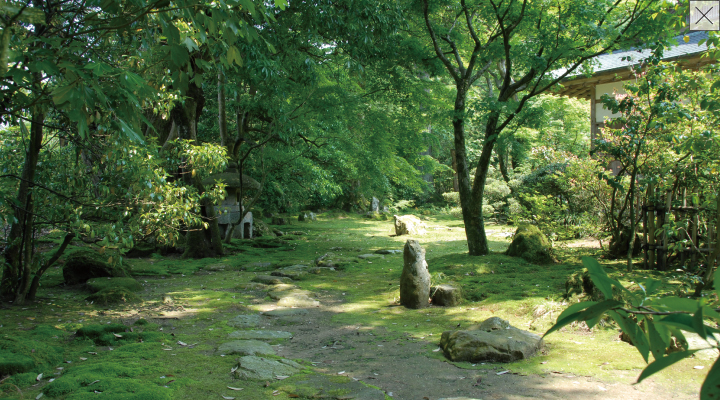
The garden was built at the same time as the construction of Kuri (living quarters of monks) at Natadera temple in 1635. Stepping stones are arranged from Nyoze-an (tea room) at the west side to a small pond at the east side, and rocks are placed at intervals. The garden also has old trees such as a large chinquapin (Castanopsis sieboldii) in the northern corner and tall Japanese cedars (Cryptomeria japonica) on the opposite side of the east pond. This is a garden with absolutely serene scenery.
cultural property : historic sites and places of scenic beauty as natural monuments
type : places of scenic beauty
122 Natamachi yu, Komatsu-shi, Ishikawa-ken 923-0336
Tel:0761-65-2111
Home page : www.natadera.com/spot/#shointeien
Natadera is a well-known temple of the Shingon sect that is said to have been founded when Taicho Daishi placed a Thousand-armed Kan’non in a stone cave. The temple fell into ruin due to fires during the Azuchi and Momoyama Period, but it was reconstructed by the 3rd lord of the Kaga Domain, Maeda Toshitsune, in Kan’ei 1836. The garden and Kuri (living quarters of monks) were constructed at the same time. It is told that they received instructions from Kobori Enshu and a Commissioner of Garden Design, 別部ト斉, took charge of building the garden.
The main section is located in the north, behind the study and the main temple. Stepping stones are arranged to connect a tea room Nyoze-an in the northwest corner with the east garden along with a pond via the back of the study. Rocks are placed at intervals along the path. At the northeast of the garden and at the corner of the study, triad stones are arranged to create the main scenery of the garden.
Old trees densely grow in the garden, including a large chinquapin (Castanopsis sieboldii) at the north corner and tall Japanese cedars (Cryptomeria japonica) on the opposite side of the east pond. When a poet Matsuo Basho visited Natadera during his trip to Komatsu, he created a famous poem, “Autumn wind, whiter than white stones of the stone mountain.
Garden of the Ito Family
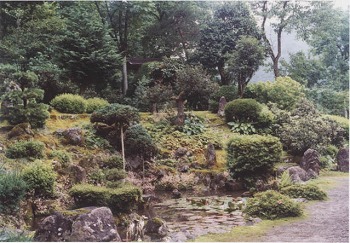
This garden was built by Ito Sukezaemon, doctor and head of the Ito Family who were the village headmen over multiple generations. The garden was designed based on a garden picture book that became popular during the Kyoho Era of the Edo Period. Since it well preserves the original state, it is an important piece not only for its esthetic value but also as historical material concerning gardens.
cultural property : historic sites and places of scenic beauty as natural monuments
type : places of scenic beauty
29−2 Seto, Minamiechizen-cho, Nanjo- gun, Fukui-ken 919-0113
Home page : www.town.minamiechizen.lg.jp/kurasi/103/128/p001179.html
This garden was designed based on a garden design book “Tsukiyama-niwatsukuri-den,” which was compiled and became popular from the mid- to late Edo Period. It was built by Ito Sukezaemon, doctor and the 10th head of the Ito Family who were the village headmen over multiple generations.
The garden features the principal stone on the front Tsukiyama (artificial hill), a lotus stone in the front, a mountain slope stone to the right, and a stone of Fudo to the left. A Dejima (peninsula), Nakajima (central island), Funaishi (boat stone) and a stone bridge are placed in the garden pond at the foot of the Tsukiyama.The pond shore along the building has a worshipping stone in the middle and two deity stones on both ends. This is a Tsukiyama garden with a grove and a pond that is meant to be viewed while sitting in the building. An enormous Japanese yew (Taxus cuspidata) grows at the east side of the garden, and maples, rhododendrons, and sasanquas are planted throughout.
The garden is believed to have preserved the original state, and visitors can see the authentic design of a traditional Japanese garden as it faithfully followed the instructions of the garden design book at the time.
Jofuku-ji Garden
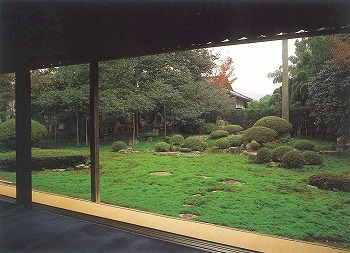
The garden was built at Kuri (living quarters of monks) of Jofuku-ji, a temple of the Izumoji school of the Shin sect, in the mid-Edo Period. It is a Karesansui garden at the south of the temple and uses the view of Mt. Fumuro and other Hino mountains as borrowed scenery over the front hedge. The garden is an excellent example of landscape techniques during the mid-Edo Period.
cultural property : historic sites and places of scenic beauty as natural monuments
type : places of scenic beauty
11-26 Gobuichichō, Echizen-shi, Fukui-ken 915-0026
Tel:0778-27-1773
This is a garden built for Kuri (living quarters of monks) at Jofuku-ji, a temple of the Izumoji school (the Shin sect), in the mid-Edo Period. It is told that Jofuku-ji and its precinct were relocated to the current location in 1624.
The garden is located at the south of the Kuri. It is a Karesansui (dry landscape) garden with borrowed scenery of the Hino mountains, such as Mt. Fumuro, which can be enjoyed over the front hedge. The garden well preserves landscape techniques of the mid-Edo Period.
A low Tsukiyama (artificial hill) is placed at the south of the study, and the principal stone is installed at the center of the Tsukiyama. The foot of the Tsukiyama has flat stone arrangements representing the pond shore, and Tateishi (standing stones) are placed as deity stones on both ends.
The area in the front is flat and covered with moss. The worshipping stone is located at the center, and a turtle island, a crane island, and a boat island are arranged in the area.
The Tsukiyama has a large tree of false holly (Osmanthus heterophyllus) on top.
There are not many materials that indicate when the garden was built, but it is a good example of a flat Karesansui garden created in the mid-Edo Period.
Garden of the Umeda Family
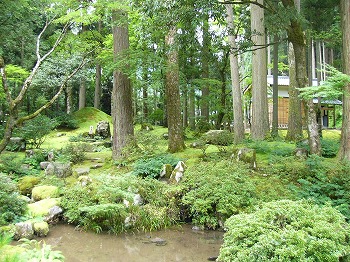
This is a garden with a grove and a pond at the residence of the Umeda Family, a local ruling family who were the powerful village headmen of Ikeda-go. The garden features old growth of Japanese cedars (Cryptomeria japonica), Japanese red pines (Pinus densiflora), and Japanese firs (Abies firma) with Mt. Takao and Mt. Atago as borrowed scenery, creating a serene landscape. The garden preserves the characteristic features of the late Muromachi Period, and is important for understanding the diffusion of garden culture in this region.
cultural property : historic sites and places of scenic beauty as natural monuments
type : places of scenic beauty
33-8-1 Taniguchi, Ikeda-machi, Imadate District, Fukui-ken 910-2503
Tel:0778-44-6106
Home page : https://umeda-teien.jp
This is a garden with a grove and a pond at the residence of the Umeda Family, a local ruling family who were the powerful village headmen of Ikeda-go. The garden features a curved pond in the front, and water-crossing stones and a natural stone bridge are placed in the middle of the pond. A waterway is drawn from the far right, which is then divided into two streams to form waterfalls on both sides of Nakajima (a central island). A large boulder is placed at the front left as the center of the scenery, and stones are arranged at key points around the boulder. The streams and the pond have edges protected by stone arrangements. Large stepping stones are placed between the building and the pond at wide intervals.
There is a high mountain to the right, and the far-left section of the garden has old growth of Japanese cedars (Cryptomeria japonica), Japanese red pines (Pinus densiflora), and Japanese firs (Abies firma) with Mt. Takao and Mt. Atago as borrowed scenery. Many parts of the garden are covered with moss, creating a mystic landscape. The garden preserves the characteristic features of the late Muromachi Period, and is important for understanding the diffusion of garden culture in this region.
Takidan-ji Garden
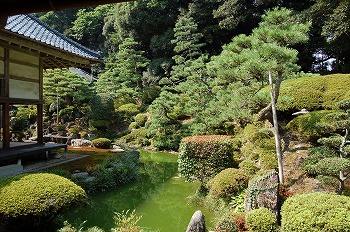
This garden belongs to a temple of the Chizan school (the Shingon sect) built in 1375 during the Eiwa Era of the period of the Northern and Southern Dynasties. The garden itself was believed to have been made between the Keicho Era and the mid-Edo Period. It is built on a hillside, and each of its four sides is designed to serve as a front.
cultural property : historic sites and places of scenic beauty as natural monuments
type : places of scenic beauty
1-7-15 Mikunichō Takidani, Sakai-shi, Fukui-ken 913-0054
Tel:0776-82-0216
Takidan-ji is a temple of the Chizan school (the Shingon sect) founded in 1375 during the period of the Northern and Southern Dynasties. The garden stretches from the main temple to the study, and is a Sansui (mountain-and-water) garden that utilizes the south hillside at the north of the main temple.
This garden is unique in a way that all sides are designed to be the front. A pond was made by curbing an exposed rock at the foot of the slope in the front of the building. Viewing the pond from the building, visitors can see large chinquapins (Castanopsis sieboldii), Japanese firs (Abies firma), and Japanese umbrella trees (Sciadopitys verticillata) in the back as well as old pines scattering on the front slope. Azaleas that are trimmed low are planted among the pines. There are also rocks with lanterns on top.
Takidan-ji has old buildings such as Chinju-do (a hall of Tutelary Deities of Land). Literature related to the temple and a number of cultural properties including a Buddhist sound instrument (金銅毛彫宝相華唐草文磬; National Treasure) and statues of Buddha are displayed in the repository.
Seifuku-ji Shoin Garden
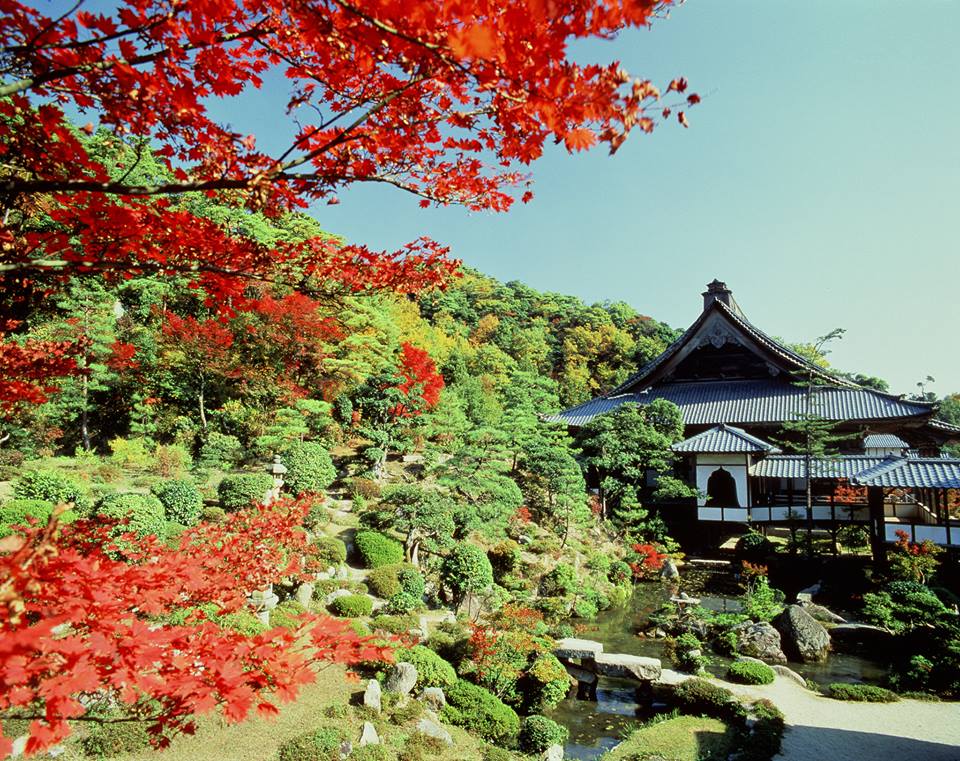
This is a garden at Seifuku-ji, a temple said to have been founded by Ryonyo Shonin of the Chinzei school of the Jodo sect. Although the date of its creation is not known, it is believed that the garden was built around 1747 (the Enkyo Era of the Edo Period) when its closely-related Amida Hall was reconstructed. It is told that this Shoin-style garden (garden that belongs to a traditional Japanese residential architecture with a study) represents the Pure Land of Bliss. The garden is famous for its beautiful fall colors.
cultural property : historic sites and places of scenic beauty as natural monuments
type : places of scenic beauty
13−7 Hara, Tsuruga-shi, Fukui-ken 914-0824
Tel:0770-22-3926
Home page:http://www.saifukuji.jp/
This is a garden at Seifuku-ji, a temple said to have been founded by Ryonyo Shonin of the Chinzei school of the Jodo sect. There is a basin in the mid-section of the mountain behind the garden, where large boulders of granite are clustered and a pine forest as well as a mixed forest with pines densely grow in the northwest and the northeast respectively. Low shrubs such as azaleas and other trees such as chinquapins (Castanopsis sieboldii) and Chinese bayberries (Morella rubra) are planted in the basin.
The garden uses the form of the mountain as its background and there is a pond at the foot of the mountain. The pond has an elongated shape and is located along the Amida Hall. There are three Nakajima (central islands) and stone bridges in the pond. In the northwest section of the pond, there are two large natural boulders instead of a waterfall stone arrangement. Water goes through a conduit placed on a wall made by piling up stones on top of the two natural stones. There is no Mizuwake-ishi (water-dividing stone). Water drains from the northeastern corner.
Although the date of its creation is not known, it is believed that the garden was built around 1747 when its closely-related Amida Hall was reconstructed. It is told that this Shoin-style garden (garden that belongs to a traditional Japanese residential architecture with a study) represents the Pure Land of Bliss. The garden is famous for its beautiful fall colors.
Kyu Gensei-in Garden
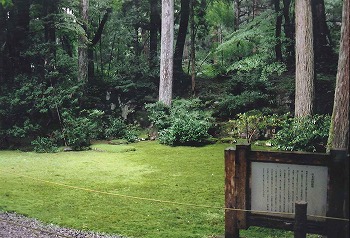
The garden is believed to have been built by Governor Hosokawa Musahi-no-kami Takakuni in 1531 (the Kyoroku Era of the Muromachi Period). This is a garden of Gensei-in, a sub-temple of the former Heisen-ji of the Tendai sect, and the oldest existing garden in the Hokuriku region. More than 200 species of moss grow throughout the garden, creating a mystic landscape.
cultural property : historic sites and places of scenic beauty as natural monuments
type : places of scenic beauty
56-63 Heisenji Heisenjicho, Katsuyama-shi, Fukui-ken 911-0822
Tel:0779-88-1591
This is a garden of Gensei-in, a sub-temple of former Heisen-ji of the Tendai sect, and it is believed that the garden was built by Governor Hosokawa Musashi-no-kami Takakuni in 1531 in the Muromachi Period. It is a stroll Karesansui (dry landscape) garden located at the east of the building. There is a Tsukiyama (artificial hill) on the front upper level, and a dry pond is placed in front of the Tsukiyama. The principal stone is set on the highest point of the Tsukiyama. Stones are arranged in a spiral with the principal stone at the center to represent a waterfall. There is a stone arrangement to the far left of the pond, which also represents a waterfall. In the dry pond, a crane island and a turtle island are placed, and a stone bridge is installed near the turtle island. More than 200 species of moss carpet the entire garden, creating a mystic landscape. Behind the garden, old trees of Japanese cedar (Cryptomeria japonica), Japanese fir (Abies firma), and maple grow densely. The slope halfway up the hill is dotted with young cedars, among which stand azaleas and a few stone lanterns. Altogether, they give the garden a quiet and elegant appearance.
Eiho-ji Garden
This is a garden with a pond as its main feature that covers the south side of Kan’non-do (a hall dedicated to the Goddess of Mercy) at Eiho-ji, located in Kokeizan-cho, Tajimi City. The garden is an excellent example of the style of Muso Soseki, the most representative gardener in the garden culture history of the Middle Ages in Japan. Views from any spot along the pond edge are outstanding. The garden is typical of the Zen-temple style of the Muromachi Period.
cultural property : historic sites and places of scenic beauty as natural monuments
type : places of scenic beauty
1-40 Kokeizanchō, Tajimi-shi, Gifu-ken 507-0014
Tel:0572-22-0351
This is a garden with a pond as its main feature that covers the south side of Kan’non-do (a hall dedicated to the Goddess of Mercy) at Eiho-ji, located in Kokeizan-cho, Tajimi City. After Muso Soseki founded the temple in 1314, the temple ground was improved and the garden was created as the temple added the Kan’non-do.
On the west of Kan’non-do, which is the main building of the temple, water falls from a rocky mountain “Bon’ongan” down its wall, to the pond built directly beneath the waterfall. There are two islands in the pond.
Musai-kyo, is a rainbow-shaped bridge that crosses the pond to Kan’non-do, ending directly in front of Kannon-do. The temple ground is flanked by Mt. Nagase’s hilly landscapes from north to west. From south to east, it is adjacent to the west bank of the winding flow of the Toki River. The garden creates outstanding scenery utilizing such natural landforms. The garden is an excellent example of the style of Muso Soseki, the most representative gardener in garden culture history of the Middle Ages in Japan. Views from any spot along the pond edge are outstanding. The garden is an example of the Zen-temple style of the Muromachi Period.
Saioku-ji Garden
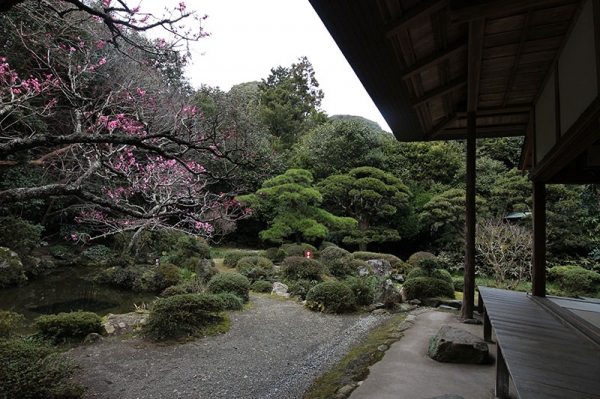
Saioku-ji was originally built as a thatched hut by Socho, a renga (linked poems) poet who worked for the Imagawa Family. Its garden was made by Socho himself. The garden was designated as a National Place of Scenic Beauty and Historic Site in 1936. In 1956, the areas around the waterfall and the front gate were added to the designation in order to protect the forests behind the temple as well as Mt. Tenchu, which is essential to the borrowed scenery.
cultural property : historic sites and places of scenic beauty as natural monuments
type : places of scenic beauty, historic sites
3316 Mariko, Suruga-ku, Shizuoka-shi, Shizuoka-ken 421-0103
Tel:054-259-3686
It is believed that renga poet, Socho, who worked for the Imagawa Family, built a thatched hut Saioku-ken in his later years, which Imagawa Ujichika renovated to a temple, Saioku-ji. It is also called Togeppo Saioku-ji. The garden was made by Socho, which is written about in his notes. West of the main temple building lies flat land where a small pond is situated and filled with fresh water springing from the north-eastern side.
A variety of trees are planted, and various Tateishi (vertical stones) are arranged along the edge of the pond. The garden utilizes Mt. Tenchu in the west as borrowed scenery.
The garden also has a moon-viewing stone, which is said to be a stone Socho would sit on to enjoy the moon. Behind the moon-viewing stone are the tombs of Socho and his teacher, Sogi, side by side. The garden had been designated as a Historic Site/Place of Scenic Beauty in 1936, but in order to protect the bamboo forest behind the temple and Mt. Tenchu—which is essential for the borrowed scenery—from changes of the environment surrounding Togeppo, the areas around the waterfall and the front gate were added to the designation in 1956.
Ryotan-ji Garden
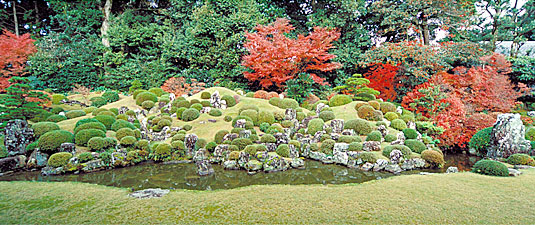
The garden is located north of the main hall of Ryotan-ji, a famous temple believed to have been founded by Gyoki. The garden was built by Kobori Enshu in the early Edo Period, and is considered to be an exemplary temple garden. Made of locally found chert, a number of its rock arrangements and a Tsukiyama, together represent a crane and a turtle.
cultural property : historic sites and places of scenic beauty as natural monuments
type : places of scenic beauty
1989 Inasachō Iinoya, Kita-ku, Hamamatsu-shi, Shizuoka-ken 431-2212
Tel:053-542-0480
Home page : www.ryotanji.com
The garden is located north of the main building of Ryotan-ji, which is believed to have been founded by Gyoki in the Nara Period. Its garden is an exemplary piece built by Kobori Enshu in the early Edo Period.
When viewed from the front, the garden has a pond in the center that is shaped like the Chinese character representing “heart” (Shinji-ike). The other side of the pond edge is a gently undulating Tsukiyama. On the Tsukiyama, various stone arrangements of locally found chert form a crane and a turtle. A guardian stone is installed halfway up, in the middle of the Tsukiyama. Nio-seki, two Tateishi (vertical stones) representing the Nio guardians, are situated on both sides of the pond. The front edge of the pond features a flat worshiping stone that faces the guardian stone across the pond. A number of dwarf azaleas are planted between the stone arrangements, and together with trees throughout the garden, create elegant and tasteful scenes that change over the seasons. Ryotan-ji also has a Karesansui (dry landscape) garden south of the main building. This garden depicts the Hamana Lake and represents Kan’non’s paradise, known as “Fudaraku.”
Rinzai-ji Garden
Rinzai-ji is a Zen temple of the Myoshin-ji group, Rinzai sect, and a family temple for the Imagawas. The garden is believed to have been created when Tokugawa Ieyasu rebuilt the main temple buildings during the Tensho Era. This stroll garden with a central pond consists of three levels by utilizing the slope of Mt. Shizuhata. The temple buildings and the garden are not open to the public except on two days per year, one in spring and another in fall.
cultural property : historic sites and places of scenic beauty as natural monuments
type : places of scenic beauty
7-1 Ōiwachō, Aoi-ku, Shizuoka-shi, Shizuoka-ken 420-0885
Tel:054-245-2740
Rinzai-ji is a guardian temple of Imagawa Ujiteru, a brother of Imagawa Yoshimoto. It is a Zen temple of the Myoshin-ji group of the Rinzai sect, and was founded when Yoshimoto’s senior strategist, Taigen Sessai invited Daikyu Zenji. It is believed that the garden was built when Tokugawa Ieyasu rebuilt the main temple buildings during the Tensho Period. This stroll garden with a central pond consists of three levels by utilizing the slope of Mt. Shizuhata behind the temple.
It is built by using a foothill slope of Mt. Shizuhata, which is used as borrowed scenery, north of the temple building. Water falls from the top of the cliff to recreate a valley and flows into the pond in front of the main study on the east side, which is elevated by one level. Water spilling from the eastern pond creates a waterfall flowing into the western pond.
Garden plantings consist mainly of Japanese red pines (Pinus densiflora), yews (Podocarpus macrophyllus var. maki), Japanese white pines (Pinus parviflora), and sago palms (Cycas revoluta). Between the main trees, Selaginella tarariscina plants are found in clusters, in addition to low-height dwarf azaleas (Rhododendron indicum). The temple buildings and the garden are not open to the public except on two days a year, one in spring and another in fall.
Nagoya castle Ninomaru Garden
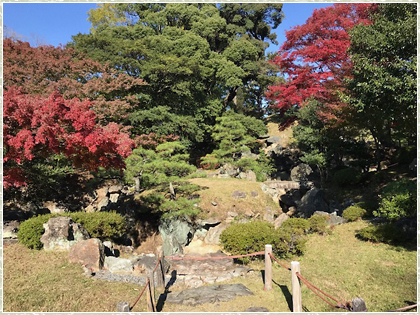
The garden was constructed at the north side of the Ninomaru Palace of the Nagoya Castle in early 17th century, sometime after the castle was built. Although the garden was re-worked during the Edo Period and Meiji Era, it is considered valuable as a castle garden with its Tsukiyama, large garden stones, and a waterfall arrangement using blue-green stones from the Edo Period.
cultural property : historic sites and places of scenic beauty as natural monuments
type : places of scenic beauty
1 Ninomaru, Naka-ku, Nagoya-shi, Aichi-ken 460-0032
Tel:052-231-1700
Home page : www.nagoyajo.city.nagoya.jp
The garden is located in Ninomaru, inside the Nagoya castle. It was significantly changed twice after its initial construction. The garden was first created during the construction of the Ninomaru Palace. It adopted Confucian philosophies which the first lord of the Owari Domain, Yoshinao, was inclined to. The image depicting the garden at the beginning of the Edo Period shows large stones and sparsely arranged Chinese-style buildings.
During the Bunsei Era (1818-1830), the tenth lord Saicho, who acceded to the Owari Domain from the Hitotsubashi Family, changed and expanded the garden into an authentic Japanese-style stroll garden with a central pond, a tea room, and a Tsukiyama. During the Meiji Era, the Japanese Imperial Army took over the site and the Edo-Period building and the garden were removed. However, the north-western section, which was the main feature of the garden, survived and a new front garden was built on its south side.
In 1953, the north-western section and front garden were designated as Places of Scenic Beauty. The excavation and literature research later found that the original garden site was preserved underground in good condition. Almost the entirety of the garden was additionally designated a Place of Scenic Beauty in 2018.
The Edo-Period features such as a Tsukiyama, large garden stones, and a waterfall arrangement using blue-green stones remain today. This is Japan’s largest of the gardens built at lords’ palaces.
Kyu Garden of Mr. Moroto
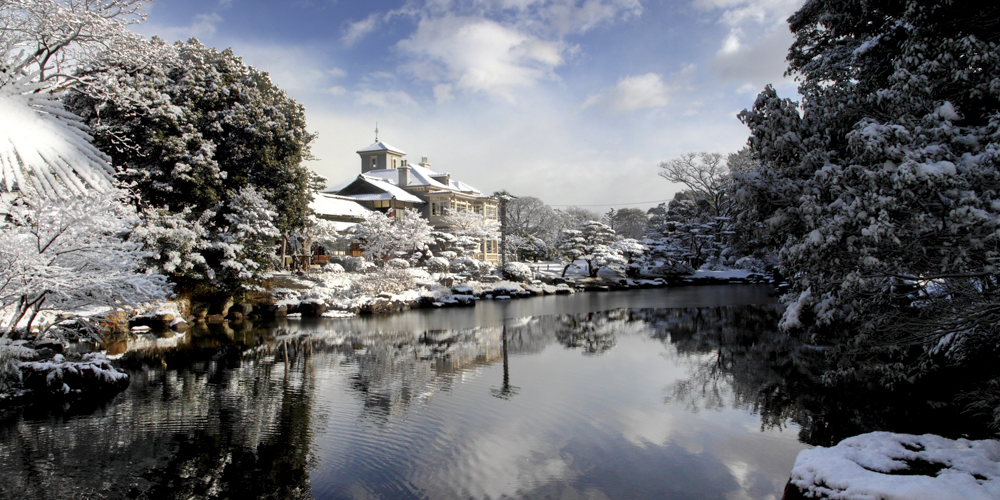
The site was completed in Karoto Shinden (currently Kisosaki-cho, Kuwana-gun, Mie Prefecture) in 1914 as a residence of the second Moroto Seiroku, who acceded to his family position as the village headman. The area spreads from east to west with a lawn, a garden pond, and a Tsukiyama that give depth to the garden, emphasizing its open space. The site holds extremely important academic value as a garden built by a wealty rural merchant in Japan’s modern times.
cultural property : historic sites and places of scenic beauty as natural monuments
type : places of scenic beauty
663−5 Kuwana, Kuwana-shi, Mie-ken511-0009
Tel:0594-24-4466
Home page : www.intsurf.ne.jp/~rokkam/
The site was completed in Karoto Shinden (currently Kisosaki-cho, Kuwana-gun, Mie Prefecture) in 1914 as a residence of the second Moroto Seiroku, who acceded to his family position as the village headman. The residence stands at the right-hand side of the Ibi River, which flows from south to east in the north-eastern section of Kuwana City, Gifu Prefecture. When walking through Nagaya-mon (a gate built into row houses – Nagaya – at the entrance of a high-ranking samurai) adjacent to the river bank, and proceeding along the walking path meandering to the left, visitors can see a Western-style building designed by Josiah Conder to the front, and a unique Japanese-style building to the west, which is connected to the first building. The main garden is located at the south of these buildings. The area spreads from east to west with a lawn, a garden pond, and a Tsukiyama that give depth to the garden, emphasizing its open space.
There is also an inner courtyard in the back of the Japanese-style building. This yard originally had a tea room and a tea garden. The tea room was transferred to another location in the early Showa Era. The tea garden no longer maintains its original form but the structural remains still exist. The site carries extremely important academic value as a garden built by a wealty rural merchant in Japan’s modern era.
Garden of Mr. Moroto
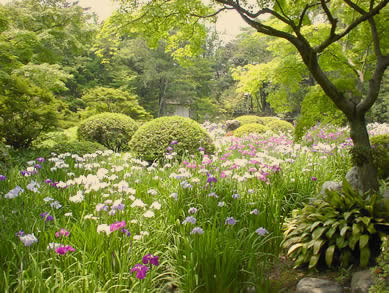
The garden was built in Karoto Shinden (currently Kisosaki-cho, Kuwana-gun, Mie Prefecture) in 1906 by the first Moroto Seiroku, who acceded to his family position as the village headman. The pond in the garden takes in water from a canal and is called a “tidal pond.” The pond originally created varying landscapes as the tide changed, but it no longer uses seawater.
cultural property : historic sites and places of scenic beauty as natural monuments
type : places of scenic beauty
18 Taichimaru, Kuwana-shi, Mie-ken 511-0005
Tel:0594-25-1004
Home page : www.moroto.jp
The garden was built in Karoto Shinden (currently Kisosaki-cho, Kuwana-gun, Mie Prefecture) in 1906, by the first Moroto Seiroku, who acceded to his family position as the village headman.
The garden mainly consists of two sections, which are the garden with a grove and a pond in front of the former Yamada residence, and the palace garden in front of the palace’s study. The west and north borders of the site are marked by a moat.
The garden of the former Yamada residence is a stroll garden centered around a shallow pond stretching east and west. In the mid-section of the pond, zigzag stone bridges are installed to connect the southern edge with Nakajima (the central island) and Mt. Sotetsu on the northern edge. Suiko-tei, which was built in the Edo Period, stands at the western edge of the pond. It is believed that the area around Suiko-tei includes the oldest features of the garden. The palace garden is meant to be viewed from a zashiki (a sitting room). It consists of a pond in the center in front of the study, and dynamic stone arrangements that remind viewers of a rough seashore or deep mountains protect the pond edges. The shore has two levels, and the sandy bottom level submerges and reappears depending on the tide.
The garden at the former Yamada residence retains many of its original characteristics, while the palace garden is valuable as a unique garden built by a wealthy rural merchant in Japan’s modern time.
Taga-jinja Oku-shoin Garden
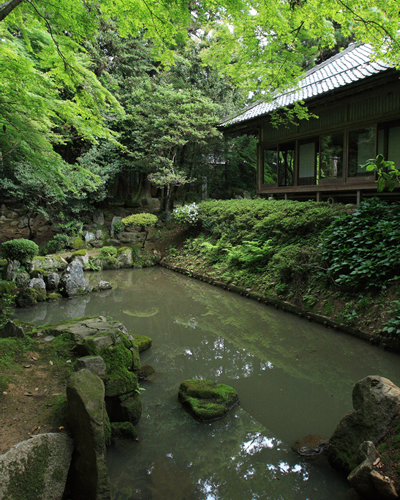
This is a garden at Kojo-in, which is one of the sub-temples of Mii-dera. Azaleas (Rhododendron spp., Rhododendron indicum) are planted densely in various locations, and Japanese cedars (Cryptomeria japonica), Japanese cypress (Chamaecyparis obtusa), and pines form dense forests on the hillside. It is considered to be an outstanding example of of gardens in the Omi region due to its small but dense composition that gives depth to the garden.
cultural property : historic sites and places of scenic beauty as natural monuments
type : places of scenic beauty
604 Taga, Inukami District, Shiga-ken 522-0341
Tel:0749-48-1101
Home page : www.tagataisya.or.jp/about/
This is a garden at Kojo-in, which is one of the sub-temples of Mii-dera. The timeframe in which the temple was constructed is unclear, but it is thought that the temple was built around 1601 when the Kyakuden (reception hall) was completed. This view garden with a large pond is integrated with the Kyakuden. Since the Kyakuden’s pillars supporting the southern veranda stand on rocks protecting the pond shore, the pond can be seen directly under the veranda. With water approaching visitors’ feet, the Kyakuden creates a sense of elegance similar to the charm of floating architecture. The pond stretches from east to west. A natural stone bridge is installed at a turtle island, and an old waterfall on the opposite shore is made of two Tateishi (standing stones) while three large Yodomari-ishi (stones representing boats) also grace the pond. Natural stones are arranged around the pond. The southwestern section of the pond ends at a steep slope. Japanese cedars (Cryptomeria japonica), Japanese cypresses (Chamaecyparis obtusa), and pines grow densely on the hillside.Thick groupings of azaleas and dwarf azaleas are planted on the slope. It is considered to be a representative garden of the Omi region due to its small but dense composition that gives it depth.
Seigan-ji Garden
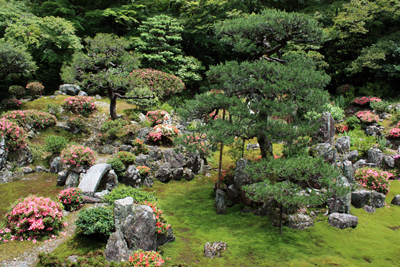
This garden is located at Seigan-ji, a temple of the Soto sect. It is believed that the third Kokin, a Buddhist monk, ordered the gardener, Katori, to make the garden in the early Edo Period. Katori is known for creating the Genkyu-en and Raku-raku-en of the Hikone Castle. The garden is set against a lush hill and is situated on its hillside at the back of the main temple.
cultural property : historic sites and places of scenic beauty as natural monuments
type : places of scenic beauty
669 Maihara, Maibara-shi, Shiga-ken 521-0012
Tel:0749-52-0463
Home page : www.seiganji.org/
This is a garden located at Seigan-ji, a temple of the Soto sect. The temple was founded as Beisen-ji by Sasaki Kyogoku Doyo of the Omi Genji Clan in the early period of the Northern and Southern Dynasties (the Enbun Era). He transcribed the eight volumes of the Lotus Sutra as an offering to the temple. Most of the temple building burned down in war fire during the Eisho Era, but after more than 150 years, in 1650, the temple was reconstructed and renamed Seigan-ji.
The garden is located in the back of the main temple and built on the hillside with a lush grove in the background. It is a stroll Karesansui (dry landscape) garden that utilizes the landform of Mt. Tao’s foothill, and includes a dry pond with a stone bridge and a Horai island as well as a dry waterfall on the far right. The stone lantern in front of Kuri (living quarters of monks) is a Yose-doro (a type of lantern that combines parts of different lanterns), a style popular among masters of the tea ceremony, adding elegant scenery to the garden. It is believed that the third Kokin, a Buddhist monk, ordered the gardener Katori to make the garden in the early Edo Period. Katori is known for creating Genkyu-en and Raku-raku-en of the Hikone Castle.
The Seigan-ji garden gives the illusion of flowing water using haircap moss (Polytrichum) instead of stones or sand. After it rains, water that has seeped into the moss springs out as underflow water, transforming the dry pond into a real one. The scenery after a rain is exceptional.
Kojo-in Garden
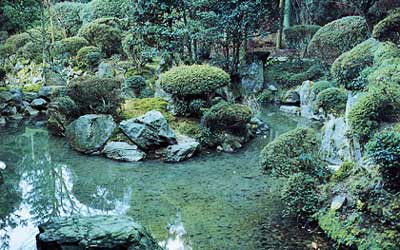
This is a garden at Kojo-in, which is one of the sub-temples of Mii-dera. Azaleas (Rhododendron spp., Rhododendron indicum) are planted densely in various locations, and Japanese cedars (Cryptomeria japonica), Japanese cypress (Chamaecyparis obtusa), and pines form dense forests on the hillside. It is considered to be an outstanding example of of gardens in the Omi region due to its small but dense composition that gives depth to the garden.
cultural property : historic sites and places of scenic beauty as natural monuments
type : places of scenic beauty, historic sites
246 Onjōjichō, Ōtsu-shi, Shiga-ken 520-0036
Tel:077-522-2238
Home page : www.shiga-miidera.or.jp/index.htm
This is a garden at Kojo-in, which is one of the sub-temples of Mii-dera. The timeframe in which the temple was constructed is unclear, but it is thought that the temple was built around 1601 when the Kyakuden (reception hall) was completed.
This view garden with a large pond is integrated with the Kyakuden. Since the Kyakuden’s pillars supporting the southern veranda stand on rocks protecting the pond shore, the pond can be seen directly under the veranda. With water approaching visitors’ feet, the Kyakuden creates a sense of elegance similar to the charm of floating architecture.
The pond stretches from east to west. A natural stone bridge is installed at a turtle island, and an old waterfall on the opposite shore is made of two Tateishi (standing stones) while three large Yodomari-ishi (stones representing boats) also grace the pond. Natural stones are arranged around the pond.
The southwestern section of the pond ends at a steep slope. Japanese cedars (Cryptomeria japonica), Japanese cypresses (Chamaecyparis obtusa), and pines grow densely on the hillside.Thick groupings of azaleas and dwarf azaleas are planted on the slope.
It is considered to be a representative garden of the Omi region due to its small but dense composition that gives it depth.
Zenpo-in Garden
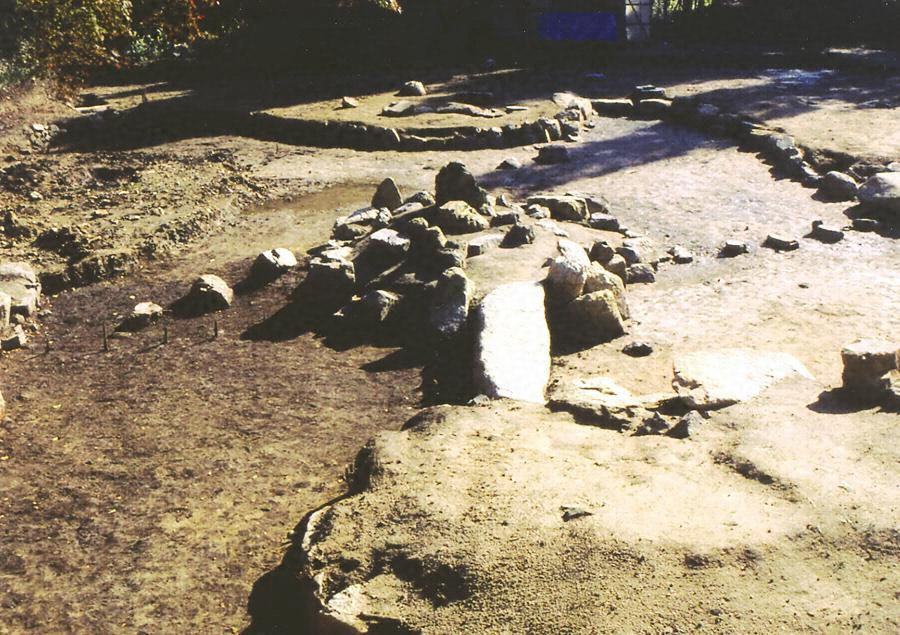
The timeframe of its construction is unclear, but it is thought to have been around the beginning of the Edo Period. The garden had been buried under earth and sand dumped by the debris flow of torrential rains in 1941. However, the excavation survey during the reconstruction and improvement project in recent years has revealed the entire garden. Although no associated buildings survived, the garden features have been well preserved.
cultural property : historic sites and places of scenic beauty as natural monuments
type : places of scenic beauty, historic sites
246 Onjōjichō, Ōtsu-shi, Shiga-ken 520-0036
Tel:077-522-2238
Home page : www.shiga-miidera.or.jp/index.htm
Zenpo-in is one of the six sub-temples of Mii-dera. The timeframe of its construction is unclear, but it is thought to have been built at the beginning of the Edo Period. Although the garden was designated as a National Place of Scenic Beauty/Historic Site in 1934, the site was buried under earth and sand dumped by the debris flow of torrential rains in 1941.
However, thanks to a surveyed map by garden research authority, Shigemori Mirei, and an excavation led by forest expert and landscape researcher, Okazaki Aya’aki, the full details of the garden were recovered. Although associated buildings no longer exist, the pond shore and stone arrangements of the garden have been preserved.
Based on a description in the database of the Otsu City Museum of History, the details of the garden’s original design have been recovered, such as two ponds in front of the study, a Nakajima (central island), a stone bridge, and arrangements of large stones. However, neither the study nor the garden has been reconstructed.
Hyozu-jinja Garden
This is a garden facing north, situated at the south side of the inner shrine of Hyozu-jinja. When the garden was designated as a National Place of Scenic Beauty in 1953, it was believed to have been built in the mid- to late Kamakura Period. However, the later reconstruction and improvement project revealed ruins characteristic of the Heian Period, confirming that the garden was made in the late and final years of the Heian Period.
cultural property : historic sites and places of scenic beauty as natural monuments
type : places of scenic beauty
566 Gojo, Yasu-shi, Shiga-ken 520-2424
Tel:077-589-2072
This is a stroll garden with a large pond built facing north at the south of the inner shrine of Hyozu-jinja. There is a Nakajima (central island) with a stone bridge in the pond made in the shape of the Chinese character for “heart (Kokoro).” The garden has diverse scenery including the Nakajima with a Hokora (small shrine), a peninsula, and a Tsukiyama (artificial hill).
During a recent repair and improvement project, the pond was drained to carry out excavation. As a result, the ruin of a Suhama (sandy beach) was found, which is characterstic of gardens built in the Heian Period.
The garden was originally thought to have been created in the mid- to final Kamakura Period, but the discovery of the ruin confirmed that it was made in the late- to final Heian Period. The garden is covered in fresh green haircap moss (Polytrichum) and Hypnum plumaeforme Wilson. Visitors can enjoy beautiful seasonal scenery such as azaleas in spring, tender green in early summer, sweet flags (Acorus calamus) during the rainy season, Japanese maples in fall, and a snowscape in winter.
Genkyu rakuraku-en
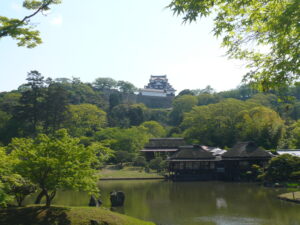
The garden consists of Genkyu-en and Raku-raku-en, and is located northeast of Hikone Castle, between the inner moat and what was once an inner lake. It is thought that the garden was made in the Enpo Era (Edo Period). It is an outstanding Daimyo garden that seamlessly links to its borrowed scenery, which includes the Hikone Castle’s Tenshu (castle tower) and a beautiful background of mature trees.
cultural property : historic sites and places of scenic beauty as natural monuments
type : places of scenic beauty,(special historical sites)
3 Konkichō, Hikone-shi, Shiga-ken 522-0061
Tel:0749-22-2742
The garden has two components, Genkyu-en, which is a stroll garden, and the Tsuki Palace’s Raku-raku-en. It is located northeast of Hikone Castle and between the inner moat and what was once an inner lake. It is thought that the garden was made in the Enpo Era of the early Edo Period.
Genkyu-en has a large pond with four Nakajima (central islands) including Moto-jima and Nii-jima. A Tsukiyama (artificial hill) stretches from the east side to the north side of the garden, and a walking path goes through the garden. The main scenery of the garden includes Moto-jima, which is an arrangement of large stones, and Hakkei-tei built on the opposite side, facing the pond. From the north side of the garden, visitors can see a beautiful landscape with the Hikone Castle’s Tenshu (castle tower) and forests in the background.
Tsuki Palace was added during the Bunka Era, and the garden became part of an Okumuki-shoin (study for family members) after the Genkyu-en was partially rennovated. Raku-raku-en has stone arrangements that represent a waterfall and its flow, and is currently a Karesansui (dry landscape) garden. However, there was a water supply facility in the past, which provided water to the garden.
Fumon-ji Garden
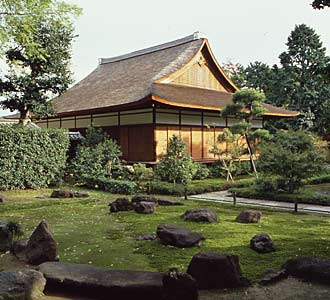
It is assumed that the garden was created as part of the improvement of the temple facilities during the Shoho Era, in the early Edo Period. This is a Karesansui (dry landscape) garden with a pond and borrowed scenery of Mt. Abu. It is believed that the garden was made by Gyokuen’nobo, an apprentice of Kobori Enshu. The garden is located at the northwestern side of a Hojo (the chief monk’s residence), and uses stone arrangements of Katsura Rikyu (Katsura Imperial Villa).
cultural property : historic sites and places of scenic beauty as natural monuments
type : places of scenic beauty
4-10-10 Tondachō, Takatsuki-shi, Ōsaka-fu 569-0814
Tel:072-694-2093
Fumon-ji is a Zen temple founded by the monk, Setsugen, of the Rankei Doryu school in 1390. The temple was transferred to the Myoshin-ji school in the Edo Period, and became a branch temple of Ryoan-ji in Kyoto. Due to the anti-Buddhist campaign in the Meiji Era and the emancipation of farm land after WWII, the premises that used to encompass the present day Honsho-ji, Miwa-jinja and the former Tonda Elementary School was reduced and the temple fell into ruin. The temple was restored at the end of the Showa Era by welcoming a new chief monk.
It is believed that the garden was created during the improvement of the temple facilities during the Shoho Era at the beginning of the Edo Period. It is a Karesansui (dry landscape) garden with a pond and borrowed scenery of Mt. Abu. It is believed that the garden was made by Gyokuen’nobo, an apprentice of Kobori Enshu.
The land of the garden has slight ups and downs. The lower section is viewed as water surface, while slightly higher sections are used as shores or islands. Stones are arranged at key points with stone bridges over them.
Byodo-in Garden
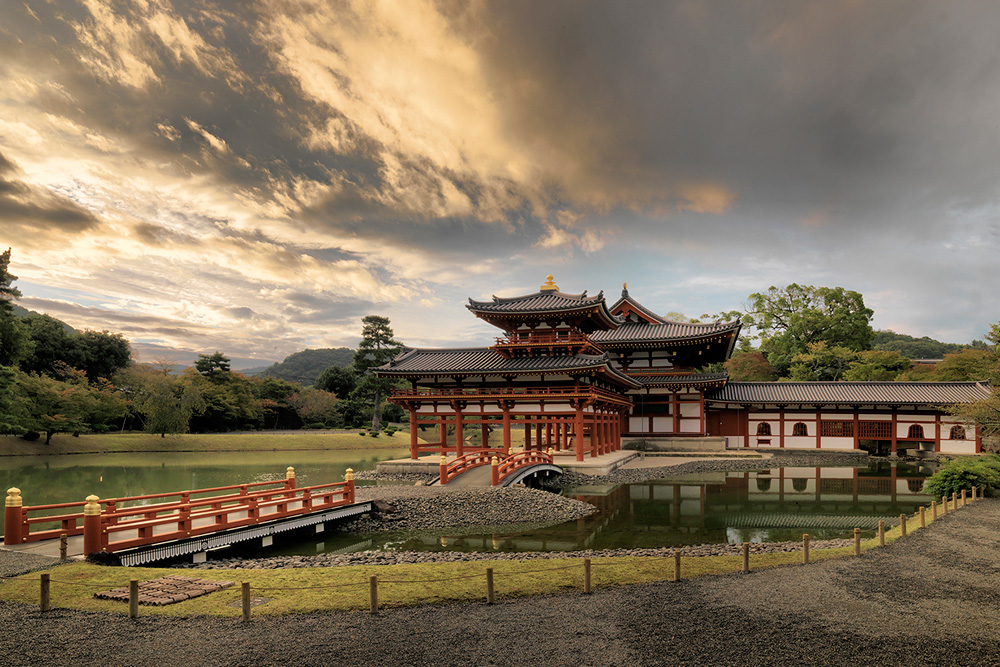
This is Japan’s oldest Jodo (Pure Land) architecture and garden that are integrated into the Amida-do (Amida Hall) built in mid-Heian Period. They recreate the scene of paradise, much sought after by aristocrats at the time. Although the original appearance has been completely changed due to the construction of a levee to prevent flooding in later years, the surrounding scenery still carries the elegance of the past.
cultural property : historic sites and places of scenic beauty as natural monuments
type : places of scenic beauty
Renge-116 Uji, Uji-shi, Kyōto-fu 611-0021
Tel:0774-21-2861
Byodo-in is a temple that was built by Fujiwara Yorimichi. It stands at the riverside of the Uji River’s midstream, southeast of the Uji Bridge. During the mid-Heian Period, uniquely Japanese culture was maturing and the Latter Day of the Law became widely embraced within Buddhism. According to the trends of the time, it seems that aristocrats longed for the Pure Land of Bliss. Byodo-in was built in this time and is the oldest Jodo garden in Japan.
Ho’o-do (Phoenix Hall) and its surrounding pond, Aji-ike, represent Takara-no-ike (Treasure Pond) of the Paradise. The majestic reflection of Ho’o-do on the water’s surface is supposed to be the image of the Pure Land of Bliss materialized in this world. With the serene stream of the Uji River and mountains in the back as borrowed scenery, visitors can enjoy seasonal landscapes – cherry blossoms, azaleas and wisterias in spring; crape mertles and water lilies in summer; Japanese maples in fall; and sasanquas and camelias in winter.
Although the original appearance has completely changed due to the construction of a levee to prevent flooding in later years, the surrounding scenery still carries the elegance of the past.
Osawa-no-Ike tsuketari nakoso-no-taki ato
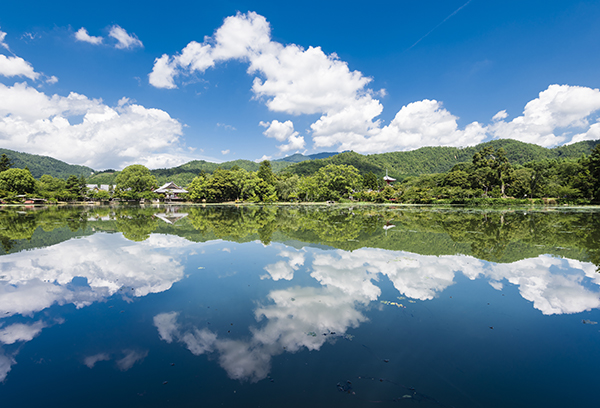
The garden is located at the east of Daikaku-ji. Its perimeter is approximately 1km and the garden is Japan’s oldest example of an artificial grove and ponds. It is also called “Teiko (庭湖)” since Emperor Saga created the garden after the Tang Dynasty’s Dongting Lake (洞庭湖), during the construction of his villa, Saga-in.
cultural property : historic sites and places of scenic beauty as natural monuments
type : places of scenic beauty
4 Sagaōsawachō, Ukyō-ku, Kyōto-shi, Kyōto-fu 616-8411
Tel:075-871-0071(Daikakuji Offical)
Tel:075-871-0191(Property Administration Section)
Home page : https://www.daikakuji.or.jp/precincts/
In the early Heian Period, a pond and a waterfall were added to the garden of the villa Saga-in built during the Konin Era (810-824), and the rule of Emperor Saga. The garden is also called Teiko (庭湖) since it was modeled on Dongting Lake (洞庭湖) in China.
The pond has Tenjin (heavenly God) Island, Kiku-ga-shima (chrysanthemum island), and a Teiko stone. A waterfall is located at the north section of the pond. Based on the excavation survey, it is assumed that when the garden was built, the pond had a large amount of water. However, in a poem, Fujiwara-no-kinto (966-1041) reads: “Although the sound of the waterfall has been gone for a long time, its fame is still flowing and I can hear the reputation.” This suggests that the pond was already dry by the mid-Heian Period.
At the pond shore, there is a Gosha Myojin (a shrine of five deitities), of which the deities are said to have been divided and transferred to the villa as Chinju (Tutelary Deities of Land) by Kobo Daishi. The garden is well-known for blossoms, as many cherry trees are planted there. It is also famous for moon-viewing. Many people visit the garden for cherry blossoms in spring and to enjoy the moon in fall.
Myoshin-ji Garden
The garden consists of a garden with Hojo (the chief monk’s residence), which is believed to have been made in the Edo Period, and Yoko-en, which was newly built in 1965. The garden with Hojo is in a Karesansui (dry landscape) style that spreads to the west and south of the Hojo. Yoko-en was built when the bamboo forest behind it died off altogether as it reached the end of its life.
cultural property : historic sites and places of scenic beauty as natural monuments
type : places of scenic beauty, historic sites
1 Hanazonomyōshinjichō, Ukyō-ku, Kyōto-shi, Kyōto-fu 616-8035
Tel:075-461-5226
Myoshin-ji is the head temple of the Myoshin-ji school (the Rinzai sect). Its garden consists of a garden with Hojo (the chief monk’s residence), which is believed to have been created in the Edo Period, and Yoko-en, which was newly constructed in modern times. The garden with Hojo is in a Karesansui (dry landscape) style that spreads to the west and south of the Hojo. Yoko-en was built when the bamboo forest behind it died off altogether as the plants reached the ends of their lives.
The western section of the garden with Hojo is believed to have been made by the Muromachi Period painter, Kano Motonobu. It is called “Motonobu’s Garden.” Motonobu is considered to have established the Kano-style painting school.
Yoko-en was newly built in 1965 in the area where the bamboo forest, the Hojo garden’s background, used to grow. The bamboo forest died off in the late 1950s and early 1960s as it reached the end of its natural life. Yoko-en was designed and built by garden expert, Nakane Kinsaku. On the both sides of the site, he created Karesansui gardens named “Yo-no-niwa (Yang Garden)” and “In-no-niwa (Ying Garden).
Gyokuho-in Garden
The garden was built in the mid-Edo Period. It is divided into southern, northern, and eastern sections, with the South Garden, the Mountain Garden, and the Wind and Water Garden respectively. The entire ground of the South Garden is covered with white sand. Japanese white pines (Pinus parviflora) and Japanese black pines (Pinus thunbergii) are planted in rows. Both the Mountain Garden and the Wind and Water Garden have intricate stone arrangements, creating an elegant atmosphere.
cultural property : historic sites and places of scenic beauty as natural monuments
type : places of scenic beauty, historic sites
60 Hanazonomyōshinjichō, Ukyō-ku, Kyōto-shi, Kyōto-fu 616-8035
Tel:075-461-5226
This is the first sub-temple to have been built among 46 sub-temples at the head temple of the Myoshin-ji school (the Rinzai sect). It was constructed by Emperor Hanazono and also called “Gyokuho Zenkyu.” When going through the main gate, visitors can see Kuri (living quarters of monks) in the front. The Hojo and Kaizan-do (a hall where the remains of Myoshin-ji founder, Kanzan Egen, have been entombed) are linked by a corridor, and a garden in the style of the Momoyama Period is situated on the north and south sides of the corridor. The garden was built in the early Edo Period and is divided into three sections – south, north and east. These sections house the South Garden, the Keisokurei (mountain) Garden, and the Fusuisen (wind and water) Garden respectively.
The South Garden’s ground is covered with white sand. Japanese white pines (Pinus parviflora) and Japanese black pines (Pinus thunbergii) are planted.
The Keisokurei Garden has a Tsukiyama on the east side of Kaizan-do with stone arrangements that represent mountains. The Fusuisen Garden is located to the north, and has a dry waterfall, a Horai stone arrangement, and stepping stones. Among these components, a well called “Fusuisen” and a date-shaped basin can be found. Both the Keisokurei Garden and the Fusuisen Garden have skillful stone arrangements.
Fushin-an (Omotesenke) Garden
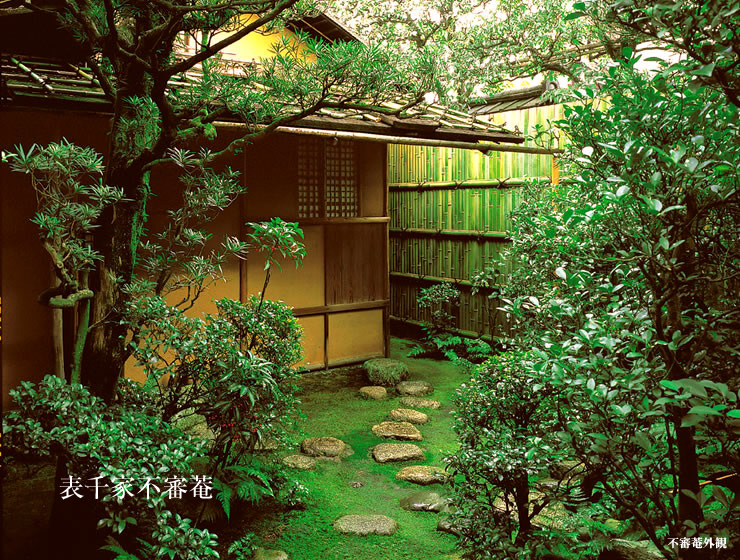
This is a tea garden (Roji) that belongs to Omotesenke, one of the Sansenke tea schools. It consists of an outer tea garden to the west, a tea garden in front of Zangetsu-tei, another in front of the Sodo (mausoleum), and an inner tea garden that belongs to Fushin-an. The inner tea garden of Fushin-an is located at the innermost part of the garden and can be reached by going through the Umemi-mon (plum viewing gate) from the spacious tea garden in front of the Sodo. Although rather small, Fushin-an’s garden recreates the serenity of a secluded mountain.
cultural property : historic sites and places of scenic beauty as natural monuments
type : places of scenic beauty
597 Honpojimae-cho,Ogawa Teranouchi agaru, Kamigyō-ku, Kyōto-shi, Kyōto-fu 602-006
Tel:075-432-2195
This is a tea garden (Roji) that belongs to Omotesenke, one of the Sansenke (three Sen Families) tea schools. It consists of an outer tea garden to the west, one in front of Zangetsu-tei, one in front of the Sodo (mausoleum), and an inner tea garden that belongs to Fushin-an.
A path goes through the outer tea garden on the west side, and through the garden entrance and the small Nakakuguri gate to the inner garden. Visitors will then see a thatched-roof gate to the right to enter Sodo, and stepping stones to the left that continue to Zangetsu-tei. In front of Sodo, there is a spacious tea garden with a Tsukubai (wash basin) and a dry moat.
The path of stepping stones that turns to the left in front of the thatched-roof gate leads to Zangetsu-tei. Visitors can see a well to the right, skillfully arranged stepping stones, Umemi-mon (plum viewing gate), and a tea garden with perfectly balanced plantings. Visitors will finally enter the inner tea garden of Fushin-an once they go through Umemi-mon. In the inner tea garden, there is a bench to the right. Suna Secchin (an ornamental toilet made of sand and stones), Tsukubai, and small stepping stones lead visitors to Nijiri-guchi (a crawl-through entrance). Although the area is small, the inner garden recreates the atmosphere of a secluded mountain, creating serene space.
As the site continued to be passed down over generations, buildings such as a tea room and a practice room were added from other locations or newly built. The tea garden was renovated each time, and resulted in a garden with a complex configuration.
Kon’nichi-an (Urasenke) Garden
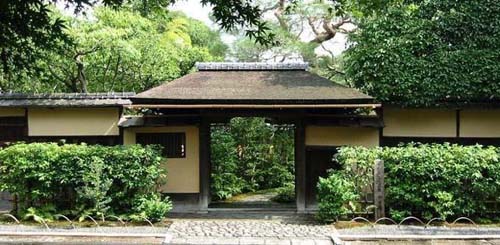
This is a tea garden (Roji) that belongs to Urasenke, one of the Sansenke tea schools. The garden was made along with a tea room built by the third generation Sen Sotan for his retirement residence. In order to reach the tea room, visitors go through Kabuto-mon and the main entrance. They walk by the waiting bench, through the Chumon (middle gate), and into the tea garden. The Chumon functions as a boundary that distinguishes the outer tea garden without particular scenery, and the inner tea garden that creates subtle and profound beauty.
cultural property : historic sites and places of scenic beauty as natural monuments
type : places of scenic beauty
613 Honpojimae-cho,Ogawa Teranouchi agaru, Kamigyo-ku, Kyoto 602-0061
Tel:075-431-3111
Kon’nichi-an is a tea room at the center of Urasenke along with Yuin (also a tea room). Kon’nichi-an started as a tea room of two jo (two tatami mats), built in the retirement residence of Sen Sotan.
In order to reach the tea room, visitors go through tea gardens, which include Kabuto-mon, the main entrance, the waiting bench, and the Chumon (middle gate).
Although the middle gate is extremely simple, it carries significance as a boundary according to the configuration of tea gardens, by distinguishing the outer tea garden and its plain scenery from the inner tea garden and its delicate beauty.
The outer tea garden is devoid of any accessories and is made up of the color of conifers under changing light contrasts created by sunlight filtering through trees.
Guests go through the inner garden before they are invited into the tea room. Entering guests wash their hands in the Yohobutsu-no-tsukubai (wash basin with curved Buddha on all sides), with moss growing on it, obscuring the round outlines of the Buddhas and adding to the delicate beauty of the inner garden.
NishiHongwan-ji Tekisui-en
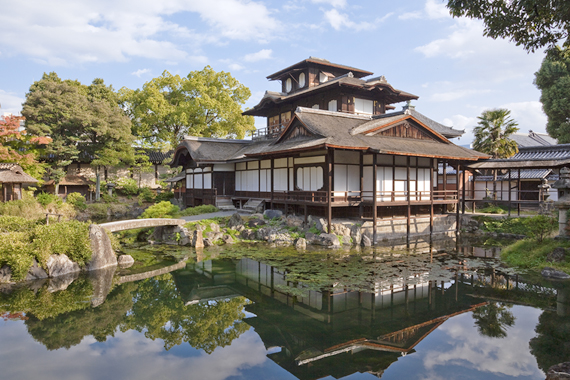
This is the front garden of Hiunkaku. It is believed that the garden was built along with the construction of Hiunkaku and Okakudai. Hiunkaku is a three-story tower, and its bottom floor includes boat access from the pond. Rooms are centered around the pond. Flowering trees such as azaleas and plums are planted, and visitors can see the outstanding stone arrangements of large rocks.
cultural property : historic sites and places of scenic beauty as natural monuments
type : places of scenic beauty
Hanayacho-sagaru, Horikawa-dori, Shimogyo-ku, Kyoto-fu 600-8501
Tel:075-371-5181
Tekisui-en is a front yard for Hiunkaku, which stands at the southeastern corner of Hongwan-ji precinct (Hongwan-ji is the head temple of the Hongwan-ji school of the Jodo Shinshu sect). The garden is believed to have been created during the construction of Hiunkaku and Okakudai. It is believed that Hiunkaku is a remnant of Toyotomi Hideyoshi’s Jurakutei. It is one of the Three Great Pavilions in Kyoto along with Kinkaku and Ginkaku. It is a three-story tower, and its bottom floor includes boat access from the pond.
The garden has a large pond that goes around Hiunkaku from the north side to the west side. The pond is narrower at the center, where a stone bridge is installed. Visitors can cross the bridge to get to Hiunkaku. When looking over the pond from Hiunkaku, visitors can see a bell tower to the side through the tree branches. Flowering trees such as azaleas and plums are planted, and large stones are arranged around the pond. It is believed that the pavilion was named Hiunkaku (“floating cloud pavilion”) since the pond reaches directly under the building and its reflection looks like a floating cloud.
Hiunkaku is not open.
Shosei-en(Higashi Hongan-ji)
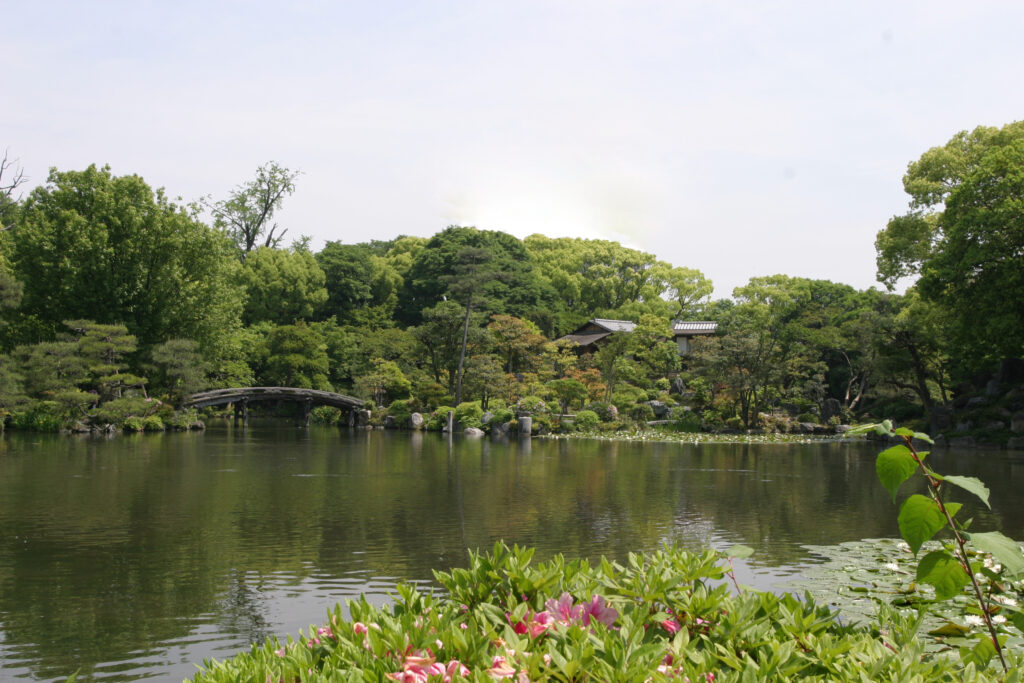
The name “Shosei-en” was taken from a verse found in Gui Qu Lai Ci (Come Away Home), a poem about a life in the countryside by Tao Yuanming. The site is in the shape of a near-perfect square. Since it is 100 ken (approximately 180 meters) on each side, the place was also called Hyakken Yashiki (100 ken mansion). Another name was Kikoku-tei, as “Kikoku” (trifoliate oranges; Poncirus trifoliata) were planted there.
cultural property : historic sites and places of scenic beauty as natural monuments
type : places of scenic beauty
Shomen-dori Ainomachi Higashi-iru, Shimogyō-ku, Kyoto 600-8190
Tel:075-371-9210
This site was donated by the third Shogun, Tokugawa Iemitsu, in 1641, during the era of the 13th head of Higashi Hongan-ji, Sen’nyo Shonin. The garden was created by incorporating the preferences of Ishikawa Jozan (a writer and also expert garden designer at the time).
The name “Shosei-en” was taken from a verse found in Gui Qu Lai Ci (Come Away Home), a poem about a life in the countryside by Tao Yuanming. Various aspects of the garden such as a tea house built partially over the pond water’s surface and a roofed bridge add Chinese elements to the scenery.
The site is in the shape of a near-perfect square. Since it is 100 ken (approximately 180 meters) on each side, the palace was also called “Hyakken Yashiki” (100 ken mansion). Another name was Kikoku-tei, as “Kikoku” (trifoliate oranges; Poncirus trifoliata) were planted there. The garden is highly regarded for its flowers blossoming in all seasons and diverse landscapes known as the “Thirteen Landscapes.”
Although it is a stroll garden with ponds where visitors can walk around the garden, the path does not circle the pond.
Juko-in Garden
Juko-in is a temple that belongs to the Daitoku-ji school of the Rinzai sect and has ties with the Sansenke tea schools (the three Sen Families). The Karesansui (dry landscape) garden at the south of the Hojo (the cheif monk’s residence) is said to have been created by Sen-no-rikyu. The garden is about 165 square meters. All the stones installed in the garden are relatively small, but Tateishi (standing stones) at key locations give accents to the scenery.
cultural property : historic sites and places of scenic beauty as natural monuments
type : places of scenic beauty
58 Murasakino Daitokujichō, Kita-ku, Kyōto-shi, Kyōto-fu 603-8231
Tel:075-492-6880
Juko-in is a temple that belongs to the Daitoku-ji school of the Rinzai sect. It was built by Miyoshi Yoshitsugu in 1566, who invited the 107th head of Daitoku-ji, Shorei Sokin, in order to pray for the repose of his father Nagayoshi. In the precinct, there is a cemetery for the three Sen Families, where Sen-no-rikyu also rests.
The Karesansui (dry landscape) garden at the south of the Hojo (the chief monk’s residence) is said to have been created by Sen-no-rikyu. The garden is about 165 square meters. Due to the number of stone arrangements, it is called “Hyakuseki-no-niwa (Garden of 100 Stone Arrangements).”
The area of the garden covered by moss is separated from the background by hedges, along which two groups of stone arrangements are placed from east to west. The central section is slightly elevated with 石塙. All the stones are small. Tateishi (standing stones) placed at key points give variation to the scenery.
Shofuku-ji Garden
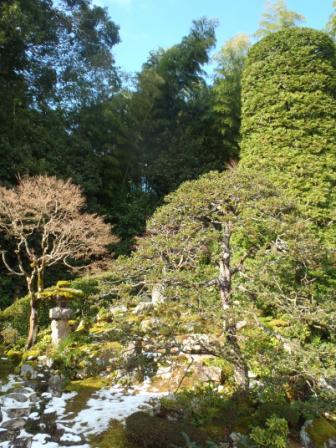
The garden is known as Gansho-tei and located at the north side of the main temple and the study at Shofuku-ji. According to “Gansho-do Kazan-ki,” a historical record, the garden was created by Sensho, chief monk of the temple, in 1843 (the Tenpo Era). Since an old garden is rare in the Ayabe region, Gansho-tei is valuable in terms of having clearly known information about the garden’s creator as well as its year of foundation.
cultural property : historic sites and places of scenic beauty as natural monuments
type : places of scenic beauty
Komaruyama-33 Takanosuchō, Ayabe-shi, Kyōto-fu 629-1263
Tel:0773-46-0185
The garden is known as Gansho-tei and located at the north side of the main temple and the study at Shofuku-ji. The temple has a garden record called “Gansho-do Kazan-ki.” According to this record, the garden was created by the chief monk, Sensho, in 1843.
The temple is located in a picturesque area where the Yura River flows to the north, mountains in the distance can be seen, and a hill lies directly behind the temple.
There is a Tsukiyama (artificial hill) to the back left, where a guardian stone is placed. Next to the Tsukiyama a dry waterfall is arranged with stones. The Tsukiyama slopes gently to the right, and its center at the front has another Tateishi and a dry waterfall. A stone bridge is also installed. Locally produced mountain rocks are used for the stone arrangements. There is a dry pond at the foot of the Tsukiyama, which protrudes to the front to form an island-like shape. Stepping stones placed around the pond link the main temple and the study.
Since an old garden is rare in the Ayabe region, Gansho-tei is valuable in terms of having clearly known information about the garden’s creator as well as its year of foundation.
Nanzen-ji Hojo Garden
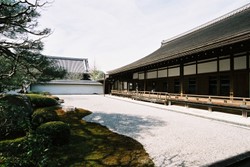
Nanzen-ji was built in 1291 during the Sho’o Era in the Kamakura Period. The garden belongs to a Hojo, where the chief monk resides. It is believed that the garden was created by Kobori Enshu at the beginning of the Edo Period. In contrast to other Japanese gardens that represent Buddhist cosmology with Tsukiyama and large stones, this garden has stones that are placed flat, a style called a flat Karesansui (dry landscape) garden, or more commonly, “young tigers crossing the river.
cultural property : historic sites and places of scenic beauty as natural monuments
type : places of scenic beauty
86 Nanzenji Fukuchicho, Sakyo Ward, Kyoto-shi, Kyoto-fu 606-8435
Tel:075-771-0365
Nanzen-ji is the head temple of the Nanzen-ji school (the Rinzai sect). The Hojo (the chief monk’s residence) is a former Empress’s palace relocated to Nanzen-ji in 1611. It is believed that the garden was created around the same time.
The garden is said to have been made by Kobori Enshu. It is an excellent example of a Karesansui (dry landscape) garden from the early Edo Period. It is a flat garden with white sand sectioned off by the Hojo and Tsuiji-bei (roofed mud wall) into an orderly rectangular shape. When seen from the Hojo, the garden has a principal stone placed in the back left, and a few stones to the right along the wall. The front and right of the Hojo is a spacious area with white sand. Between the ornamental stones, maples, pines, hollies, camelias, and dwarf azaleas trimmed into spheres are planted. The white sand, garden stones, garden trees, and the Tsuiji-bei create harmonious scenery together with pine forests and mountains in the background. The white surface of the Tsuiji-bei has five light-blue parallel lines called “Jogi-suji.” The Jogi-suji signifies that a temple is headed by a monk with a royal background (“Monzeki”), and the number of lines represents the rank of the temple, with five lines representing the highest rank.
Kyu Daijo-in Garden
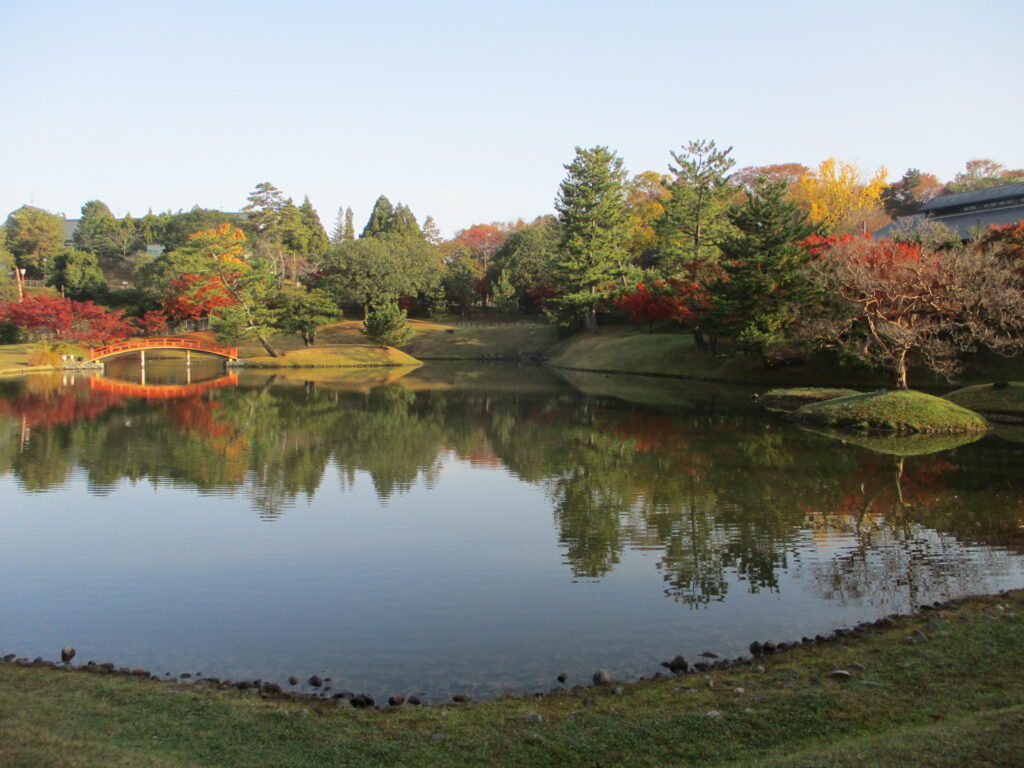
Its origin is thought to be in the Heian Period, but in the mid-Muromachi Period, a Monzeki (monk with a royal background who acceded the proper lineage of a temple) of Daijo-in, Jinson, ordered a gardener Zen’ami to repair the garden. Although the garden became dilapidated in the Meiji Era, the garden as a whole still preserves the land allotment from the Muromachi Period. This is the ruin of a garden made by Zen’ami, the best gardener of the Muromachi Period, when many outstanding gardens were created.
cultural property : historic sites and places of scenic beauty as natural monuments
type : places of scenic beauty
1083-1 Takabatakechō, Nara-shi, Nara-ken 630-8301
Tel:0742-24-0808
Home page : http://www.national-trust.or.jp/protection/index.php?c=protection_view&pk=1491202122
Daijo-in is a Monzeki temple of Kofuku-ji and believed to have been founded in the Heian Period. In the mid-Muromachi Period, Zen’ami and his son were invited by the Monzeki of Daijo-in, Jinson, to repair the garden devastated by Tokusei Ikki, an uprising demanding debt cancellation orders. It is believed that Zen’ami was one of Doboshu (those who were in charge of tea ceremonies, entertainment and miscellaneous duties for Shogun and Daimyo) for Shogun Ashikaga Yoshimasa, and was a master gardener.
In the past, the main allotment of the garden included a large pond in the east and a small pond in the west, with south and north central islands in the east pond. The garden fell into ruin in the Meiji Era, and the west pond and the south central island no longer exist. However, the garden preserves the allotment from the Muromachi Period as a whole, and flowering trees that bloom season by season still decorate the garden. This is the ruin of a garden made by Zen’ami, the best gardener of the Muromachi Period, when the garden was created. (Note: Zen’ami belonged to a social group called Senzui Kawaramono. “Kawaramono” means “people living at riverbeds” and those who were engaged in landscaping were called “Senzui (mountain-and-water) Kawaramono.
Isui-en
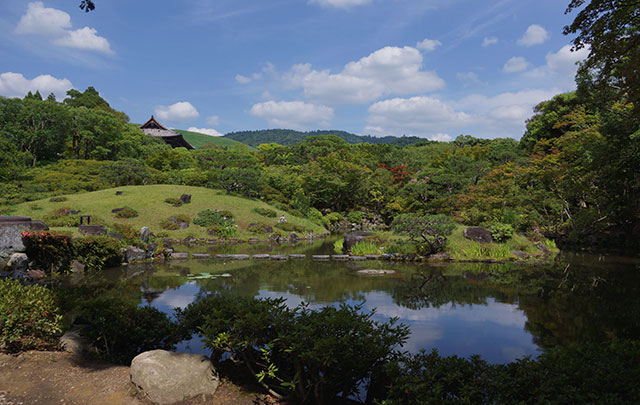
The front garden was made in the Edo Period (the Enpo Era) while the back garden was built in the Meiji Era. The two gardens with their different origins are connected with a stream, and together they are called “Isui-en.” It is an outstanding garden that incorporates the roof of the Todai-ji’s Nandai-mon (Great South Gate) and three mountains, Mt. Wakakusa, Mt. Kasuga and Mt. Mikasa, as borrowed scenery.
cultural property : historic sites and places of scenic beauty as natural monuments
type : places of scenic beauty
74 Suimonchō, Nara-shi, Nara-ken 630-8208
Tel:0742-25-0781
Home page : www.isuien.or.jp
It is located in the west of Nandai-mon (Great South Gate) and to the north of the Yoshiki River. The front garden was created in the Edo Period (the Enpo Era) and the back garden in the Meiji Era. The two gardens with their different origins are connected with a flow of water, and together they are called Isui-en.
The front garden was made by improving the remnant of Sanshu-en, which was a villa owned by a bleacher of the Kiyosumi Family, in Nara. The back garden was built when the site was owned by an affluent merchant, Sekito Jiro, in Nara. This garden uses Mt. Wakakusa, Nandai-mon of Todai-ji, Mt. Kasuga, and Mt. Mikasa as borrowed scenery. The garden also uses stepping stones, shore stepping stones, old temple stones and millstones, as well as plants such as dwarf azaleas and Okamezasa (Shibataea kumasaca), giving typical Meiji characteristics to the garden as a whole. Isui-en, consisting of two gardens, is a stroll garden with ponds and represents Nara Prefecture.
Also, there is the “Neiraku Museum” on the premise, which holds and displays bronzeware from ancient China, porcelain from Goryeo and Yi Dynasties of Korea, and Japanese tea ceremony utensils.
Nara Park
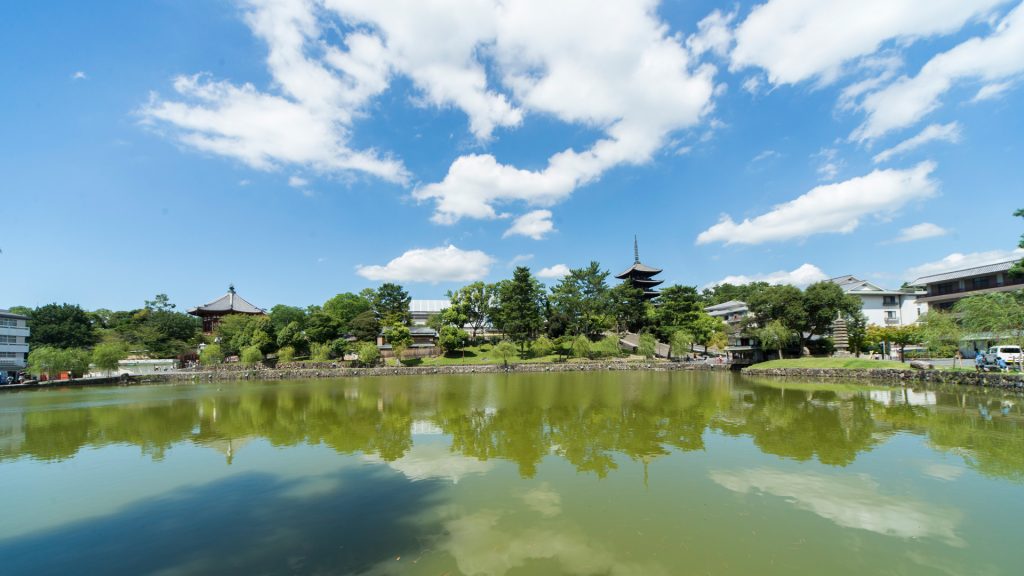
In 1880 (the Meiji Era), Nara Prefecture started managing the former precinct of Kofuku-ji and 14-hectares of the land of Kasuga Taisha as a park. Later, the surrounding forests and the princinct of the Tamukeyama Shrine at Todai-ji were incorporated, and private land necessary for improving the scenery was purchased, becoming the Nara Park. This park is also referred to as the “history” park.
cultural property : historic sites and places of scenic beauty as natural monuments
type : places of scenic beauty
543 Shibatsujichō, Nara-shi, Nara-ken 630-8114
Tel:0742-22-0375
Nara Park was established when the area of approximately 15 ha, including the precinct of Kofuku-ji and Kasugano, were designated as a park in 1880 (the Meiji Era) by a Notice of the Grand Council of State. Later, the park added Mt. Wakakusa and Mt. Kasuga, and was improved as a city park by Nara Prefecture. Nara Park was designated as a Place of Scenic Beauty in 1922 (the Taisho Era) by combining the Nara Prefectural City Park (including Sarusawa-ike, Sagi-ike, Kasugano and Mt. Wakakusa) and the precinct of Todai-ji and Kofuku-ji, which encompasses 524 ha altogether. In the park, there are 1,200 wild deer that are considered the divine messengers of Kasuga Taisha. They are protected as National Natural Monuments. The extensive lawn of Kasugano is a unique landscape sustained by deer grazing. Yamayaki (burning of a mountain) at Mt. Wakakusa every January is Nara’s traditional event that heralds the arrival of early spring. Beside Mt. Wakakusa, Mt. Kasuga is covered with a pristine forest that has not been cut since ancient times. The forest is designated as a Special Natural Monument called “Kasugayama Primeval Forest.” Everywhere in the park, visitors can enjoy landscapes that integrate history, culture and nature, such as Ukimi-do in Sagi-ike, Sarusawa-ike, the five-story pagoda of Kofuku-ji, etc.
Tentoku-in Garden
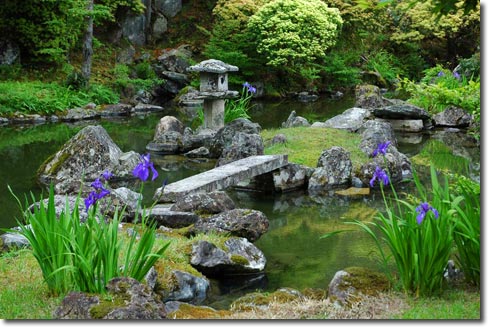
The garden is located at the south of the Tentoku-in Kyakuden (reception hall). It is designed to create a gentle and peaceful atmosphere with a pond at the center. A crane island and a turtle island are situated as central islands in the pond with stone bridges connecting them. The opposite side of the pond has a natural slope, which is used as a Tsukiyama. The main scenery of the garden is a stone arrangement at the shore to the left, representing a dry waterfall.
cultural property : historic sites and places of scenic beauty as natural monuments
type : places of scenic beauty
370 Kōyasan, Kōya-chō, Ito-gun, Wakayama-ken 648-0211
Tel:0736-56-2714
Tentoku-in is said to have been built by the lord of Kaga, Maeda Toshitsune, in 1615 (the early Edo Period), and it is believed that the garden was also created around the same time. Although all the buildings on the premise were burnt down in 1864, in the late Tokugawa Shogunate, the land allotment and the stone arrangements still remain.
The garden is located at the south of Tentoku-in Kyakuden (a reception hall) and designed to create a gentle and peaceful atmosphere. A crane island and a turtle island are situated as central islands in the pond with stone bridges connecting them. The opposite side of the pond is a natural slope, which is used as a Tsukiyama. This Tsukiyama and a stone arrangement at the shore to the left, making up a dry waterfall, are the components of the garden’s main scenery. Tall conifers such as Japanese cedars (Cryptomeria japonica), pines, Sawara cypresses (Chamaecyparis pisifera), and Japanese yews (Taxus cuspidata) form clusters in the back. Japanese pierises (Pieris japonica), rhododendrons, Japanese hollies (Ilex crenata), and azaleas are planted and trimmed low in the area from the foothill to the pond.
The stone arrangements and such retain some degree of devastation, and there are no signs of repair in later years, so visitors can witness a record of the past.
Kokawadera Garden
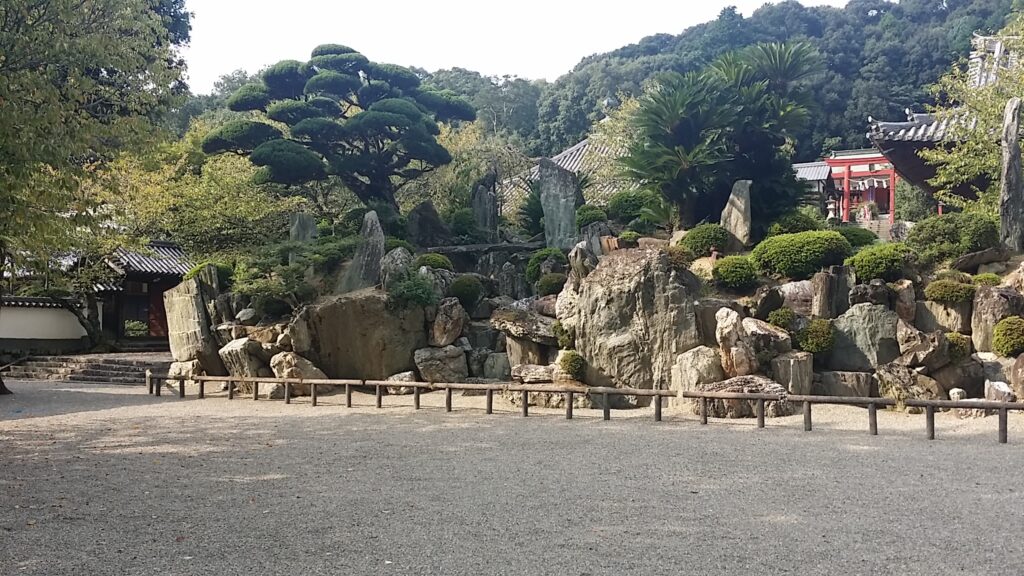
Unique stone arrangements can be seen as large rocks, mainly chlorite schist, are arranged in a strong yet elegant way utilizing a number of diverse techniques. Azaleas grow in the gaps between stones, and Chinese junipers (Juniperus chinensis), weeping cherries (Prunus spachiana), and sago palms (Cycas revoluta) are also planted throughout.
cultural property : historic sites and places of scenic beauty as natural monuments
type : places of scenic beauty
2787 Kokawa, Kinokawa-shi, Wakayama-ken 649-6531
Tel:0736-73-4830
Home page : www.kokawadera.org
Kokawadera is known as one of the sacred sites of Saigoku Junrei (a pilgrimage of 33 temples in the Kinki/Tokai regions). The path for the pilgrimage is the oldest of this sort in Japan. It covers the sacred sites of Kan’non (the Goddess of Mercy) in 7 prefectures of the Kinki and Tokai regions.
The garden is a stone garden of the Momoyama Period. It is located between the main temple and the main gate, on the both sides of stone steps that link the main gate to the main temple, functioning as retaining stone walls. Enormous rocks, mainly of chlorite schist, are arranged in a strong yet elegant way utilizing diverse techniques. Trimmed azaleas are planted in the gaps between stones that are arranged in a diverse way, and Chinese junipers (Juniperus chinensis), weeping cherries (Prunus spachiana), and sago palms (Cycas revoluta) are also planted throughout. The composition of the stone arrangements as a whole has a focus to the left with a dry waterfall, a stone bridge, and crane and turtle islands.
The great diversity of stone arrangements make this a unique stone arrangement garden.
Negoro-ji Garden
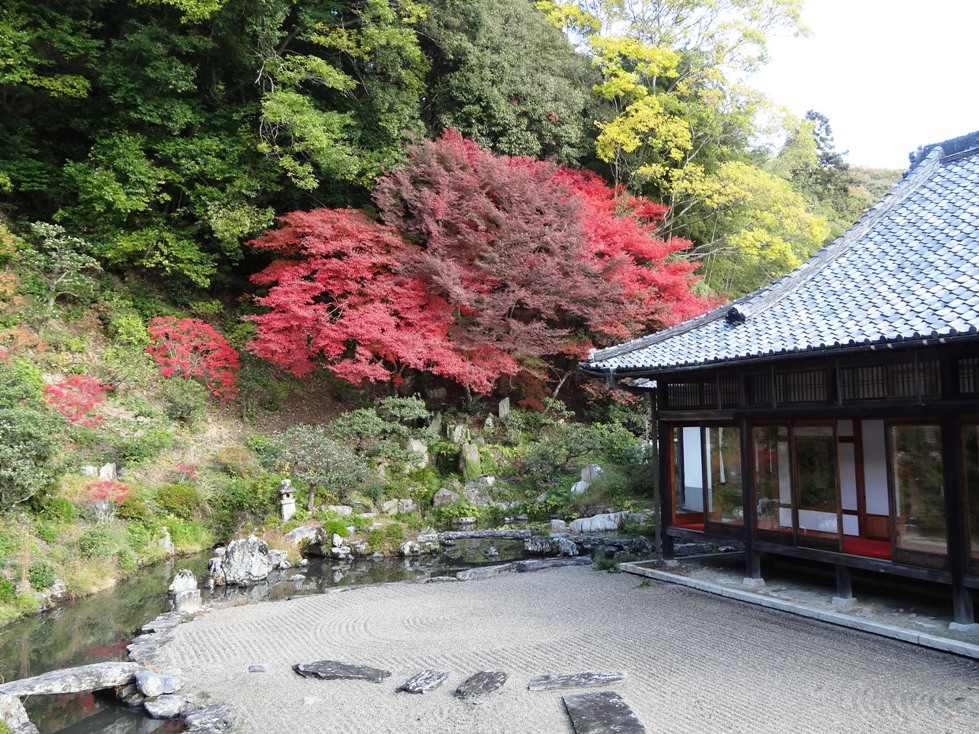
The garden consists of a flat garden, which surrounds Okushoin (a study in the back of a residence) in the north, west, and south, and Shoten-ike in the south of Shoten-do. The area around Shoten-ike is planted with pines and maples, creating rich scenery. In 1800 (the Kansei Era of the Edo Period), the Kishu Tokugawa Family’s Fukiage Palace was relocated and its construction was completed in 1801. The garden was built during this period of construction.
cultural property : historic sites and places of scenic beauty as natural monuments
type : places of scenic beauty
2286 Negoro, Iwade-shi, Wakayama-ken 649-6202
Tel:0736-62-1144
Home page : www.negoroji.org
The garden consists of a flat garden, which surrounds Okushoin (a study in the back of a residence) in the north, west, and south, and Shoten-ike in the south of Shoten-do. A section with a Tsukiyama (artificial hill) and a pond is located to the north and west of Okushoin. The pond is at the foot of the hill in the back with a waterfall arrangement at the north front. The water flows down three levels of the tall stone arrangement. There are two low islands, big and small, with two stone bridges. There is also an Ukishima (detached island), and the islands and the pond edges are protected by flat stones.
The south garden of Okushoin has Tateishi (standing stones) at the south-eastern corner. There are ornamental stones, Japanese red pine (Pinus densiflora) and azaleas all within in this flat garden.
Shoten-ike at the south of Shoten-do has an island at the center to worship Benzaiten (Saraswati). There are some stone arrangements nearby. Pines and maples are planted all around the pond, creating diverse scenery.
Yosui-en
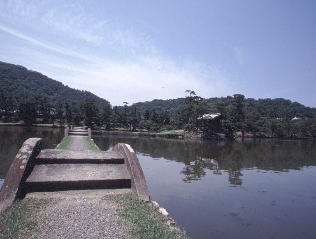
This is a villa of the 10th lord of Kishu, Tokugawa Harutomi, of the Bunsei Era. It occupies part of the Kishu’s Suiken territory next to the Oura Bay, south-west of Wakayama City. This is a Daimyo garden of approximately 33,000m2, with plantings of Japanese black pines (Pinus thunbergii) as well as Japanese red pines (Pinus densiflora), camelias, sweet olives (Osmanthus fragrans), black ridge oaks (Quercus phillyraeoides) and more. The garden has a pond that takes in seawater.
cultural property : historic sites and places of scenic beauty as natural monuments
type : places of scenic beauty
1164 Nishihama, Wakayama-shi, Wakayama-ken 641-0036
Tel:073-444-1430
Home page : www2.odn.ne.jp/cap99810/index.htm
This is a villa of the 10th lord of Kishu, Tokugawa Harutomi, during the Bunsei Era. It occupies part of the Kishu’s Suiken territory next to the Oura Bay, southwest of Wakayama City. It encompasses 33,000m2 of land.
The main feature of the garden is a large pond that stretches from east to west, and a Shoin and space for a tea ceremony are placed on the western side of the pond. The seawater pond curbs gently, and has Tateishi (standing stones) on the northwest corner as well as a central island in the center slightly toward east. The central island is dedicated for Benzaiten (Saraswati) and Inari (deity primarily known as the protector of rice cultivation), and is connected by a hook-shaped Saiko (West Lake in China)-style levee from the north shore, and an arched bridge from the south shore. There is a remnant of Shigure-tei on the south shore, while the western shore has remains of a Funagura (boat house), a Yachiyo-tei and a Baba (horseback riding ground). Behind the garden, there is an embankment that borders the garden and the Suiken River. The embankment has two sluice gates in order to draw seawater to the pond.
The area around the garden is planted with Japanese black pines (Pinus thunbergii), as well as Japanese red pines (Pinus densiflora), camelias, sweet osmanthus (Osmanthus fragrans), and black ridge oaks (Quercus phillyraeoides), which links the garden scenery to outside nature such as Mt. Takozushi and Mt. Yake.
Wakayama Castle Nishinomaru Garden
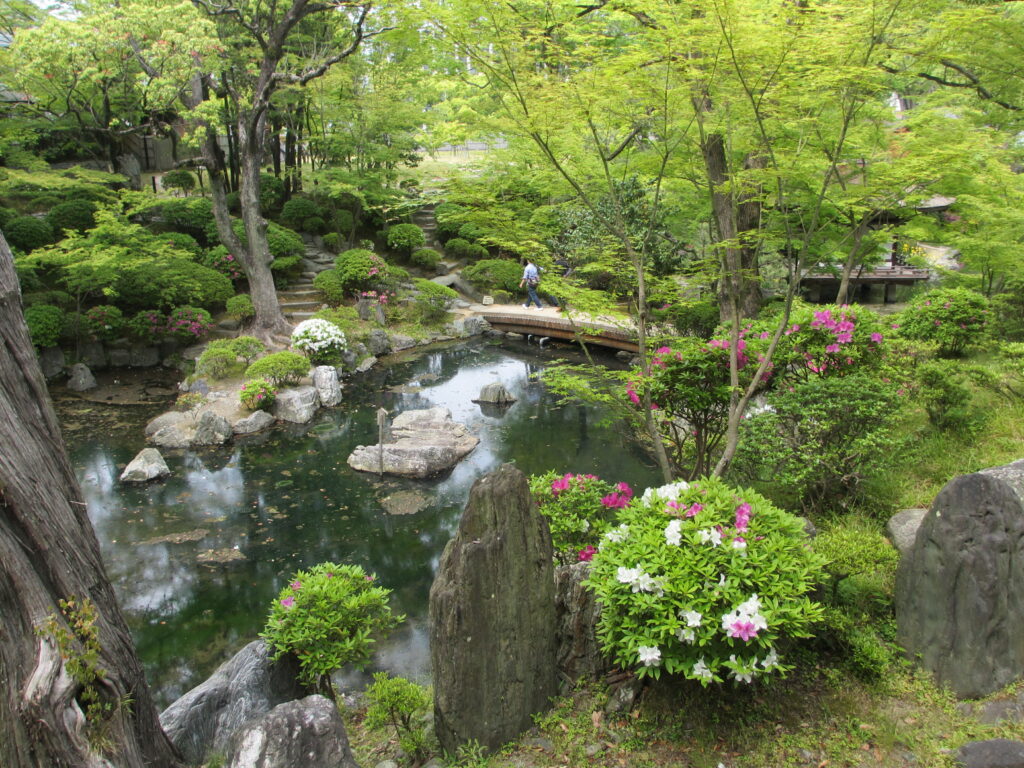
The garden belongs to the Nishinomaru Palace and is located at the northwestern foot of the Wakayama Castle. The date of its creation is not known, but it is believed to be in the early Edo Period. Remnants of surrounding garden feature and a tea room were discovered during the renovation of 1970-1973. This is one of only a few remaining examples of a garden inside a castle.
cultural property : historic sites and places of scenic beauty as natural monuments
type : places of scenic beauty
3 Ichibanchō, Wakayama-shi, Wakayama-ken 640-8511
Tel:073-435-1044
The garden belongs to the Nishinomaru Palace and is located at the northwestern foot of the Wakayama Castle. The date of its creation is not known, but it is believed to be in the early Edo Period. It is a stroll garden with a two-level pond and a waterfall utilizing the slope of Mt. Torafusu. A Tenshukaku, or castle tower, is situated on top of the mountain.
The inner moat of the castle is extended to make it resemble a large pond, where “Willow Island” made of chlorite schist is placed. At the shore of the large pond, there is a building called “Engyo-kaku.” A smaller pond, “Ue-no-ike” (upper pond), is in the west of Engyo-kaku. A stone that resembles a boat with its bow raised is placed in the pond, and the stone is called “Ofuna-ishi.” The upper pond has many bridges including Momiji-bashi (“maple” bridge), an earthen bridge and a stone bridge. Since visitors can enjoy majestic fall colors, the garden is also called “Momiji-dani Garden (maple valley garden).”
During the renovation of 1970-1973, the remnants of the surrounding garden feature and a tea room were discovered. The garden is one of the only few remaining examples of a garden inside a castle.
Kotonoura-onzanso-en
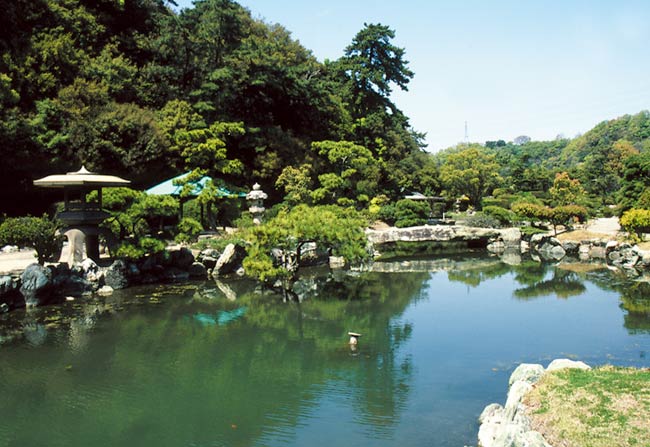
It is a stroll garden with a pond utilizing seawater and was made by Nitta Chojiro, a successful leather business owner, between the early Taisho Era and the beginning of the Showa Era. It has almost 6 ha of space, and the seawater pond features a unique design, composition, and decorative techniques using many imitation stones and woods.
cultural property : historic sites and places of scenic beauty as natural monuments
type : places of scenic beauty
370 Funoo, Kainan-shi, Wakayama-ken 642-0001
Tel:073-482-0201
Home page : http://www.onzanso.or.jp
It is a stroll garden with a seawater pond. It was made by Nitta Chojiro, a successful leather business owner, between the early Taisho Era and the beginning of the Showa Era.
When constructing the garden, an area between Ya-no-shima (an island) and the land was filled, and two ponds that draw seawater were built by burying a water main pipe to take in seawater. Therefore, as the pond surface goes up and down with the tide, shadows of stones and trees at the shore reflected upon the water surface, change in subtle ways.
A tunnel from the garden to the beach was dug into the bedrock of Ya-no-shima to connect the landscape of an artificial pond in the east foothill and the natural beach scenery of the west foothill.
The garden was made with a variety of ideas and by making the most of the location, including a unique technique that often uses concrete-made materials such as imitation rocks and woods, which were rare at the time. The design and technique for garden paths mixing stepping stones with Yori-ishi-jiki (stone pavement) of cement and mortar, are also found in many parts of the garden.
Kyu Ako Castle Garden
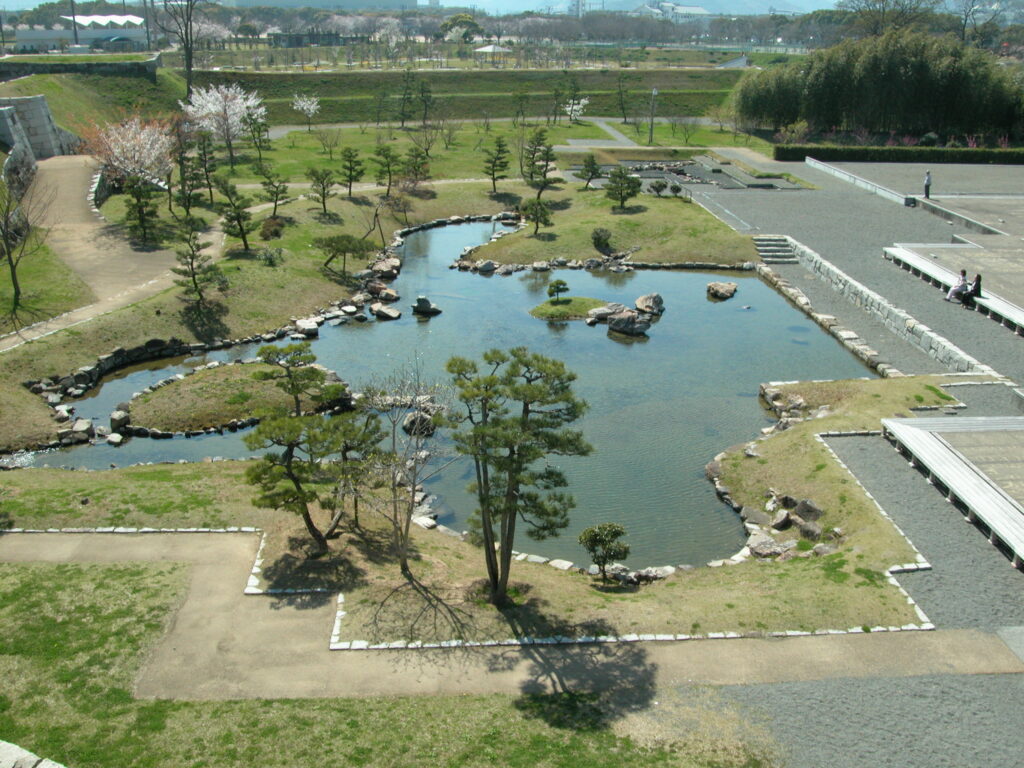
These are Daimyo gardens built in the Honmaru (inner citadel) and Ninomaru (outer citadel) of the Ako Castle. Both of them have ponds that use ample water from the waterworks of the Chikusa River. This is an important example in which the Honmaru and Ninomaru gardens, found during excavation, have been preserved as a whole. Reconstruction work is currently underway, repairing the excavated remnants.
cultural property : historic sites and places of scenic beauty as natural monuments
type : places of scenic beauty
1 Kamikariya, Akō-shi, Hyōgo-ken 678-0235
Tel:0791-43-6962
Home page : www.ako-hyg.ed.jp/bunkazai/akojo/index.html
The gardens at the Ako-jo ruins are Daimyo gardens preserving Honmaru Garden and Ninomaru Garden as a whole. Honmaru Garden has a large pond at the south of Goten (palace), a small pond of a Tsuboniwa (inner garden) at Nakaoku (where Shogun worked and spent his daily life), and another pond at the north-western corner of the Honmaru. The large pond has a cape, an inlet, a central island, and ornamental stones, and its bottom is decorated with geometrically arranged stone slabs and roof tiles, gravel, etc. The small pond at the Nakaoku Tsuboniwa consists of two small water features aligned in east and west. The water from the small pond is connected to the large pond via a covered conduit. The pond in the north-western corner is oval and dug directly in the ground. Pebbles are laid along its shoreline. Ninomaru Garden is a large scale garden with a large pond. The section near the residence is a flow, while the southwestern section is a grand space where the water is deep and boats can be used.
In Ako, water taken from the upper Chikusa River is supplied to the castle and houses in its town. This water was also supplied to the ponds in the castle.
Garden of Mr. Tabuchi
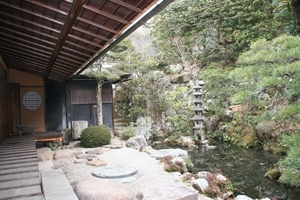
This is a residential garden of Mr. Tabuchi, who built a fortune mainly from the salt-making industry. The residence is located at the foot of Mt. Misaki in Ako Misaki, and the garden is on a hillside that continues behind the residence. The garden has Meien-ro in its upper section, Shun’insai in the middle, and a study and pond at the bottom.
cultural property : historic sites and places of scenic beauty as natural monuments
type : places of scenic beauty
329-1 Misaki, Akō-shi, Hyōgo-ken 678-0215
Tel:0791-42-2225
This is a residential garden of Mr. Tabuchi, who built a fortune mainly from a salt making industry. The residence is located at the foot of Mt. Misaki in Ako Misaki, and the garden is on the hillside that continues behind the residence.
The entry area from the front gate to the entrance of the main house is a Tuboniwa-style garden installed along stepping stones, and has a pond made by excavating the area behind the Shoin. Many Sago palms (Cycas revoluta) and sporadically planted Tsuwabuki (Farfugium japonicum) underneath them stand out among trees in the garden. They indicated that the garden is in a warm area. The opposite side of the pond is a slope, where a waterfall stone arrangement of about 4m is placed. To the right of the waterfall is a stone bridge, and visitors can reach the top of the slope by crossing the bridge. Two-story Mei’en-ro appears to the right around the section where the slope becomes gentle. Wooden fence facing Mei’en-ro has Nakakuguri (a low gate between an outer tea garden and an inner tea garden), and visitors can reach a tea room, Shun’insai and its inner tea garden.
Anyo-in Garden
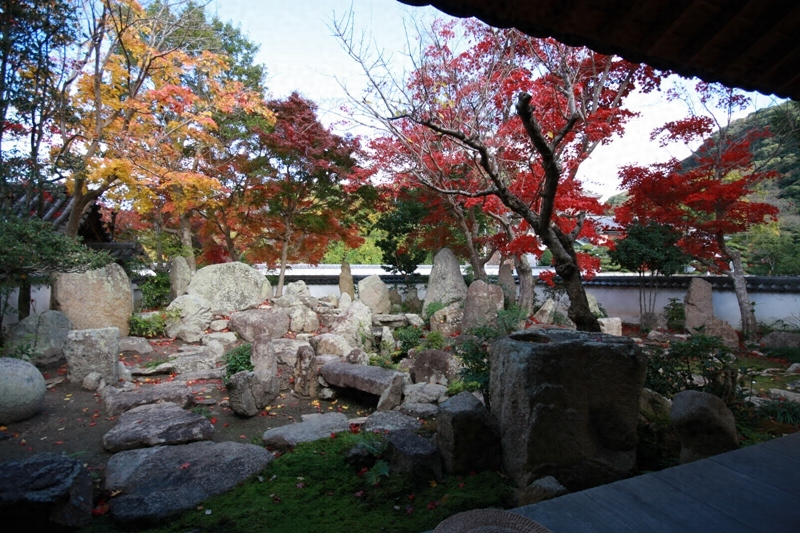
This is a garden made at the shoin of An’yo-in, a sub-temple of Taisan-ji (the Tendai sect). It is a magnificent, elegant garden that uses the old-growth forest of Taisan-ji as borrowed scenery. The landscaping style and the stone arrangement techniques clearly show the characteristics of the Momoyama Period. The old-growth forest of the borrowed scenery is designated as an important area (an ecosystem encapsulating the biological characteristics of a region).
cultural property : historic sites and places of scenic beauty as natural monuments
type : places of scenic beauty
Zenkai-258 Ikawadanichō, Nishi-ku, Kōbe-shi, Hyōgo-ken 651-2108
Tel:078-974-0408
This is a garden at the study of An’yo-in, a sub-temple of Taisan-ji (the Tendai sect). It is a majestic and elegant Karesansui (dry landscape) garden with the old-growth forest of Taisan-ji as borrowed scenery.
Enormous rocks as triad stones are placed at the center, with crane and turtle island stone arrangements are at each side. Inbetween is a valley, and stone are arranged as a Mt. Horai in the back of the valley.
It is a Karesansui garden that uses many large rocks, but its atmosphere is different from sand gardens often seen at typical Karesansui gardens. Taisan-ji was built in the Heian Period, but fires damaged it many times and historical materials that could indicate the date and person who created An’yo-in has been lost. The style and stone arrangement techniques used in the garden are characterstics to the Momoyama Period, indicating that the garden was built in the Period.
The old-growth forest of the borrowed scenery is designated as an important area (an ecosystem indicating the biological characteristics of a region).
Garden of Mr. Osaki
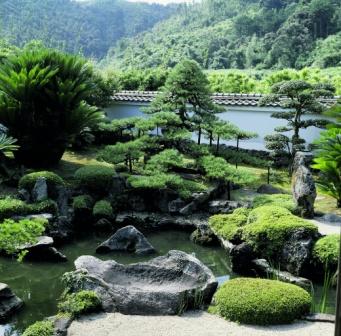
The garden’s main scenery is a pond that stretches from the east to the south of the Shoin. It uses a pine forest outside the garden as borrowed scenery, and has stone arrangements at the top of a waterfall, a Horai island, and pond edges. The garden preserves the scenery style of the early Edo Period, indicating how landscaping techniques evolved in the Hoki region.
cultural property : historic sites and places of scenic beauty as natural monuments
type : places of scenic beauty
1518 Uno, Yurihama, Tohaku District, Tottori 682-0701
Tel:0858-35-2003
The Osaki Family was a village headman responsible for temples, shrines and their religious administration for the Tottori Domain in the Edo Period.
During the time of the 5th chief, Kiyo’emon, the family moved to the current location and newly constructed the main residence, a Buddhist alter, a few cellars, and a Mon-nagaya (Nagaya-mon).
The garden is in the southeast of the main residence with a thatched roof. A pond stretches from east to south, and to the left, a dry waterfall is arranged in a triad-stone style. A Chozubachi (water basin) made of a natural stone is placed in the front riht corner. Mature trees of Japanese black pines (Pinus thunbergii) and sago palms (Cycas revoluta) grow on the other side of the pond with approximately 30 varieties of other plants such as dwarf azaleas (Rhododendron indicum) and cleyeras (Ternstroemia gymnanthera).
The garden preserves the scenery of the early Edo Period, indicating how landscaping techniques had evolved in the Hoki region.
Kannon-in Garden
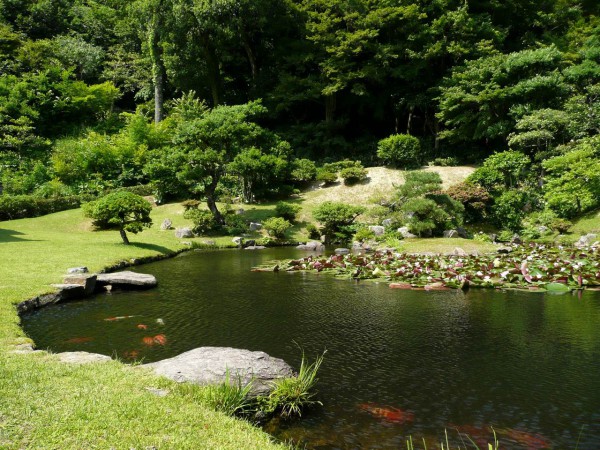
A Tsukiyama uses a natural slope from the south-east to the west of the Hojo. The pond at the bottom of the Tsukiyama occupies half of the garden. The waterfall arrangement, a central island, and garden trees create an elegant landscape. This is a good example of the localization of Kyoto-style gardens in the late Edo Period.
cultural property : historic sites and places of scenic beauty as natural monuments
type : places of scenic beauty
162 Uemachi, Tottori-shi, Tottori-ken 680-0015
Tel:0857-24-5641
Kan’non-in is one of the 8 prayer halls of the Ikeda Family of the Tottori Domain. It is told that the Lord, Ikeda Mitsunaka, completed the temple spending 10 years, and it is considered to be one of the localized Kyoto-style gardens in the late Edo Period.
A Tsukiyama arranges a natural slope from the south-east to west of the Hojo. The pond at the bottom of the Tsukiyama occupies half of the garden. When viewing the pond from the Hojo, visitors can see a forest expanding on the mountain slope behind a Tsukiyama (artificial hill), creating scenery with depth. The pond has stone arrangements of a crane island, a turtle island, and a waterfall, which remain the same as they were in the Genroku Era. The garden skillfully utilizes wild plants native to the area to create beautiful landscape. During spring when cherry trees blossom, the garden becomes a regional tourist destination.
“Sho-kanzeon-bosatu,” the principal image of the temple, is called “Shusse Kan’non (Kan’non of eminance) since it was moved to a bigger temple everytime its alter was changed.
Manpuku-ji Garden
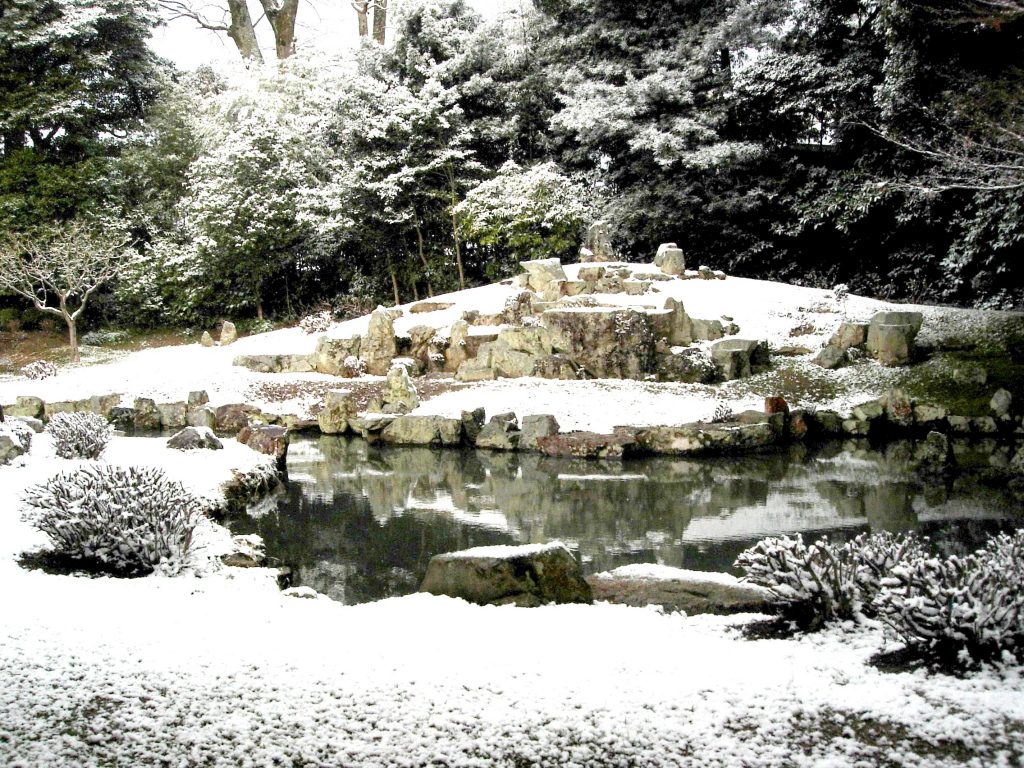
Manpuku-ji was originally founded as Anpuku-ji in the Heian Period, then moved to its current location in 1374 as Manpuku-ji. The garden is a “temple” style garden made by Sesshu in 1479. The pond in the front represents the Chinese character for “heart (kokoro).” A gently sloped Tsukiyama, and spiraling stone arrangements represent the world of Shumisen, of Buddhist cosmology.
cultural property : historic sites and places of scenic beauty as natural monuments
type : places of scenic beauty, historic sites
25-33 Higashimachi, Masuda-shi, Shimane-ken 698-0004
Tel:0856-22-0302
Home page : manpukuji.server-shared.com/
The origin of Manpuku-ji was a temple called Anpuku-ji, which was built in the Heian Period. Anpuku-ji was washed away in large tsunami, rebuilt as a martial art practice hall, then transferred to the current location by the 11th lord, Masuda Nanao, in 1374 (the Muromachi Period).
Its garden is said to have been made by Sesshu in 1479. It is in a temple style with a pond in the front center representing the Chinese character “heart (kokoro).”
The right-hand section of the pond is under the shadow of tree branches that are extending from a forest behind the pond. A stone arrangement of a waterfall is placed on the other shore of the pond. A cape is placed in front, and a Horai stone is located to the left of the dry waterfall. A gently-sloped Tsukiyama can be seen at the center of the other side of the pond. A low-height Tateishi is placed on top of the Tsukiyama, and stones are arranged in a spairaling shape down the slope to represent the world of Shumisen, which is the Buddhism cosmology. The area from the left-hand section of the pond to the west side of the building represents a more open, bright world.
Iko-ji Garden
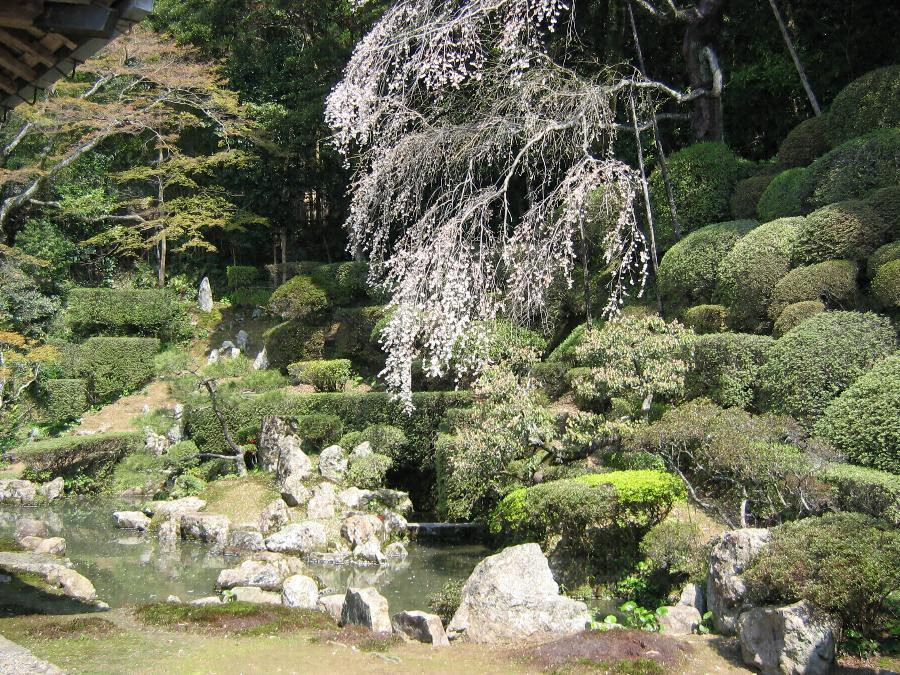
The 5th chief monk of Sukan-ji, the predecessor of the present Iko-ji, was Sesshu and he created a garden in one of the subordinate temples. Sukan-ji was dilapidated during the Warring States Period, but later combined with Iko-ji and remains to this day. This is a Horai-style garden with a crane-shaped pond and a turtle island, and it shows a variety of scenery from season to season.
cultural property : historic sites and places of scenic beauty as natural monuments
type : places of scenic beauty, historic sites
4-29 Somebachō, Masuda-shi, Shimane-ken 698-0011
Tel:0856-22-1668
Iko-ji is a temple of the Tofuku-ji school of the Rinzai sect. Its predecessor was called Sukan-ji and it was founded during the Muromachi Period. Sukan-ji became dilapidated during the Warring States Period, but the 17th head of the Masuda Family, Munekane, restored the temple as Iko-ji.
The 5th chief monk of Sukan-ji was Sesshu, who was a famous ink painter, and created a garden in one of the subordinate temples which became the base of the current garden.
It is a Horai-style stroll and view garden with a pond. The pond is shaped like a crane and there is a turtle island in the pond. It is famous for its weeping cherry trees in the spring and azaleas in May. Various trees create cool shade in the summer, and large maple trees turn red in the fall. The snowscape in winter reminds visitors of the ink paintings by Sesshu. The garden has various appearances from season to season. There are also other things to see in the temple. An ash mound is believed to be the place where Sesshu was cremated. There is a grave of Masuda Munekane, the lord of the clan that governed this area for a long time, and historical statues such as arhat statues.
Kyu Garden of Mr. Hori
Old residence and garden of Hori consists of four areas, namely the front garden of the main building, Rakusan-en, Waraku-en and the outer garden of Hatagasako Hospital. It has a wide variety of landscaping elements with superb design and structures. It is also famous for its unique scenery which maximizes the local landscape such as the valley of the Shiraishi River and the land along the river.
cultural property : historic sites and places of scenic beauty as natural monuments
type : places of scenic beauty
795 Muraki, Tsuwano-chō, Kanoashi-gun, Shimane-ken 699-5622
Tel:0856-72-0010
The Hori Family was one of the powerful clans in the Tsuwano area who managed the Sasagadani copper mine in the Iwami silver mine during the Edo Period. The garden consists of 4 areas: A dry landscape garden in the south of the main building, which was built along the Shiraishi River; the garden, Rakusan-en, for a Sukiya style building, Rakusan-so, which was built by Hori Tojuro Reizo, the 15th head of the clan, in 1900; the garden, Waraku-en, built on the slope of the riverbank of the Shiraishi River on the opposite side in 1915 and a fish-breeding pond; and the remains of the outer garden of the Hatagasako Hospital, which was built by the Hori Family for the employees and local residents who worked for the copper mine.
The garden in the south of the main building and study is a simple and small dry landscape garden surrounded by mud walls, which exhibits the standard style of the Shoin-style front garden established in the Edo Period. Rakusan-en is famous for stone arrangements for a double-tier waterfall, lanterns for snow-scene viewing along stepping stones by the pond and stone buildings such as the Soto-style stone lanterns. The view of the garden from the main parlor includes a scenery of rice paddies by the Shiraishi River and Waraku-en on the opposite riverbank.
Unique characteristics of the local geography are applied fully to Waraku-en with various designs. The entire valley along the Shiraishi River can be viewed from the lookout on the higher point of the garden. The Hatagasako Hospital was considered to be an important welfare and medical service facility related to the Hori Family. The garden is valuable because of the remains of the landscapes which were used for the hospitals in the recent modern times.
Raikyu-ji Garden
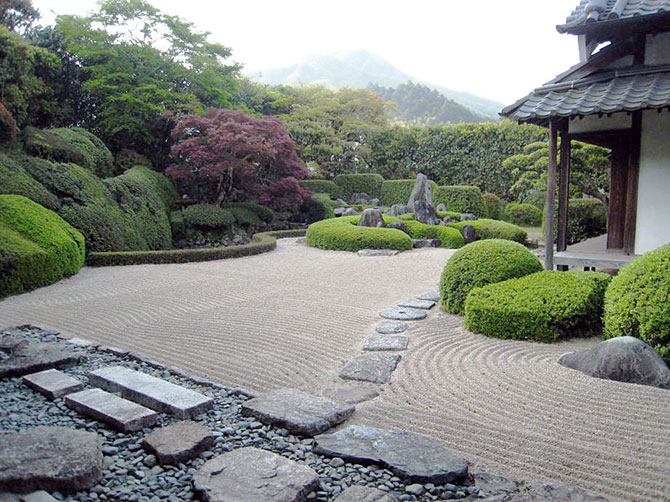
This is the garden in the south of Raikyu-ji’s study. It uses Mt. Atago, which is far away in the frontal direction from the garden, as its borrowed scenery. There are stone arrangements on the crane and turtle islands and white sand covers the entire surface. Raikyu-ji burnt down in a great fire in the Tenpo Era and the garden has also been renovated repeatedly, but the methods from the beginning of the Edo Period can still be seen in the main portion and visitors can enjoy its exquisite design.
cultural property : historic sites and places of scenic beauty as natural monuments
type : places of scenic beauty
18 Raikyūjichō, Takahashi-shi, Okayama-ken 716-0016
Tel:0866-22-3516
Home page :raikyuji.com/
This garden is created in the south of the study in Raikyu-ji, a Zen temple originally founded as Ankoku-ji by Ashikaga Takauji in 1339. It is a Horai-style dry landscape garden and it is believed to be an early landscaping work of Kobori Enshu, who was a famous landscaper.
There are stone arrangements on the crane and turtle islands and the white sand covers the entire surface. It uses Mt. Atago, which is far away in the frontal direction from the garden, as its borrowed scenery. A large dwarf azalea bush is planted at the bottom of the mountain on the left of the study and it adds a unique appearance to the garden. The pruning method used for this dwarf azalea is unique to the Enshu style and it represents big waves of the ocean in this garden. All Buddhist temples in Raikyu-ji were burnt down in the great fire of the Tenpo Era. The temple estate was confiscated during the anti-Buddhist movement in the Meiji Era and most parts of the precincts were lost. The garden has also been renovated repeatedly since then, but the methods from the beginning of the Edo Period can still be seen in the main portion and visitors can enjoy its exquisite design.
Shukkei-en
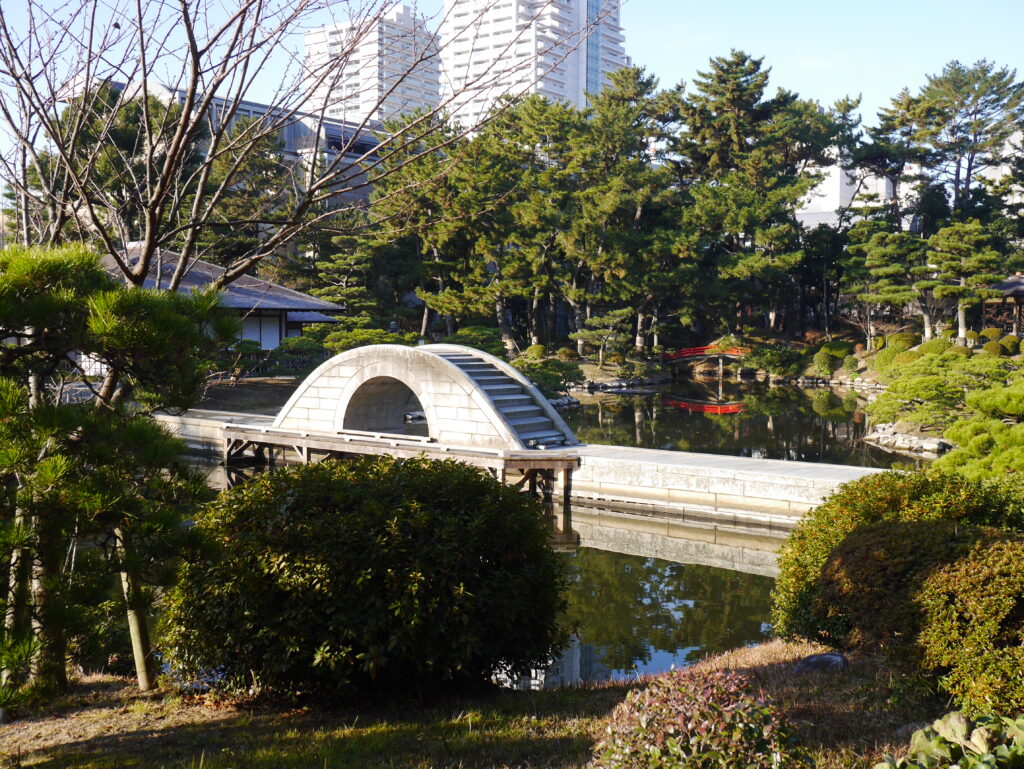
It was created as a garden in the villa of the 1st lord of the Asano Domain in Hiroshima, Asano Naga’akira, in 1620. Ueda Soko, who was a principal retainer and a famous tea master, landscaped this garden. The name, Shukkei-en (a garden with shrank scenery), was derived from the fact that the garden represents many famous scenaries in reduced sizes. It is also said that this garden imitates the West Lake, a famous scenic spot in China.
cultural property : historic sites and places of scenic beauty as natural monuments
type : places of scenic beauty
2-11 Kaminoborichō, Naka-ku, Hiroshima-shi, Hiroshima-ken 730-0014
Tel:082-221-3620
Home page : shukkeien.jp
It was created as a garden in the villa of the 1st lord of the Asano Domain in Hiroshima, Asano Nagaakira, in 1620. Ueda Soko, who was a principal retainer and a famous tea master, landscaped this garden. There is a pond called Takuei-chi in the center of the garden and there are more than 10 islands of various sizes. A Tsukiyama, valley, tea room, bridge and arbor are beautifully arranged and visitors can stroll along the paths around the garden. A Sukiya style tea room, called Seifu-kan, is in the center of the garden and its western side is in a style of Shoin-zukuri. There is a window called Kato-mado in the east side of the tea room and a bridge called Koko-kyo in the middle of the pond can be seen through the window.
The name, Shukkei-en (a garden with shrank scenery), was derived from the fact that the garden represents many famous sceneries in reduced sizes. It is also said that this garden imitates the West Lake, a famous scenic spot in China.
The garden suffered devastating damage from the atomic bomb in 1945, but after that it was restored over a 30-years time span and it is now a place of recreation and relaxation for many people from inside and outside Japan.
Jodo-ji Garden
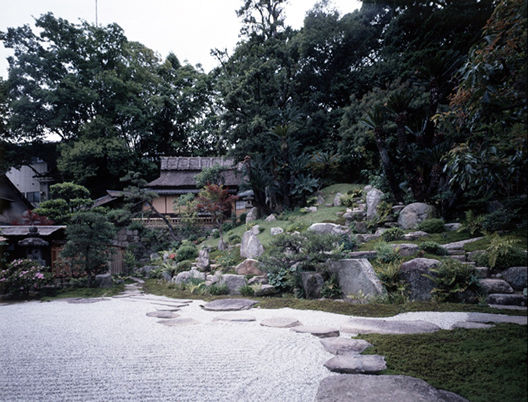
It is a garden with a Tsukiyama (artificial hill) and a pond. It is located in the northwest part of the precincts of Jodo-ji and there is Hojo (the chief monk’s residence) and a Kuri (living quarters for monks) in the southeast of the garden. A natural mountain ridge is used as a Tsukiyama in this garden and there is a narrow pond between the Tsukiyama and white sand in the foreground. Many stones are also arranged around the Tsukiyama. The stone arrangement for the waterfall in the center is especially elaborate.
cultural property : historic sites and places of scenic beauty as natural monuments
type : places of scenic beauty
20−28 Higashikubochō, Onomichi-shi, Hiroshima-ken 722-0043
Tel:0848-37-2361
Home page : www.ermjp.com/j/temple/index.html
It is a garden with a Tsukiyama (artificial hill) and a pond. It is located in the northwest of the precincts of Jodo-ji and there is a Hojo (the chief monk’s residence) and a Kuri (living quarters of monks) in the southeast of the garden. A natural mountain ridge is used as a Tsukiyama in this garden and there is a narrow pond between the Tsukiyama and white sand in the foreground. Many stones are also arranged around the Tsukiyama. The stone arrangement for the waterfall in the center is especially elaborate.
According to the temple’s old drawing, Hasegawa Senryu, who is Sesshu’s descendant 13 generations later, created this garden in, the so-called, Tsukiyama of Gyo (semi-formal) style in 1806. The date and landscaper of the gardens, that were created before the Edo Period, are often unknown, therefore it is very rare that both are clear for this garden.
A tea room called Roteki-an and its garden were created behind the Tsukiyama in 1814. In later years, important stone arrangements such as the main Honzon stone became invisible due to the overgrowth of plants including azaleas, but it was known that the original layout and stone arrangements were well preserved based on the drawing.
The renovation was completed in 1999 and now the original garden is restored.
Joei-ji Garden
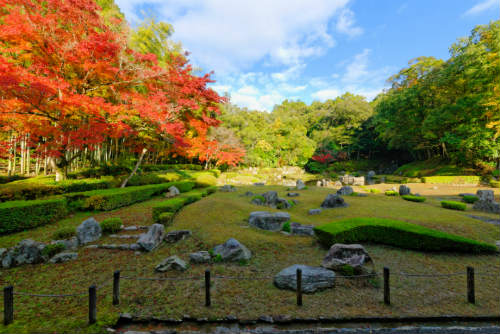
Joei-ji was built as a villa by Ouchi Masahiro about 500 years ago. It is said that Ouchi requested Sesshu to design the garden. There is a pond shaped like the character for “heart (Kokoro)”, a dry waterfall and standing stones in the garden with mountains and forests in its background. It seems that some renovations have been conducted, but most of the original landscapes have been preserved.
cultural property : historic sites and places of scenic beauty as natural monuments
type : places of scenic beauty, historic sites
2001−1 Miyanoshimo, Yamaguchi-shi, Yamaguchi-ken 753-0011
Tel:083-922-2272
Joei-ji was built as a villa by Ouchi Masahiro about 500 years ago. It is said that Ouchi requested Sesshu to design the garden.
The garden is located in the entrance of a small valley, which opens in the direction from east to south, on the edge of the hill. The garden is designed in a deep valley and its front faces the mountain.
It has mountains and forests in its background and there is a pond shaped like the character for “heart (Kokoro)” in the back. In front of the pond, a dry waterfall and numerous garden stones are arranged. The designs, including the method used for the standing stones, are ingenious and the garden is full of tasteful elements. It seems that some renovations have been conducted but most of the original landscapes have been preserved. The garden is full of the Zen taste which is characteristic of Sesshu, an artist monk who created this garden.
Garden of Mr. Mouri
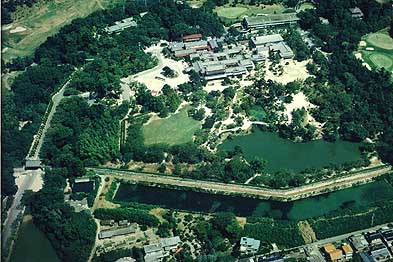
This is a garden inside the main residence (built in 1916) of the Mouri Family, a former lord of the Choshu Domain. It is located at the foot of Mt. Tatara, which is in the east of the city center of Hofu City, Yamaguchi Prefecture. They made the best use of its natural landscape around the pond and it is a typical stroll garden with stone arrangements, plants, lawn, gazebos and lanterns, which are arranged perfectly.
cultural property : historic sites and places of scenic beauty as natural monuments
type : places of scenic beauty
1-15-1 Tatara, Hōfu-shi, Yamaguchi-ken 747-0023
Tel:0835-22-0001
This is a garden inside the main residence (built in 1916) of the Mouri Family, a former lord of the Choshu Domain. It is located at the foot of Mt. Tatara, which is in the east of the city center of Hofu City, Yamaguchi Prefecture. Originally there was a reservoir for the rice paddies and a small settlement, but it was selected as a location for the new main house for the Mouri Family around 1892. The garden was completed along with the main house in 1916. The garden’s entrance consists of a path from the front gate to the front entrance of the house along the Nagi River. The front garden has a lantern by the wide carriage porch in front of the mansion of the Mouri Family, a Chinese bayberry (Morella rubra) tree and azalea bushes. It is a stroll garden with a pond which spreads south of the main house’s 2-story study. The gourd-shaped inner pond is about 5,500 m2 and there is a stone bridge where the pond is narrow. They made the best use of its natural landscape and it is considered to be a typical stroll garden with stone arrangements, plants, lawn, gazebos and lanterns, which are arranged perfectly. There is a large lawn for garden parties in the northwest of the garden, which was a typical garden feature created around that era.
Sorin-ji Garden
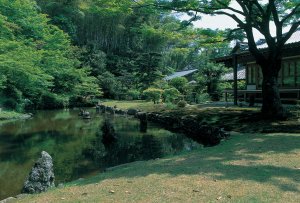
It is a garden with a Tsukiyama (artificial hill) and a pond. It is called Ryushin-tei and is located in the north of a Hojo (the chief monk’s residence) and faces towards the study for Sorin-ji, a temple of the Rinzai sect. There are standing stones on top of the hill which faces south, and these stones are the centerpiece of this garden. There is a dry waterfall towards the pond at the bottom of the hill. Eight medium-sized standing stones are arranged in two rows in the pond. Because of that particular design, it is believed that the original garden was created around the period of the Northern and Southern Dynasties.
cultural property : historic sites and places of scenic beauty as natural monuments
type : places of scenic beauty
210 Kogushi, Ube-shi, Yamaguchi-ken 755-0067
Tel:0836-21-1087
Fukubara Hirotoshi, a lord of Ube, built Sorin-ji in 1670 in order to hold memorial services for the repose of his father, Mototoshi’s soul. This Rinzai sect temple was established in the place where then dilapidated Fusai-ji was. It is believed that the old pond and garden of Fusai-ji were repaired and upgraded.
It is a garden with a Tsukiyama (artificial hill) and a pond. It is called Ryushin-tei and located in the north of a Hojo (the chief monk’s residence), facing towards the study. There are standing stones on top of the hill which faces south, and these stones are the centerpiece of this garden. There is a dry waterfall at the bottom of the hill and water falls to the pond. Eight standing stones are arranged in two rows in the pond in a Yodomari-style.
This type of landscaping can also be seen in Chion-in and Nanzen-ji in Kyoto which are believed to have been built in the 14th century (the period of the Northern and Southern Dynasties). The same style from the Shoin garden for the temples from that time period can be found everywhere in this garden, thus it is believed that the original garden goes back to the period of the Northern and Southern Dynasties. This is the oldest garden in the Yamaguchi Prefecture.
Tensha-en
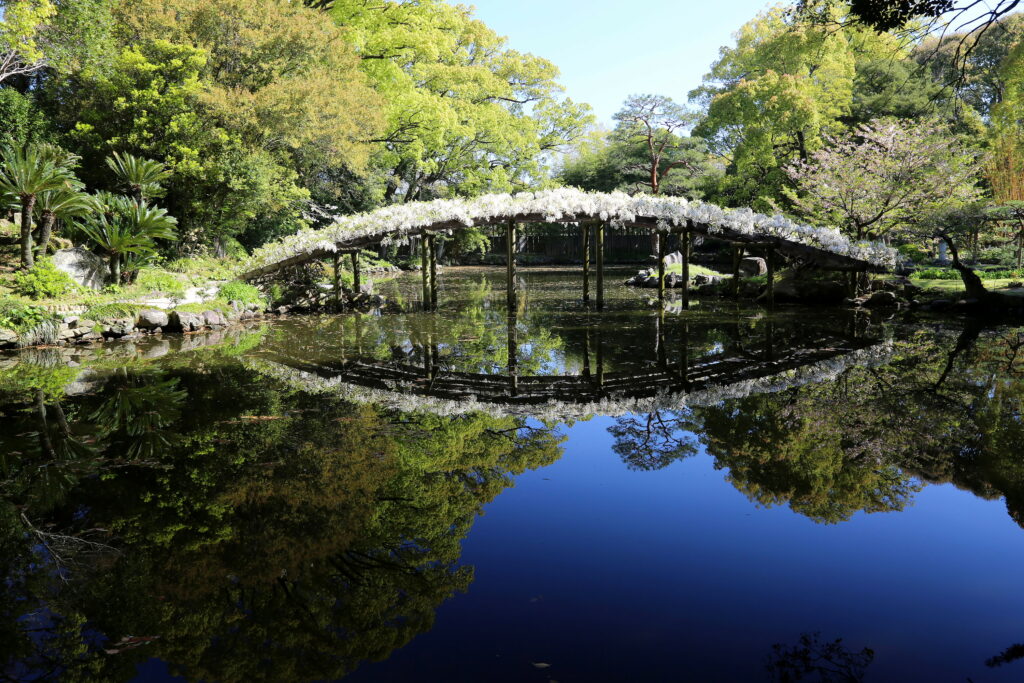
It is part of the Kyu Hama Goten (or “Former Hama Palace”), adjacent to the Uwajima Castle to the west. The garden’s main feature is a large pond. The pond features an indented shoreline with a cape, an inlet, and a Kyokuho (winding beach) as well as a small island. Many sea rocks, mainly of Izumi sandstone, are used for stone arrangements at the key shore points. The park features a variety of warm-temperate plants, especially many varieties of bamboo and wisteria.
cultural property : historic sites and places of scenic beauty as natural monuments
type : places of scenic beauty
Tenshakōen, Uwajima-shi, Ehime-ken 798-0065
Tel:0895-25-2709
This is a garden for a retirement residence built by the 7th lord of Uwajima, Date Munetada. It is located within Kyu Hama Palace along the west side of the Uwajima Castle. It is thought that the name “Tensha-en” derives from a verse of a poem written by the lord of Sendai, Date Masamune, when he retired, since the first lord of the Uwajima Domain, Date Hidemune, was the oldest son of Masamune.
The garden’s main feature is a large pond. The pond features an indented shoreline with a cape, an inlet, and a Kyokuho (winding beach) as well as a small island. Many sea rocks, mainly of Izumi sandstone, are used for stone arrangements at the key shore points. Evergreen trees such as Japanese black pines (Pinus thunbergii), camphor trees (Cinnamomum camphora), and black ridge oaks (Quercus phillyraeoides) grow densely around the garden east of the pond, shutting out the view outside the garden. Many and various warm-temperate zone plants grow in the garden as well as tall evergreen palm trees such as fountain palms (Livistona chinensis). Among the plants at the garden a variety of bamboo and wisteria create the unique scenery of Tensha-en.
Chikurin-ji Garden
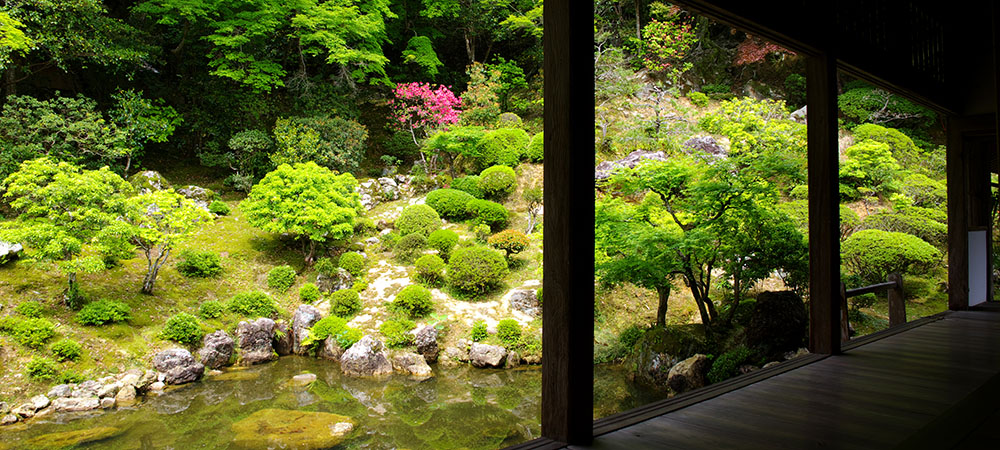
Chikurin-ji was built on an independent hill with abundant spring water. The current main buildings of Chikurin-ji were constructed in the late Edo Period, and it is believed that the garden pond was also made using spring water from that time. The garden consists of three main sections extending around a Kyakuden (reception hall) and a study.
cultural property : historic sites and places of scenic beauty as natural monuments
type : places of scenic beauty
3577 Godaisan, Kōchi-shi, Kōchi-ken 781-8125
Tel:088-882-3085
Home page : www.chikurinji.com
It is believed that Chikurin-ji was founded by Gyoki in 724. It is the 31st pilgrimage site of the 88 temples of Shikoku. The temple was built on an independent hill with abundant spring water. The main buildings of current Chikurin-ji were built in the late Edo Period.
The area facing the south side of a Kyakuden (reception hall) was originally a simple space covered only with gravel for ceremonies. It is believed that stepping stones and trees were added in later years.
The west garden of the Kyakuden has a small water feature. Its edge forms straight stone steps in order to draw water closer under the eaves and give the garden a more spacious appearance. Ornamental stones are placed here and there at the foot of the hill base that borders the water surface as well as on the slope. The garden from the north to the west of the study has three powerful stone arrangements that create a waterfall on the slope. The edge of the pond built along the hill base is protected by large stones. It is believed that the pond was made using spring water.
Next to the gate, there is a memorial museum to Dr. Makino Tomitaro, a world-class botanist, and the Kochi Prefectural Makino Botanical Garden.
Garden of Mr.Ito Denemon
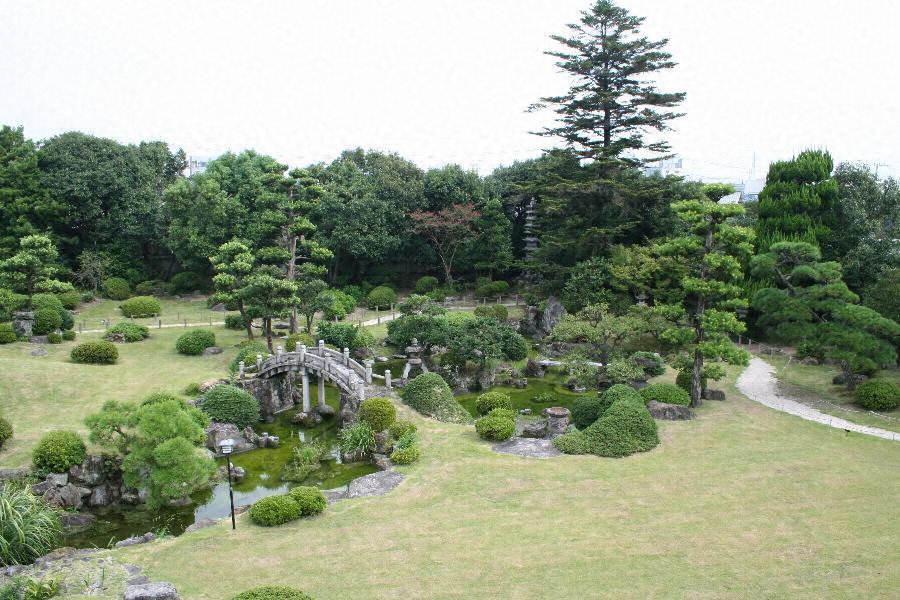
The garden was made by coal magnate, Ito Den’emon of Chikuho in the northern Kyushu, for his main residence. It consists of three sections: The entry to the entrance of the residence, two small courtyards between buildings including the main house, and a spacious garden with a pond encompassing the northern half of the land.
cultural property : historic sites and places of scenic beauty as natural monuments
type : places of scenic beauty
300 Kōbukuro, Iizuka-shi, Fukuoka-ken 820-0066
Tel:0948-22-9700
Home page : www.city.iizuka.lg.jp/shokokanko/kyoiku/leisure/kanko/dennemon/shite.html
Home page : www.kankou-iizuka.jp/denemon/
The garden was made by a coal magnate, Ito Den’emon of Chikuho in the northern Kyushu, for his main residence. While operating coal mines, Den’emon also completed two terms as a member of the Lower House of the Diet, where he worked to improve legal systems related to the mining industry and advanced the improvement works for the Onga River, where floods were recurring. Den’emon’s main residence, built on slightly higher ground close to the left levee in the midstream of the Onga River, added buildings as his coal mining business grew. In the early Taisho Era, the garden, with ponds on the north side of the main residence, was almost finished. By the early Showa Era, the buildings and gardens that remain today were mostly completed.
The garden largely consists of three areas: The entry section in front of the entrance of the residence where unique landscape design can be seen, two small courtyards made between the buildings, and a spacious garden with ponds built on the northern side of the land. The two ponds in the garden are equipped with fountain facilities made of granite (east) and tuff (west). All the streams of the garden have cement mortar floors, characteristics of garden design and structure that were popular in the early Showa Era.
Gyoraku-en of Mr.Fujie
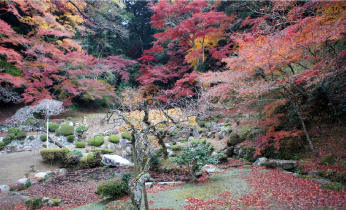
Although the date of its creation is not known, based on a record indicating that the garden was named in 1862, it is believed that the garden was built in the mid-Edo Period. The garden is situated at the foot of a mountain with a pond at the center. There is a waterfall stone arrangement placed in the part of the pond closer to the hill. The pond also features a Nakajima (central island) and three stone bridges.
cultural property : historic sites and places of scenic beauty as natural monuments
type : places of scenic beauty
6388 Amagi, Oaza Kawasaki-machi, Tagawa-gun, Fukuoka-ken 827-0001
Tel:0947-72-7777
It is thought that the name “Gyoraku-en” was taken from a verse of a Chinese book of poetry, “Major Festal Song,” by a scholar of Chinese classics, Murakami Butsuzan, in 1862 (the Bunkyu Era of the Edo Period). Although the date of its creation is not known, based on the record indicating the garden naming, it is believed that the garden was built in the mid-Edo Period.
The garden was built at the foot of a mountain based on the Shinsen Horai philosophy. The main feature of the garden is the pond, and an island representing Horai island is placed in the pond. A waterfall stone arrangement is placed closer to the mountain, and stone bridges are installed in three places. Maples, camelias, sweet osmanthus (Osmanthus fragrans), and Sago palms (Cycas revoluta) are planted around the pond, with azaleas around these trees. Visitors can enjoy a quiet view with forests of maples, Japanese red pines (Pinus densiflora), and Japanese cedars (Cryptomeria japonica) in the background. In 2018, the garden was hit by heavy rain in western Japan. It was extensively damaged and is currently impossible to visit. Reconstruction is expected.
Suizen-ji Joju-en
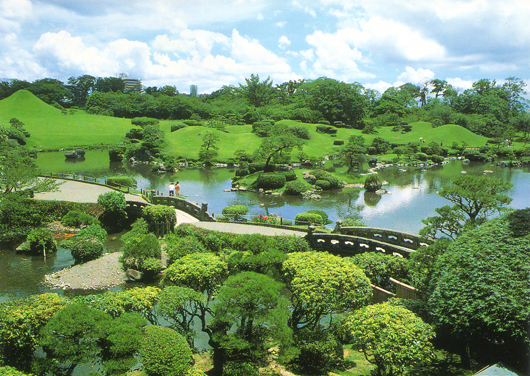
This is a Tsukiyama Sansui (mountain-and-water landscape) garden. A pond simulating a lake has a small island. In the back of a line of stepping stones, there is a gentle slope of a Tsukiyama (artificial hill). Clean spring water bubbles and flows freely into the pond. The garden’s name, “Joju-en” originates from “Gui Qu Lai Ci” (Come Away Home), a Chinese poem by Tao Yuanmng (365 – 427 CE).
cultural property : historic sites and places of scenic beauty as natural monuments
type : places of scenic beauty, historic sites
8-1 Suizenji Kōen, Chūō-ku, Kumamoto-shi, Kumamoto-ken 862-0956
Tel:096-383-0074
Home page : www.suizenji.or.jp
In 1632, Hosokawa Tadatoshi, the first lord of the Hosokawa Family (Higo Domain), enjoyed the area while he was practicing falconry and built a teahouse there. Later, the garden was completed during the era of Hosokawa Tsunatoshi, the third lord of the Hosokawa Family. It is a stroll garden and was named Joju-en based on “Gui Qu Lai Ci” (Come Away Home), a Chinese poem by Tao Yuanmng (365 – 427 CE). The garden features a pond simulating a lake that includes an island. In the back of the line of stepping stone, a gentle slope of a Tsukiyama (artificial hill) is created. Clean spring water bubbles and flows freely into the pond.
In the Genroku Era (1688 – 1707), many arbors were built and enjoyed. Due to the Horeki Reform (for the Domain’s fiscal reconstruction), however, all buildings except Suigetsu-tei were removed and of many kinds of trees, only pine trees remain now. When the Meiji Era began (in 1869), lands and people were returned to the emperor (“Hanseki Hokan”). The garden temporarily became government land. On the north side of the garden is the Izumi-jinja Shrine that honors the lords of the Hosokawa Family, including Hosokawa Tadaiju and Fujitaka.
Myokoku-ji Garden
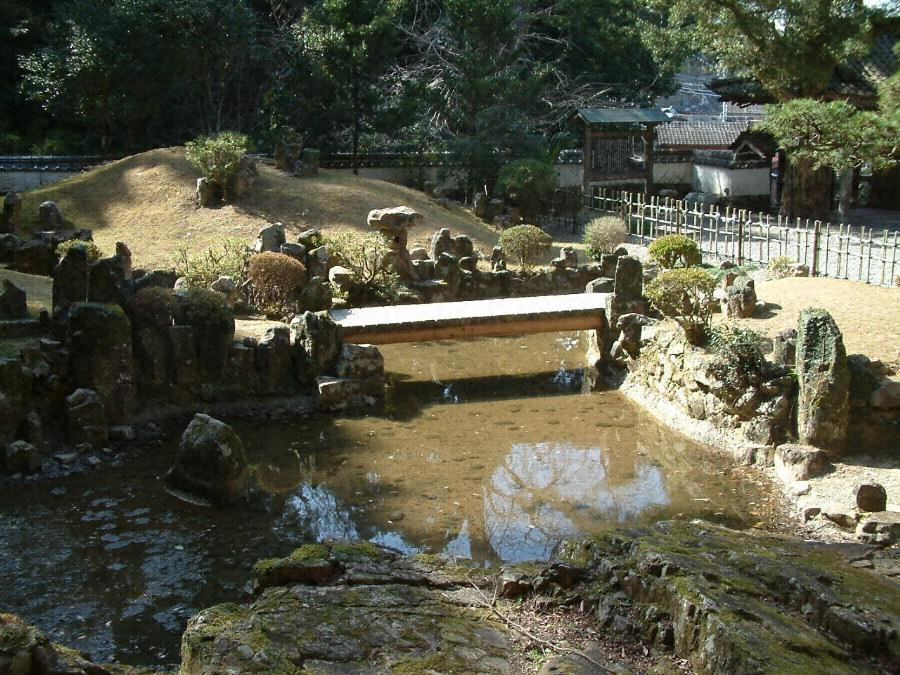
The garden is built at the south side of the Hondo (the main temple). With the natural forest of Komeno-yama mountain in the background as borrowed scenery, the garden features three Tsukiyama (artificial hills), a pond with a central island, a wooden bridge across the pond, and garden stones arranged at intervals. Chinquapins (Castanopsis sieboldii) grow thickly mixed with a few enormous Japanese red pines (Pinus densiflora) from the east to south of the garden.
cultural property : historic sites and places of scenic beauty as natural monuments
type : places of scenic beauty
373 Hososhima, Hyuga, Miyazaki 883-0001
Tel:0982-52-2486
Myokoku-ji is a famous temple of the Nichiren sect and is said to be founded by Satsuma Ajari Nichiren shonin (a Nichiren sect priest) in the Koei period (1342 – 1345). The garden is built at the south side of the Hondo (the main temple). From the east side to the south side, the garden includes an inclined plane at the foot of Komeno-yama mountain in the background, featuring three Tsukiyama (artificial hills), a central island at the center of a pond, and a wooden bridge across the pond. Various stones are arranged around the pond. Notably, standing stone arrangements surround the central island. On the east side of the pond, an inclined plane at the foot of the mountain is incorporated into the garden landscape. A granite wall makes up the narrow part of the inclined slope, forming a terrace allowing water from the mountain to flow into the garden. Water from the mountain flows directly down to the pond. The inclined plane where chinquapins (Castanopsis sieboldii) grow thickly mixed with a few enormousJapanese red pines (Pinus densiflora) give a sense of depth in the rather small garden.
Sengan-en Kekura Okari-ya Garden
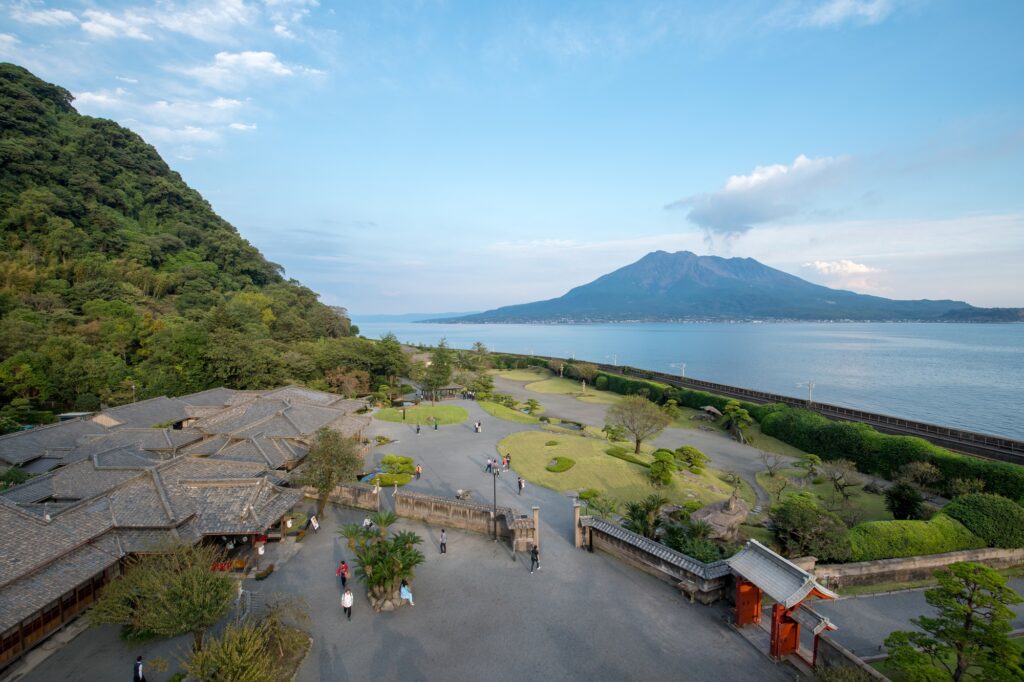
Sengan-en was a villa of the Shimazu Family, the lords of the Satsuma Domain. The garden is built at the bottom of the Isoyama Park with a thick broad-leaved forest on the north side. The south front side of the garden commands a panoramic view of Mt. Sakurajima across Kinko Bay. The waterfall, river wall of a mountain torrent, and splendid stone arrangements using boulders such as a stone bridge have been preserved without any major alteration.
cultural property : historic sites and places of scenic beauty as natural monuments
type : places of scenic beauty
9700-1 Yoshinochō, Kagoshima-shi, Kagoshima-ken 892-0871
Tel:099-247-1551
The garden originated in 1658, when an Okariya (rest house of shogun and lord) was built on the Oiso Shimotsu Hamamon mansion, which was the former residence of Karo (chief retainer) Kamata Izumo-no-kami as a villa of Shimazu Mitsuhisa, the 19th lord of the Shimazu Family. The name “Sengan-en” is said to originate from its resemblance to Ryuko-san-sengen (龍虎山仙巌), a scenic site in the Jiangxi Province in China.
The garden is built at the bottom of the Isoyama Park with a thick broad-leaved forest on the north. The south front side of the garden commands a panoramic view of Mt. Sakurajima across Kinko Bay. The garden occupies a wide two-terraced space in front of the building facing the ocean, featuring stone arrangements and stone lanterns. A partial reformation was carried out prior to the first year of the Meiji period. Since then the garden has remained almost intact without suffering from a major change.
Kekura Okari-ya is located approximately 500 meters east of Sengan-en. It was built as an annex of the Shimazu Family. The building survived only for a short period of time. However, the waterfalls, river wall of the mountain stream, stone arrangements using boulders such as stone bridges remained without significant alterations, conveying the landscapes of the end of Edo Period (1853 – 1869). (Kekura Okari-ya is currently not open to the general public.)
Tamasato residential garden of Mr. Shimazu
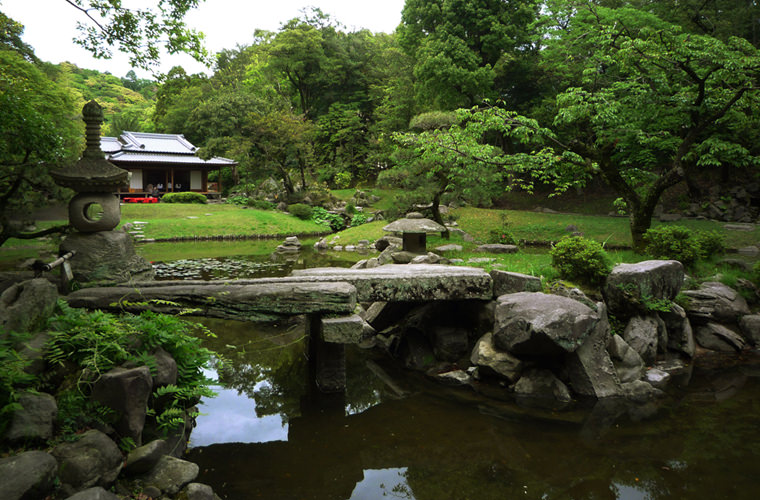
There is also a pond garden called “Ueoniwa” (upper garden) and a garden with a teahouse called “Shitaoniwa” (lower garden) at the western side on the lower level. Ueoniwa was built as a southern garden of a shoin (study) parlor. It features three Tsukiyamas and an oval pond on the east side. Shitaoniwa features a teahouse to the north, overlooking the wide pond garden on the south side.
cultural property : historic sites and places of scenic beauty as natural monuments
type : places of scenic beauty
27-20 Tamazatochō, Kagoshima-shi, Kagoshima-ken 890-0012
Tel:099-222-2627
Home page : www.tamazatotei-teien.jp
The garden is located at the west side of Atagoyama, the north hill in Kagoshima city. It is believed to have been built in 1835 by Shimazu Nariakira, the 27th lord of the Simazu Family. At the eastern side of the premises, there is a flat area where a group of main buildings once stood. A pond garden called “Ue-oniwa” (upper garden) was built there, and a garden with a teahouse called “Shita-oniwa” (lower garden) was built at the western side on the lower level. Ue-oniwa was built as the southern garden of a shoin (study) parlor, featuring three Tsukiyama (artificial hills) and an oval pond on the east side. Eroded beach stones were used in the arrangement of the stream flowing into the pond, simulating a mountain stream consisting of multiple branches. The central island is a turtle-shaped rock, which gave the pond its other name of “Kame-no-ike” (turtle pond). The teahouse commands a view of the mountains over trees toward the south. In the Shita-oniwa, a waterfall stream is created symbolizing a gorge on the east side of the teahouse, from which it flows around the southeast corner of the teahouse, goes under the big natural stone bridge, and becomes a waterfall flowing into the pond. The garden has a unique design, such as the central island, boulders, and a dozen of stone lanterns.
Garden of Mr.Ishigaki
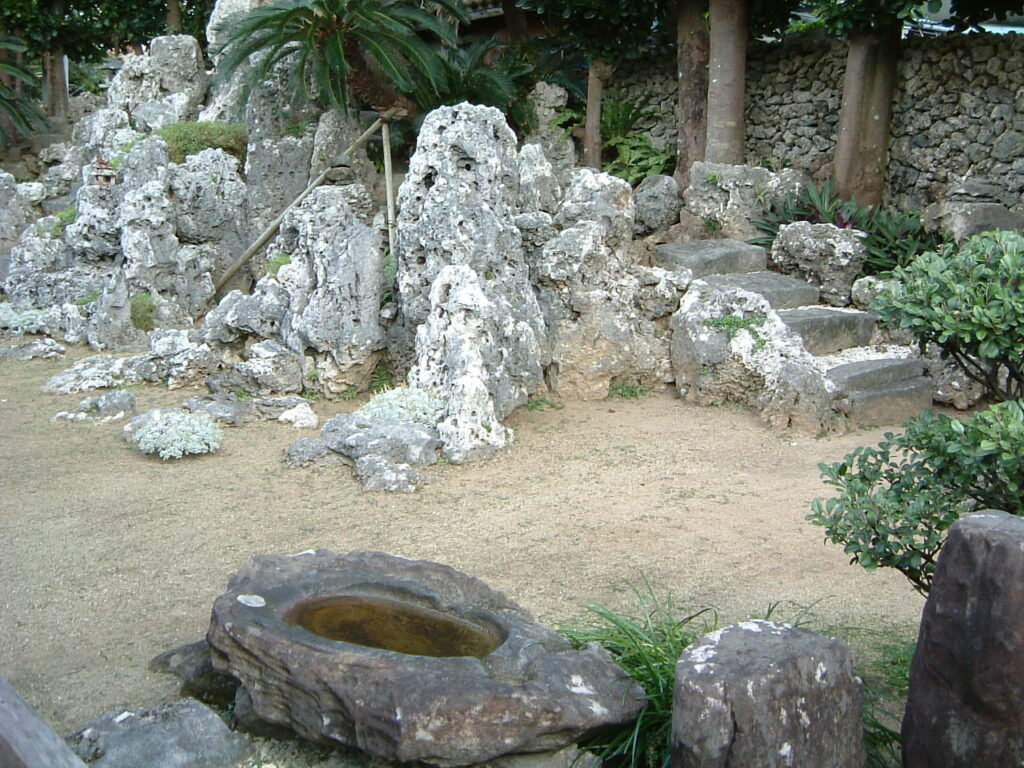
Peechin (rank order) Ohama, an ancestor of the Ishigaki Family, built the garden based on adesign by Peechin Gusukuma, a gardener in Shuri in 1819. Ryukyu limestone is the main stone used in the garden. Based on the style of the Japanese garden—such as five sets of stone arrangements that slope down from the north to south, a stone bridge, and a dry waterfall—the garden is a Karesansui (dry landscape) that incorporates local colors, for example, plantings of Sago palms (Cycas revoluta) on a Tsukiyama (artificial hill).
cultural property : historic sites and places of scenic beauty as natural monuments
type : places of scenic beauty
287 Arakawa, Ishigaki-shi, Okinawa-ken 907-0024
Tel:0980-82-2720
It is a garden of the Ishigaki Family located in Ishigaki City. The Ishigaki Family is an old family that produced appointed officials sent to administer the Ohama Magiri region in the Ryukyu Kingdom. The Ohama Magiri region includes the central area of Ishigaki Island, the western area of Iriomote Island, and Hateruma Island. It is not clear when the garden was built. Based on the description of the garden’s design specification, called “Niwa-zukuri-fushin-sho” (庭作不審書), which was handed down in the Ishigaki Family, it is estimated to have been created around 1819. It is believed that the garden was designed by Peechin (rank order) Gusukuma, a gardener in Shuri, the same gardener who also designed the garden of Miyara Dunchi (the residence of the government official in charge of the Miyara District).
The garden is a Karesansui (dry landscape) garden that features Tsukiyama (artificial hills), five sets of stone arrangements that slope down from the north to south, a dry waterfall, and a stone bridge. The stone arrangements use Ryukyu limestones, natural stones that are locally produced. Plants native to the Yaeyama Islands, such as common garcinias (Garcinia subelliptica) and screw pines (Pandanus odorifer) are used in the plantings. The garden offers the atmosphere of a southern country.