
mie」タグアーカイブ

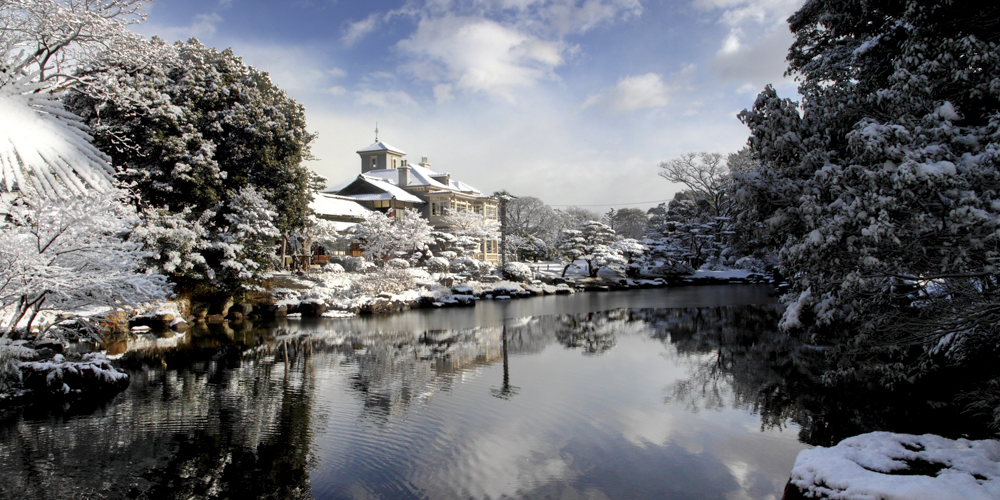
Kyu Garden of Mr. Moroto

The site was completed in Karoto Shinden (currently Kisosaki-cho, Kuwana-gun, Mie Prefecture) in 1914 as a residence of the second Moroto Seiroku, who acceded to his family position as the village headman. The area spreads from east to west with a lawn, a garden pond, and a Tsukiyama that give depth to the garden, emphasizing its open space. The site holds extremely important academic value as a garden built by a wealty rural merchant in Japan’s modern times.


cultural property : historic sites and places of scenic beauty as natural monuments 
type : places of scenic beauty

663−5 Kuwana, Kuwana-shi, Mie-ken511-0009
Tel:0594-24-4466

Home page : www.intsurf.ne.jp/~rokkam/


The site was completed in Karoto Shinden (currently Kisosaki-cho, Kuwana-gun, Mie Prefecture) in 1914 as a residence of the second Moroto Seiroku, who acceded to his family position as the village headman. The residence stands at the right-hand side of the Ibi River, which flows from south to east in the north-eastern section of Kuwana City, Gifu Prefecture. When walking through Nagaya-mon (a gate built into row houses – Nagaya – at the entrance of a high-ranking samurai) adjacent to the river bank, and proceeding along the walking path meandering to the left, visitors can see a Western-style building designed by Josiah Conder to the front, and a unique Japanese-style building to the west, which is connected to the first building. The main garden is located at the south of these buildings. The area spreads from east to west with a lawn, a garden pond, and a Tsukiyama that give depth to the garden, emphasizing its open space.
There is also an inner courtyard in the back of the Japanese-style building. This yard originally had a tea room and a tea garden. The tea room was transferred to another location in the early Showa Era. The tea garden no longer maintains its original form but the structural remains still exist. The site carries extremely important academic value as a garden built by a wealty rural merchant in Japan’s modern era. 
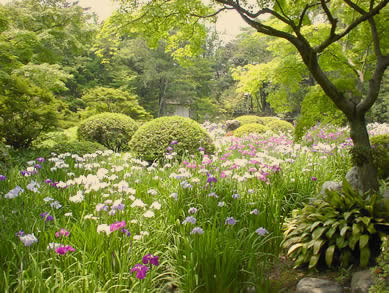
Garden of Mr. Moroto

The garden was built in Karoto Shinden (currently Kisosaki-cho, Kuwana-gun, Mie Prefecture) in 1906 by the first Moroto Seiroku, who acceded to his family position as the village headman. The pond in the garden takes in water from a canal and is called a “tidal pond.” The pond originally created varying landscapes as the tide changed, but it no longer uses seawater.


cultural property : historic sites and places of scenic beauty as natural monuments 
type : places of scenic beauty

18 Taichimaru, Kuwana-shi, Mie-ken 511-0005
Tel:0594-25-1004

Home page : www.moroto.jp


The garden was built in Karoto Shinden (currently Kisosaki-cho, Kuwana-gun, Mie Prefecture) in 1906, by the first Moroto Seiroku, who acceded to his family position as the village headman.
The garden mainly consists of two sections, which are the garden with a grove and a pond in front of the former Yamada residence, and the palace garden in front of the palace’s study. The west and north borders of the site are marked by a moat.
The garden of the former Yamada residence is a stroll garden centered around a shallow pond stretching east and west. In the mid-section of the pond, zigzag stone bridges are installed to connect the southern edge with Nakajima (the central island) and Mt. Sotetsu on the northern edge.  Suiko-tei, which was built in the Edo Period, stands at the western edge of the pond. It is believed that the area around Suiko-tei includes the oldest features of the garden. The palace garden is meant to be viewed from a zashiki (a sitting room). It consists of a pond in the center in front of the study, and dynamic stone arrangements that remind viewers of a rough seashore or deep mountains protect the pond edges. The shore has two levels, and the sandy bottom level submerges and reappears depending on the tide.
The garden at the former Yamada residence retains many of its original characteristics, while the palace garden is valuable as a unique garden built by a wealthy rural merchant in Japan’s modern time.