
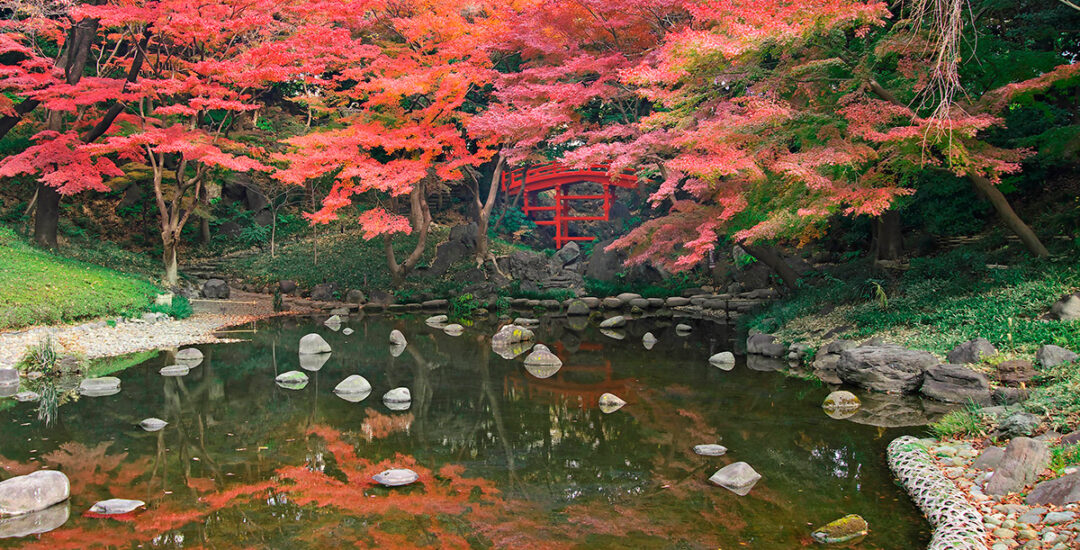
 Koishikawa Koraku-en
「special historical sites」カテゴリーアーカイブ
Koishikawa Koraku-en
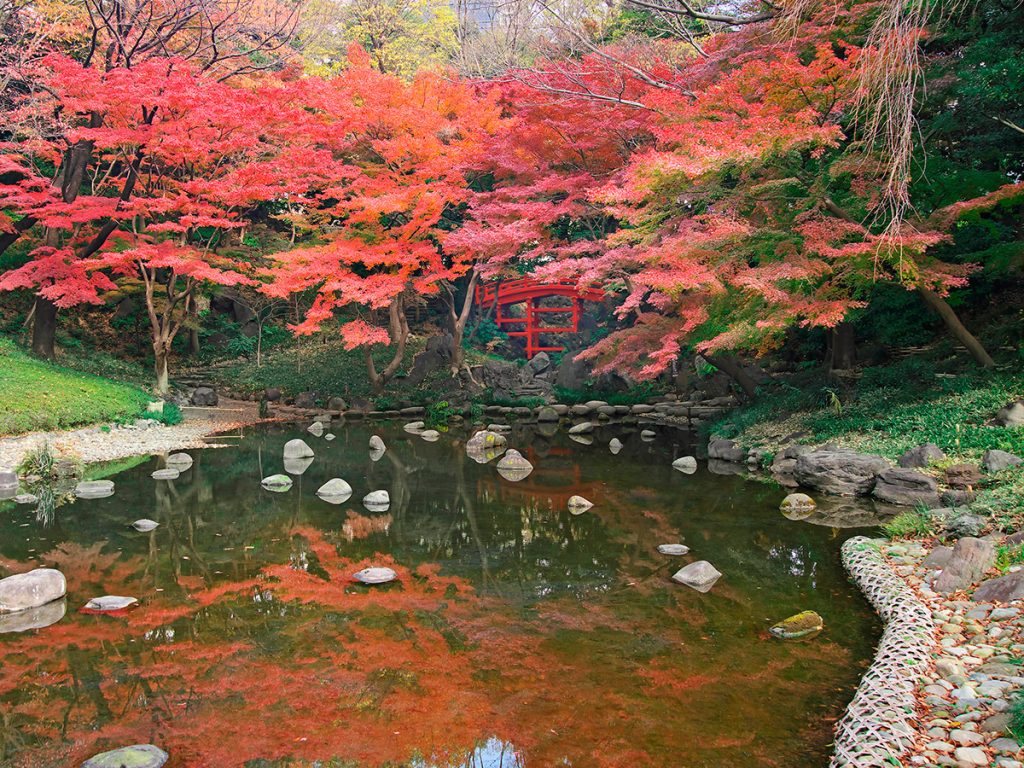
This garden was created in the second house (later it became the first house) of the Daimyo of Mito Tokugawa in Edo in 1629 by drawing water from the branch of the Kanda waterworks. This is a stroll garden with a path around a pond and considered to be a typical Daimyo garden in the early stages during the Edo Period. It was designated as a Special Historic Site and a Special Place of Scenic Beauty by the Cultural Properties Protection Law in 1952.
cultural property : historic sites and places of scenic beauty as natural monuments
type : places of special scenic beauty, special historical sites
1-chōme-6-6 Kōraku, Bunkyō-ku, Tōkyō-to 112-0004
Tel:03-3811-3015
Home page : https://www.tokyo-park.or.jp/park/koishikawakorakuen/index.html
The 1st lord of Mito, Tokugawa Yorifusa, started the construction in 1625 and later the 2nd lord Mitsukuni completed it. Mitsukuni hired Zhu Zhiyu, a Confucian scholar, who was a surviving retainer of the Ming Dynasty, in order to integrate the Chinese taste to the garden. The garden is located on the edge of the Koishikawa plateau and it is a stroll garden with a path around a Tsukiyama (artificial hill) and a pond. The pond uses the water from the Kanda waterworks. Mitsukuni named the garden from the line, “(if there is a concern) the leaders shall be concerned before the people are and (if there is something to enjoy) the leaders enjoy after the people do” in “Gakuyoro-ki”. This is considered to be an early style of the typical Daimyo garden from the Edo Period.
Some buildings only remain as ruins because of the great earthquake of 1855 and a fire on Kantoku-tei in 1880, but the pond and the forest remain beautiful as before.
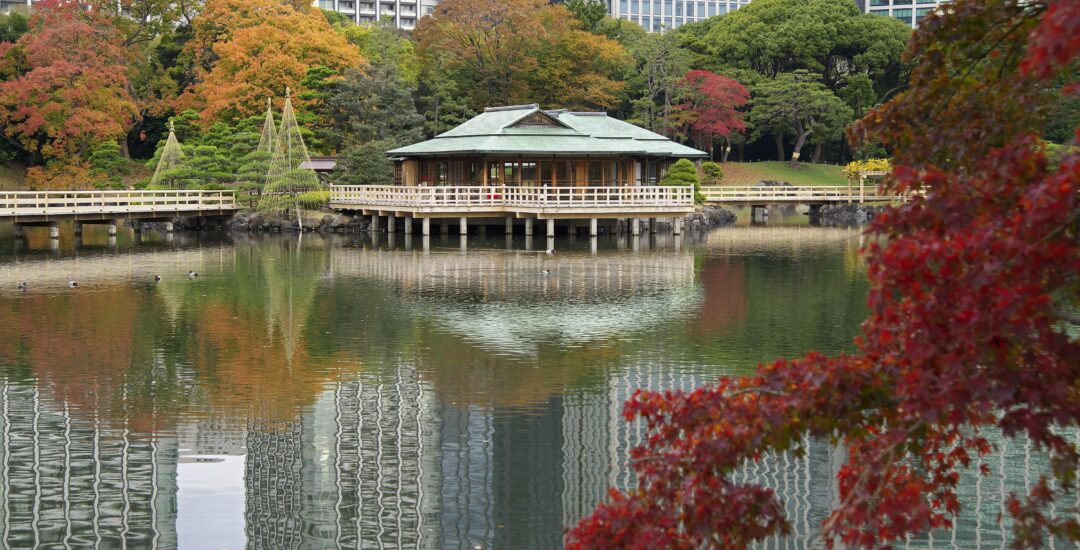
Kyu Hamarikyu Gardens
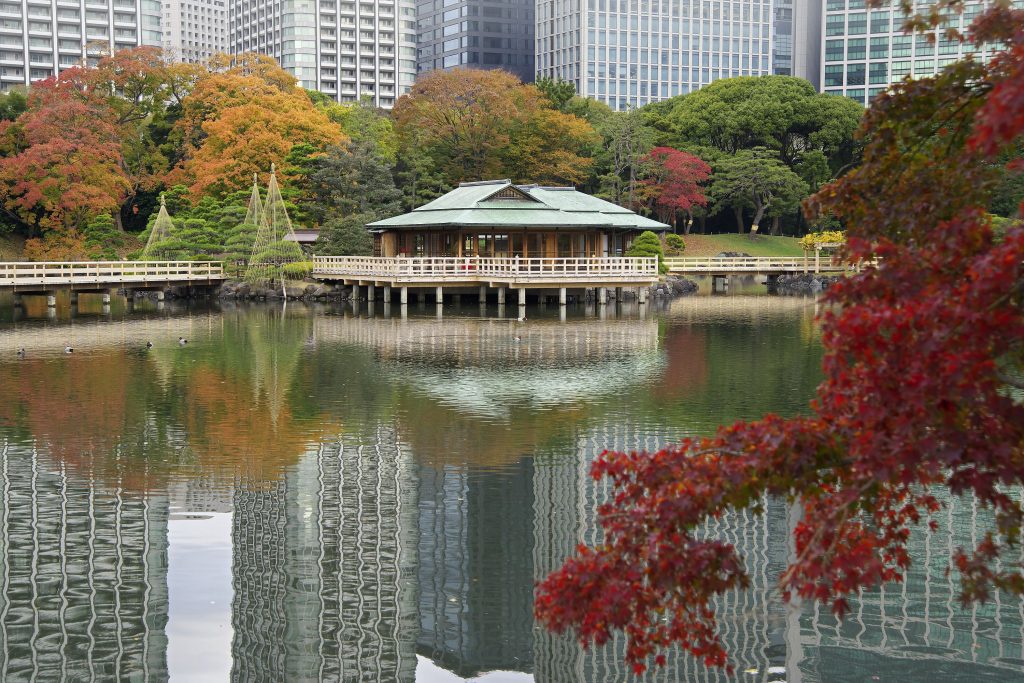
This is one of the outstanding Daimyo gardens from the Edo Period and it has a pond with an inflow of the tide and two areas designated for duck hunting. The atmosphere of the pond changes as the tide turns. This is the only existing garden in Japan with a pond using the ocean tide. It was designated as a Special Historic Site and a Special Place of Scenic Beauty by the Cultural Properties Protection Law in 1952.
cultural property : historic sites and places of scenic beauty as natural monuments
type : places of special scenic beauty, special historical sites
1-1 Hamarikyūteien, Chūō-ku, Tōkyō-to 104-0046
Tel:03-3541-0200
Home page : https://www.tokyo-park.or.jp/park/hama-rikyu/index.html
This is one of the outstanding Daimyo gardens from the Edo Period and it has a pond with an inflow of the tide and two areas designated for duck hunting. The atmosphere of the pond changes as the tide turns. This is the only garden with a pond using the ocean tide among all remaining Daimyo gardens in Tokyo. There was a vast field of reed until the beginning of the Edo Period (the Kan’ei Era) and it was used for falconry for the Shogunate. Matsudaira Tsunashige who was a prime minister of Kofu built a villa called Kofu Hama Yashiki in 1654. It later passed into the Shogunate’s possession when Ienobu was the 6th Shogun and it was renamed as Hama Goten.
The north side and the south side of the garden have different styles. The south side is centered around a large pond which draws seawater. There are paths and bridges around the pond so that visitors can enjoy strolling and admiring beautiful scenery from different viewpoints around the pond either by the pond or on the bridge over the water. There are duck hunting grounds in both the east and west sides of the garden. In those days, visitors could see Odaiba and the mountains of Boso in the southeast and Mt. Fuji in the west in the distance, but now high-rise buildings on the waterfront of the Tokyo Bay are the backdrop of the garden.
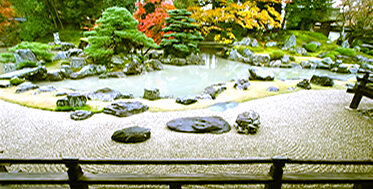
Daigo-ji Sanpo-in Garden
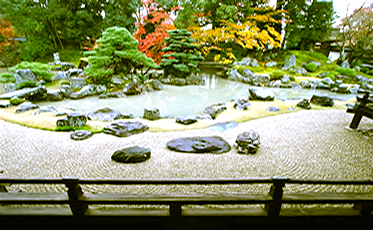
Daigo-ji is a famous temple founded in the Heian Period. This garden is adjacent to Sanpo-in, where the chief monk lives. Although the premises of Daigo-ji was devastated by the Onin-Bunmei War, it was reconstructed after Toyotomi Hideyoshi hosted “Daigo’s Cherry-blossom Viewing.” The garden was made by exceptional gardeners.
cultural property : historic sites and places of scenic beauty as natural monuments
type : places of special scenic beauty, special historical sites
22 Daigohigashiojicho, Fushimi-ku, Kyōto-shi, Kyōto-fu 601-1325
Tel:075-571-0002
Home page : www.daigoji.or.jp/garan/sanboin_detail.html
Daigo-ji is a famous temple that is said to have been founded by Rigen Daishi Shoho, who offered a Kan’on statue at Mt. Kasatori (the spring water from this mountain has been called “Daigo” water) in the Heian Period. The chief monk had resided in Sanpo-in, but the premise of Daigo-ji fell into ruin during the Onin-Bunmei War, which also destroyed Sanpo-in. The devastated Daigo-ji was reconstructed by Gien Jugo under the protection of Toyotomi Hideyoshi. It is told that, prior to 1598, when new Sanpo-in were to be made at the site of Kongorin-in, Toyotomi Hideyoshi himself roped off an area and ordered three gardening magistrates to rebuild the garden. Although Toyotomi Hideyoshi died in August 1598, the garden construction continued under the instruction of Gien, which lasted for 27 years until Gien also died.
The garden has a pond at the center, with three islands and nine bridges. There is a Tsukiyama (artificial hill) to the south and a waterfall to the east. Many ornamental stones are arranged along the pond shore. Fujito stone, a famous stone owned by past rulers, was also placed among them. The site has tall evergreen trees such as Japanese white pines (Pinus parviflora), chinquapins (Castanopsis sieboldii), and Japanese blue oaks (Quercus glauca), creating a magnanimous yet graceful atmosphere.
Jisho-ji Garden
The garden belongs to a Zen temple of the Shokoku-ji school (the Rinzai sect), and is representative of the Higashiyama culture. It was built in 1339 modeled after a garden at Saiho-ji, made by Muso Soseki. The garden has Tsukiyama (artificial hills) and ponds, with mountains, called “Tsukimachi-yama” and “Daimonji-yama” in the background.
cultural property : historic sites and places of scenic beauty as natural monuments
type : places of special scenic beauty, special historical sites
2 Ginkakujichō, Sakyō-ku, Kyōto-shi, Kyōto-fu 606-8402
Tel:075-771-5725
This is a Zen-temple garden that belongs to the Shokoku-ji school of the Rinzai sect and an excellent example of the Higashiyama culture. This is a garden of a mountain villa known as Higashiyama-dono. The villa was built by the 8th Shogun Ashikaga Yoshimasa of the Muromachi Shogunate for his retirement, following the example of Kitayama-dono Kinkaku Rokuon-ji, built by the 3rd Shogun Ashikaga Yoshimitsu. The garden is said to have been modeled after the garden of Saiho-ji designed by Muso Soseki in 1339.
The garden consists of upper and lower levels: A stroll garden with a pond is located on the ground level and a Karesansui (dry landscape) garden on the back hill. The stroll garden has a pond called “Kinkyochi” at the center, and Ginkaku and Togu-do are situated on both sides of the pond. The landscape of these gardens was significantly altered during the renovation in the early Edo Period.
The key garden components are Ginshadan and cone-shaped Kogetsu-dai created from white sand. It is believed that Ginshadan, which depicts the scene of waves at Lake Seiko in China, and Kogetsu-dai, formed to resemble Mt. Fuji, were made with moonlight reflections in mind.
Rokuon-ji Garden
Kinkaku-ji has two ponds, Kyokochi that spreads in front of the Shariden (reliquary hall), and Anmintaku that is situated on the north side, which is elevated by one level. Water flows into the pond from Daimonji-yama. Since earth and sand flow in when heavy rain cause a large amount of drainage, Anmintaku functions as a sedimentation basin for Kyokochi.
cultural property : historic sites and places of scenic beauty as natural monuments
type : places of special scenic beauty, special historical sites
1 Kinkakujichō, Kita-ku, Kyōto-shi, Kyōto-fu 603-8361
Tel:075-461-0013
The third Shogun of the Muromachi Shogunate, Ashikaga Yoshimitsu, after passing the title to his son, Yoshimochi, and became a monk, received a mountain villa from the Saionji Family in 1397 and constructed Kitayama-dono at the villa. When Yoshimitsu passed away, Kitayama-dono was turned into a temple according to his will and named Rokuon-ji, honoring his posthumous Buddhist name “Rokuon-in.”
Kinkaku-ji has two ponds, Kyokochi that spreads in front of Shariden (a reliquary hall; Kinkaku), and Anmintaku, situated on the north side, elevated by one level.
Kyokochi is a stroll garden with a pond, and uses many ornamental stones for its shore and central island.
The pond water flows in from Daimonji-yama and receives earth and sand when there is significant amount of drainage due to heavy rain. Therefore, the water is first drawn to Anmintaku, which is located on the highest level and functions as a sedimentation basin, then discharged to Kyokochi. Anmintaku, located in the back of Kinkaku, has fewer ornamental stones and is believed to have been constructed by Saionji Kintsune during the Kamakura Period.