
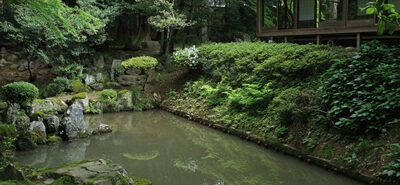
 Taga-jinja Oku-shoin Garden
「KInki」カテゴリーアーカイブ
Kinki
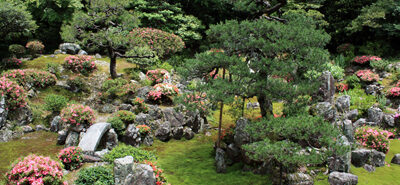
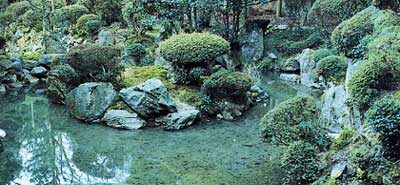
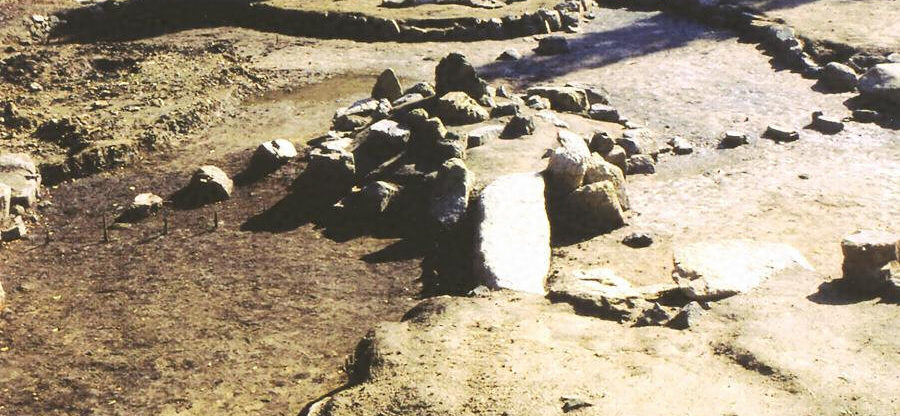
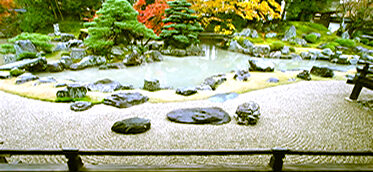
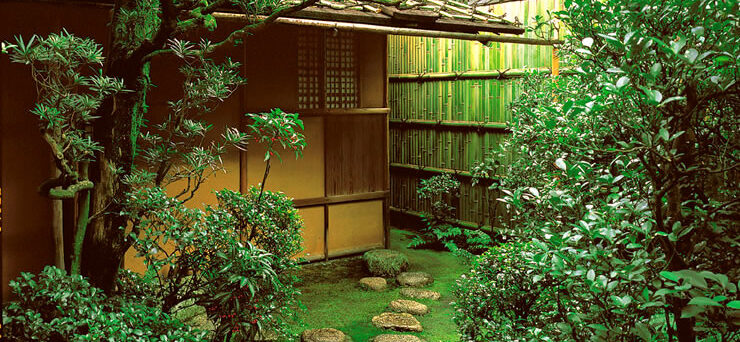
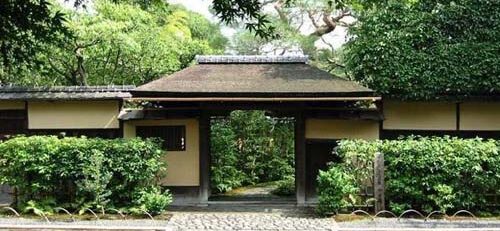
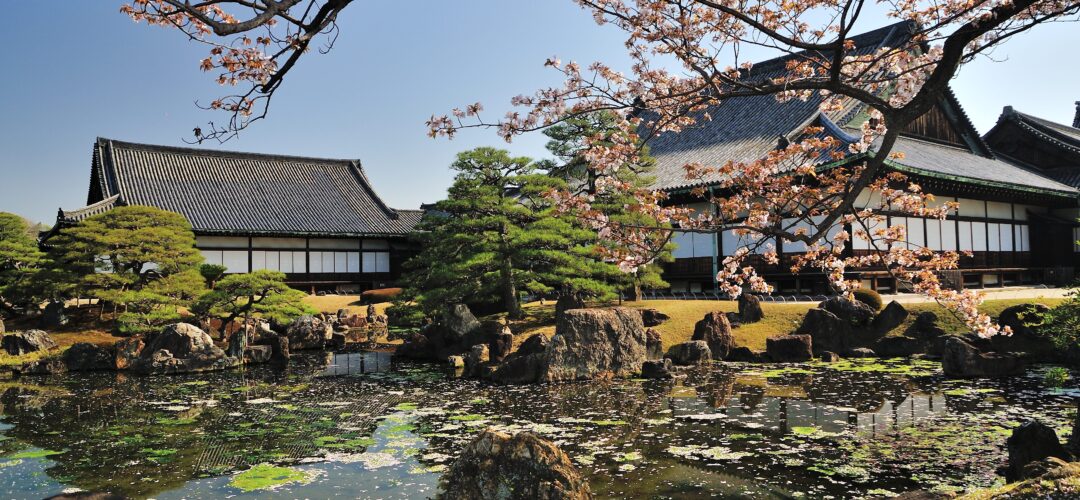
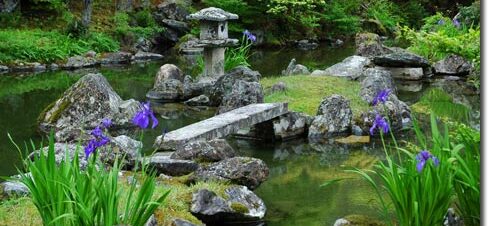
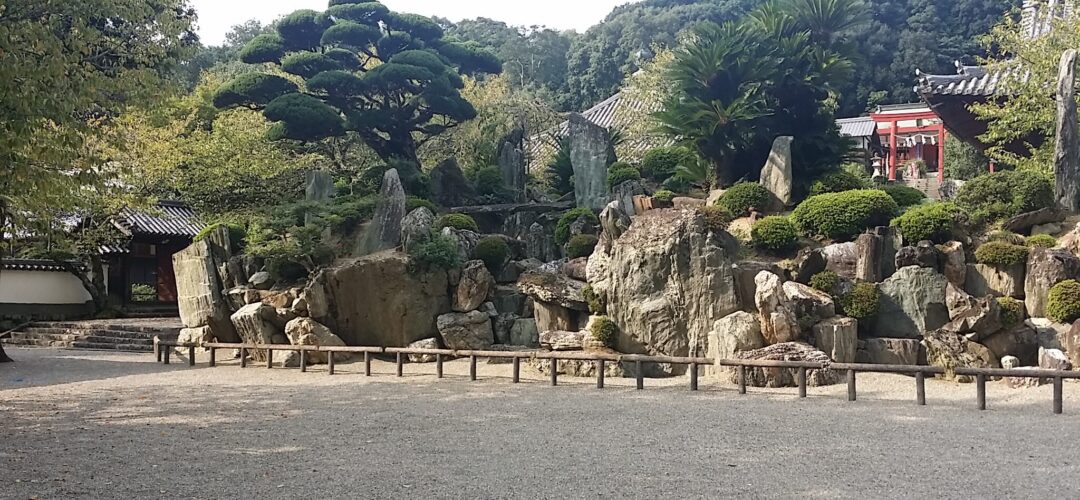
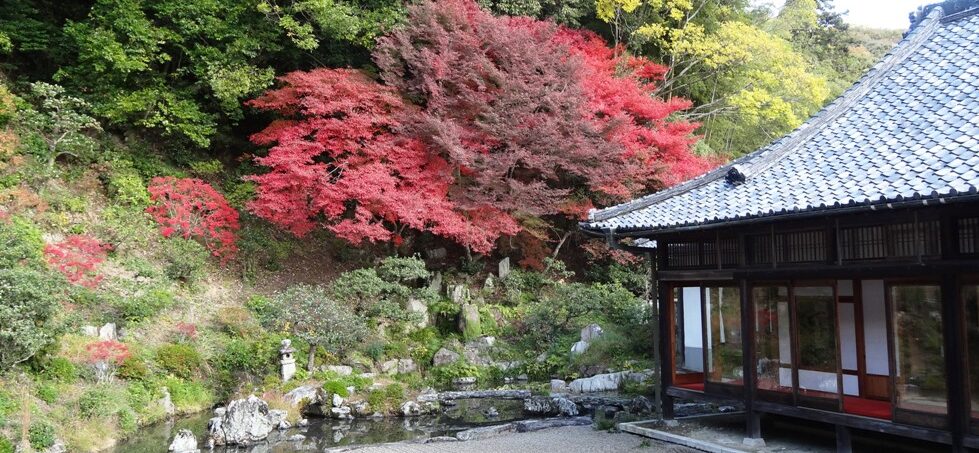
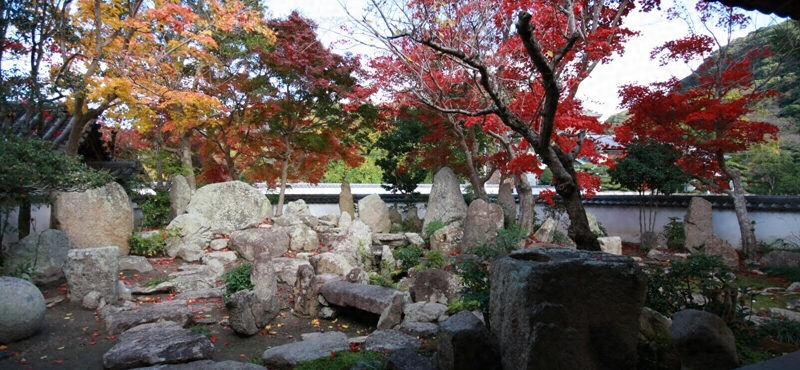
Taga-jinja Oku-shoin Garden
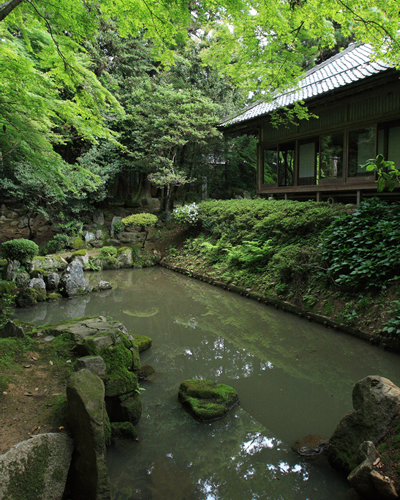
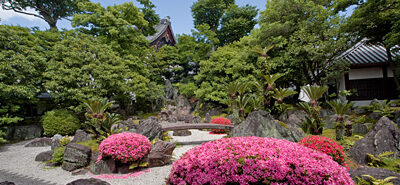
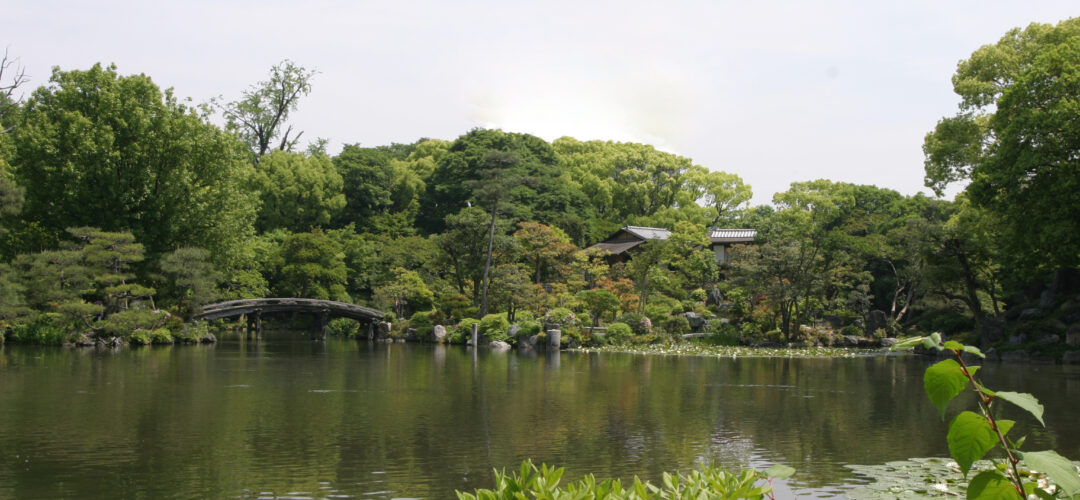
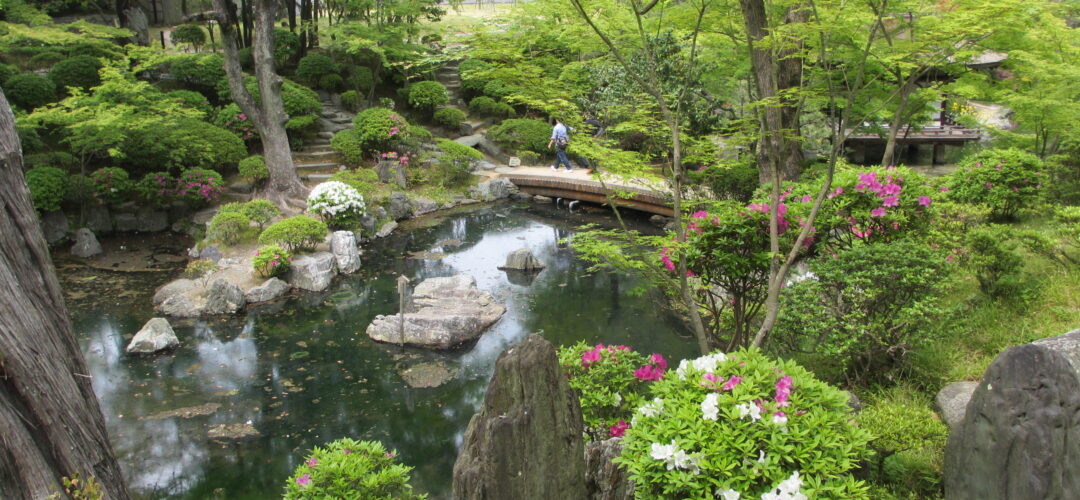
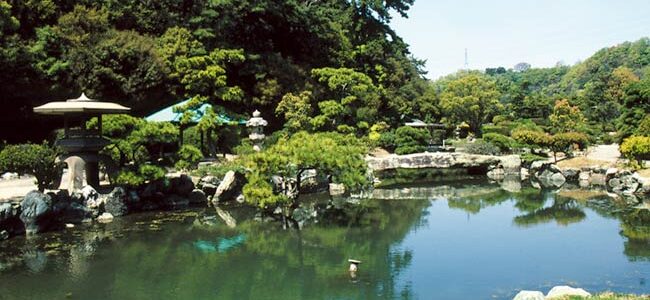
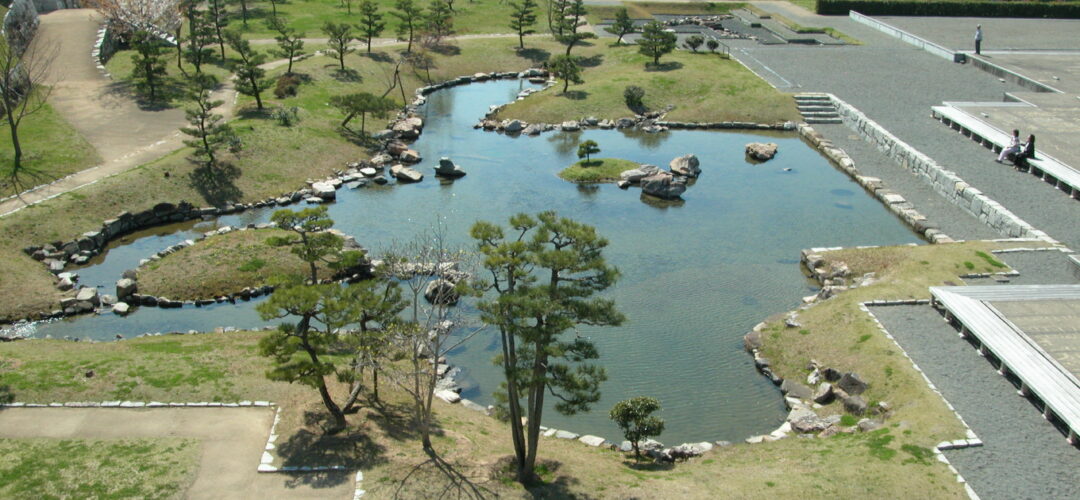
This is a garden at Kojo-in, which is one of the sub-temples of Mii-dera. Azaleas (Rhododendron spp., Rhododendron indicum) are planted densely in various locations, and Japanese cedars (Cryptomeria japonica), Japanese cypress (Chamaecyparis obtusa), and pines form dense forests on the hillside. It is considered to be an outstanding example of of gardens in the Omi region due to its small but dense composition that gives depth to the garden.
cultural property : historic sites and places of scenic beauty as natural monuments
type : places of scenic beauty
604 Taga, Inukami District, Shiga-ken 522-0341
Tel:0749-48-1101
Home page : www.tagataisya.or.jp/about/
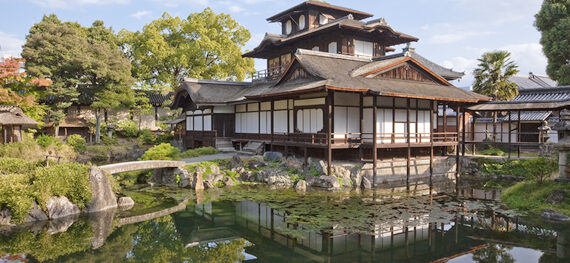
This is a garden at Kojo-in, which is one of the sub-temples of Mii-dera. The timeframe in which the temple was constructed is unclear, but it is thought that the temple was built around 1601 when the Kyakuden (reception hall) was completed. This view garden with a large pond is integrated with the Kyakuden. Since the Kyakuden’s pillars supporting the southern veranda stand on rocks protecting the pond shore, the pond can be seen directly under the veranda. With water approaching visitors’ feet, the Kyakuden creates a sense of elegance similar to the charm of floating architecture. The pond stretches from east to west. A natural stone bridge is installed at a turtle island, and an old waterfall on the opposite shore is made of two Tateishi (standing stones) while three large Yodomari-ishi (stones representing boats) also grace the pond. Natural stones are arranged around the pond. The southwestern section of the pond ends at a steep slope. Japanese cedars (Cryptomeria japonica), Japanese cypresses (Chamaecyparis obtusa), and pines grow densely on the hillside.Thick groupings of azaleas and dwarf azaleas are planted on the slope. It is considered to be a representative garden of the Omi region due to its small but dense composition that gives it depth.
Seigan-ji Garden
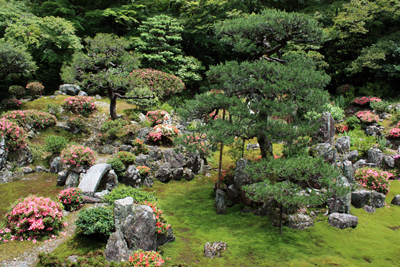
This garden is located at Seigan-ji, a temple of the Soto sect. It is believed that the third Kokin, a Buddhist monk, ordered the gardener, Katori, to make the garden in the early Edo Period. Katori is known for creating the Genkyu-en and Raku-raku-en of the Hikone Castle. The garden is set against a lush hill and is situated on its hillside at the back of the main temple.
cultural property : historic sites and places of scenic beauty as natural monuments
type : places of scenic beauty
669 Maihara, Maibara-shi, Shiga-ken 521-0012
Tel:0749-52-0463
Home page : www.seiganji.org/
This is a garden located at Seigan-ji, a temple of the Soto sect. The temple was founded as Beisen-ji by Sasaki Kyogoku Doyo of the Omi Genji Clan in the early period of the Northern and Southern Dynasties (the Enbun Era). He transcribed the eight volumes of the Lotus Sutra as an offering to the temple. Most of the temple building burned down in war fire during the Eisho Era, but after more than 150 years, in 1650, the temple was reconstructed and renamed Seigan-ji.
The garden is located in the back of the main temple and built on the hillside with a lush grove in the background. It is a stroll Karesansui (dry landscape) garden that utilizes the landform of Mt. Tao’s foothill, and includes a dry pond with a stone bridge and a Horai island as well as a dry waterfall on the far right. The stone lantern in front of Kuri (living quarters of monks) is a Yose-doro (a type of lantern that combines parts of different lanterns), a style popular among masters of the tea ceremony, adding elegant scenery to the garden. It is believed that the third Kokin, a Buddhist monk, ordered the gardener Katori to make the garden in the early Edo Period. Katori is known for creating Genkyu-en and Raku-raku-en of the Hikone Castle.
The Seigan-ji garden gives the illusion of flowing water using haircap moss (Polytrichum) instead of stones or sand. After it rains, water that has seeped into the moss springs out as underflow water, transforming the dry pond into a real one. The scenery after a rain is exceptional.
Kojo-in Garden
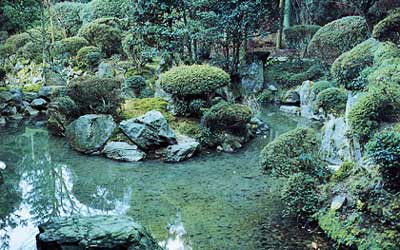
This is a garden at Kojo-in, which is one of the sub-temples of Mii-dera. Azaleas (Rhododendron spp., Rhododendron indicum) are planted densely in various locations, and Japanese cedars (Cryptomeria japonica), Japanese cypress (Chamaecyparis obtusa), and pines form dense forests on the hillside. It is considered to be an outstanding example of of gardens in the Omi region due to its small but dense composition that gives depth to the garden.
cultural property : historic sites and places of scenic beauty as natural monuments
type : places of scenic beauty, historic sites
246 Onjōjichō, Ōtsu-shi, Shiga-ken 520-0036
Tel:077-522-2238
Home page : www.shiga-miidera.or.jp/index.htm
This is a garden at Kojo-in, which is one of the sub-temples of Mii-dera. The timeframe in which the temple was constructed is unclear, but it is thought that the temple was built around 1601 when the Kyakuden (reception hall) was completed.
This view garden with a large pond is integrated with the Kyakuden. Since the Kyakuden’s pillars supporting the southern veranda stand on rocks protecting the pond shore, the pond can be seen directly under the veranda. With water approaching visitors’ feet, the Kyakuden creates a sense of elegance similar to the charm of floating architecture.
The pond stretches from east to west. A natural stone bridge is installed at a turtle island, and an old waterfall on the opposite shore is made of two Tateishi (standing stones) while three large Yodomari-ishi (stones representing boats) also grace the pond. Natural stones are arranged around the pond.
The southwestern section of the pond ends at a steep slope. Japanese cedars (Cryptomeria japonica), Japanese cypresses (Chamaecyparis obtusa), and pines grow densely on the hillside.Thick groupings of azaleas and dwarf azaleas are planted on the slope.
It is considered to be a representative garden of the Omi region due to its small but dense composition that gives it depth.
Zenpo-in Garden
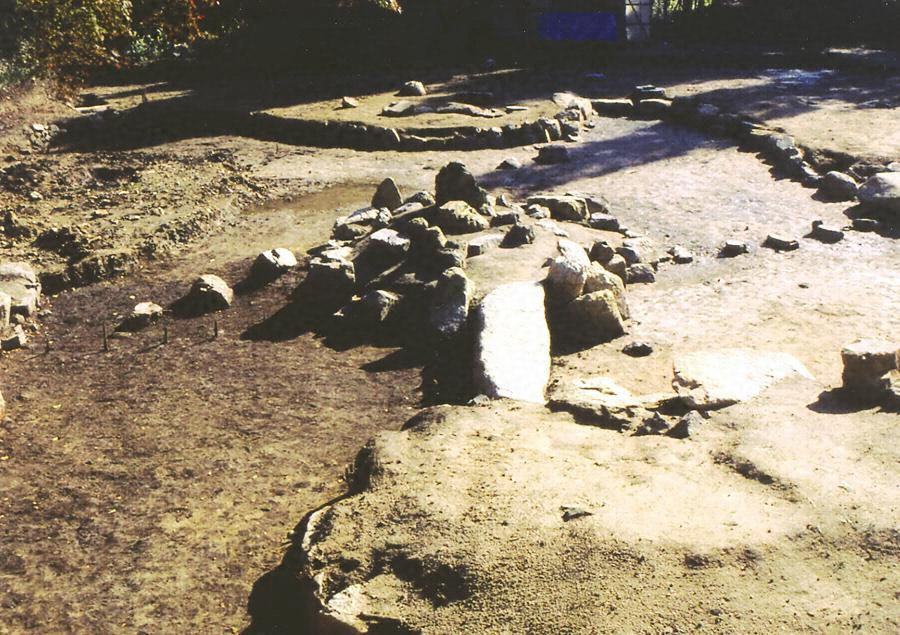
The timeframe of its construction is unclear, but it is thought to have been around the beginning of the Edo Period. The garden had been buried under earth and sand dumped by the debris flow of torrential rains in 1941. However, the excavation survey during the reconstruction and improvement project in recent years has revealed the entire garden. Although no associated buildings survived, the garden features have been well preserved.
cultural property : historic sites and places of scenic beauty as natural monuments
type : places of scenic beauty, historic sites
246 Onjōjichō, Ōtsu-shi, Shiga-ken 520-0036
Tel:077-522-2238
Home page : www.shiga-miidera.or.jp/index.htm
Zenpo-in is one of the six sub-temples of Mii-dera. The timeframe of its construction is unclear, but it is thought to have been built at the beginning of the Edo Period. Although the garden was designated as a National Place of Scenic Beauty/Historic Site in 1934, the site was buried under earth and sand dumped by the debris flow of torrential rains in 1941.
However, thanks to a surveyed map by garden research authority, Shigemori Mirei, and an excavation led by forest expert and landscape researcher, Okazaki Aya’aki, the full details of the garden were recovered. Although associated buildings no longer exist, the pond shore and stone arrangements of the garden have been preserved.
Based on a description in the database of the Otsu City Museum of History, the details of the garden’s original design have been recovered, such as two ponds in front of the study, a Nakajima (central island), a stone bridge, and arrangements of large stones. However, neither the study nor the garden has been reconstructed.
Hyozu-jinja Garden
This is a garden facing north, situated at the south side of the inner shrine of Hyozu-jinja. When the garden was designated as a National Place of Scenic Beauty in 1953, it was believed to have been built in the mid- to late Kamakura Period. However, the later reconstruction and improvement project revealed ruins characteristic of the Heian Period, confirming that the garden was made in the late and final years of the Heian Period.
cultural property : historic sites and places of scenic beauty as natural monuments
type : places of scenic beauty
566 Gojo, Yasu-shi, Shiga-ken 520-2424
Tel:077-589-2072
This is a stroll garden with a large pond built facing north at the south of the inner shrine of Hyozu-jinja. There is a Nakajima (central island) with a stone bridge in the pond made in the shape of the Chinese character for “heart (Kokoro).” The garden has diverse scenery including the Nakajima with a Hokora (small shrine), a peninsula, and a Tsukiyama (artificial hill).
During a recent repair and improvement project, the pond was drained to carry out excavation. As a result, the ruin of a Suhama (sandy beach) was found, which is characterstic of gardens built in the Heian Period.
The garden was originally thought to have been created in the mid- to final Kamakura Period, but the discovery of the ruin confirmed that it was made in the late- to final Heian Period. The garden is covered in fresh green haircap moss (Polytrichum) and Hypnum plumaeforme Wilson. Visitors can enjoy beautiful seasonal scenery such as azaleas in spring, tender green in early summer, sweet flags (Acorus calamus) during the rainy season, Japanese maples in fall, and a snowscape in winter.
Genkyu rakuraku-en
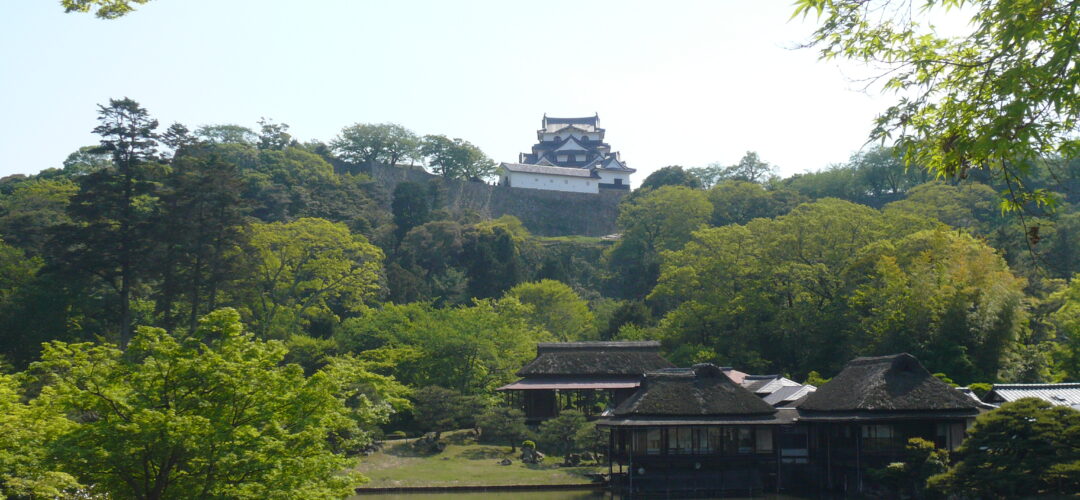
The garden consists of Genkyu-en and Raku-raku-en, and is located northeast of Hikone Castle, between the inner moat and what was once an inner lake. It is thought that the garden was made in the Enpo Era (Edo Period). It is an outstanding Daimyo garden that seamlessly links to its borrowed scenery, which includes the Hikone Castle’s Tenshu (castle tower) and a beautiful background of mature trees.
cultural property : historic sites and places of scenic beauty as natural monuments
type : places of scenic beauty,(special historical sites)
3 Konkichō, Hikone-shi, Shiga-ken 522-0061
Tel:0749-22-2742
The garden has two components, Genkyu-en, which is a stroll garden, and the Tsuki Palace’s Raku-raku-en. It is located northeast of Hikone Castle and between the inner moat and what was once an inner lake. It is thought that the garden was made in the Enpo Era of the early Edo Period.
Genkyu-en has a large pond with four Nakajima (central islands) including Moto-jima and Nii-jima. A Tsukiyama (artificial hill) stretches from the east side to the north side of the garden, and a walking path goes through the garden. The main scenery of the garden includes Moto-jima, which is an arrangement of large stones, and Hakkei-tei built on the opposite side, facing the pond. From the north side of the garden, visitors can see a beautiful landscape with the Hikone Castle’s Tenshu (castle tower) and forests in the background.
Tsuki Palace was added during the Bunka Era, and the garden became part of an Okumuki-shoin (study for family members) after the Genkyu-en was partially rennovated. Raku-raku-en has stone arrangements that represent a waterfall and its flow, and is currently a Karesansui (dry landscape) garden. However, there was a water supply facility in the past, which provided water to the garden.
Fumon-ji Garden
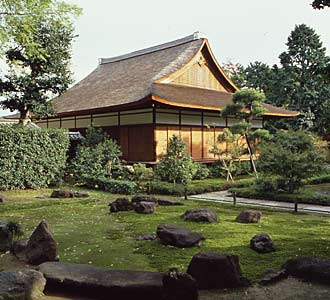
It is assumed that the garden was created as part of the improvement of the temple facilities during the Shoho Era, in the early Edo Period. This is a Karesansui (dry landscape) garden with a pond and borrowed scenery of Mt. Abu. It is believed that the garden was made by Gyokuen’nobo, an apprentice of Kobori Enshu. The garden is located at the northwestern side of a Hojo (the chief monk’s residence), and uses stone arrangements of Katsura Rikyu (Katsura Imperial Villa).
cultural property : historic sites and places of scenic beauty as natural monuments
type : places of scenic beauty
4-10-10 Tondachō, Takatsuki-shi, Ōsaka-fu 569-0814
Tel:072-694-2093
Fumon-ji is a Zen temple founded by the monk, Setsugen, of the Rankei Doryu school in 1390. The temple was transferred to the Myoshin-ji school in the Edo Period, and became a branch temple of Ryoan-ji in Kyoto. Due to the anti-Buddhist campaign in the Meiji Era and the emancipation of farm land after WWII, the premises that used to encompass the present day Honsho-ji, Miwa-jinja and the former Tonda Elementary School was reduced and the temple fell into ruin. The temple was restored at the end of the Showa Era by welcoming a new chief monk.
It is believed that the garden was created during the improvement of the temple facilities during the Shoho Era at the beginning of the Edo Period. It is a Karesansui (dry landscape) garden with a pond and borrowed scenery of Mt. Abu. It is believed that the garden was made by Gyokuen’nobo, an apprentice of Kobori Enshu.
The land of the garden has slight ups and downs. The lower section is viewed as water surface, while slightly higher sections are used as shores or islands. Stones are arranged at key points with stone bridges over them.
Byodo-in Garden
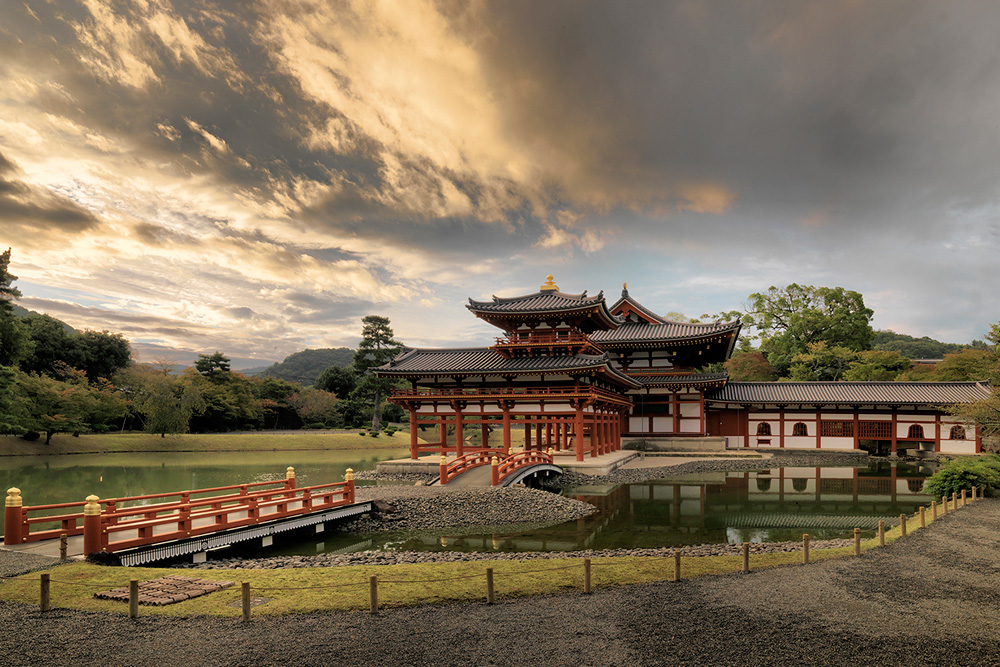
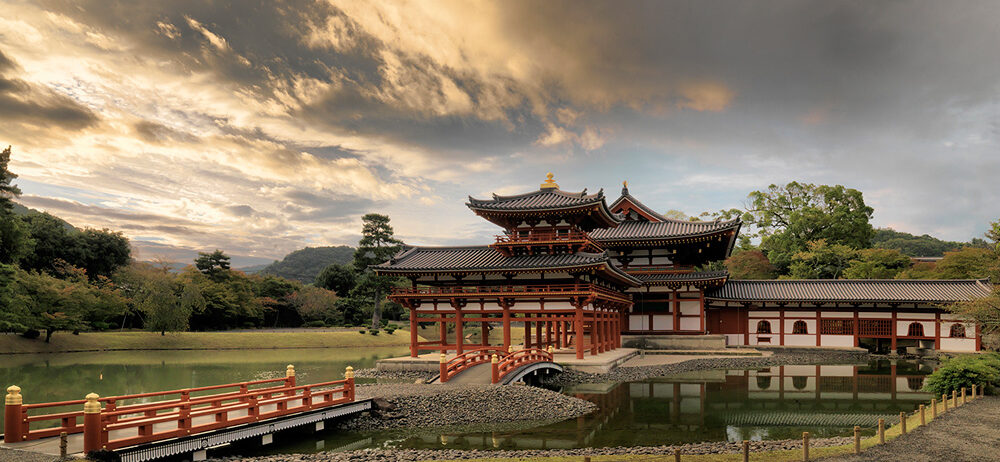
This is Japan’s oldest Jodo (Pure Land) architecture and garden that are integrated into the Amida-do (Amida Hall) built in mid-Heian Period. They recreate the scene of paradise, much sought after by aristocrats at the time. Although the original appearance has been completely changed due to the construction of a levee to prevent flooding in later years, the surrounding scenery still carries the elegance of the past.
cultural property : historic sites and places of scenic beauty as natural monuments
type : places of scenic beauty
Renge-116 Uji, Uji-shi, Kyōto-fu 611-0021
Tel:0774-21-2861
Byodo-in is a temple that was built by Fujiwara Yorimichi. It stands at the riverside of the Uji River’s midstream, southeast of the Uji Bridge. During the mid-Heian Period, uniquely Japanese culture was maturing and the Latter Day of the Law became widely embraced within Buddhism. According to the trends of the time, it seems that aristocrats longed for the Pure Land of Bliss. Byodo-in was built in this time and is the oldest Jodo garden in Japan.
Ho’o-do (Phoenix Hall) and its surrounding pond, Aji-ike, represent Takara-no-ike (Treasure Pond) of the Paradise. The majestic reflection of Ho’o-do on the water’s surface is supposed to be the image of the Pure Land of Bliss materialized in this world. With the serene stream of the Uji River and mountains in the back as borrowed scenery, visitors can enjoy seasonal landscapes – cherry blossoms, azaleas and wisterias in spring; crape mertles and water lilies in summer; Japanese maples in fall; and sasanquas and camelias in winter.
Although the original appearance has completely changed due to the construction of a levee to prevent flooding in later years, the surrounding scenery still carries the elegance of the past.
Osawa-no-Ike tsuketari nakoso-no-taki ato
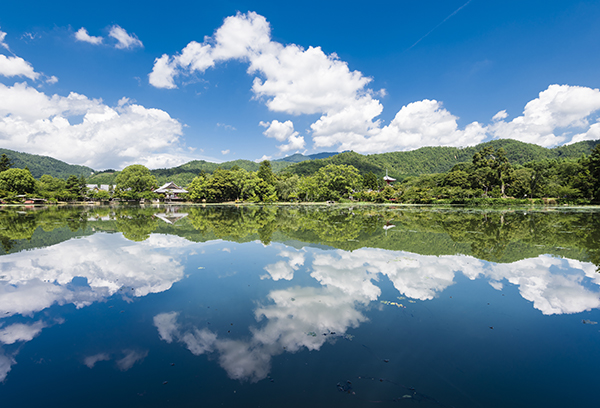
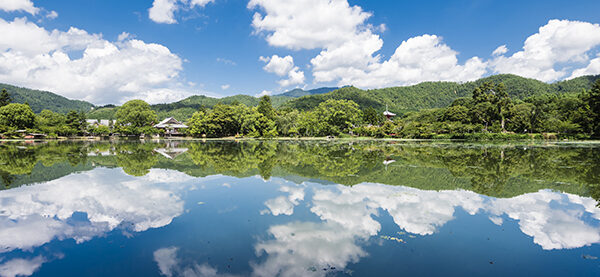
The garden is located at the east of Daikaku-ji. Its perimeter is approximately 1km and the garden is Japan’s oldest example of an artificial grove and ponds. It is also called “Teiko (庭湖)” since Emperor Saga created the garden after the Tang Dynasty’s Dongting Lake (洞庭湖), during the construction of his villa, Saga-in.
cultural property : historic sites and places of scenic beauty as natural monuments
type : places of scenic beauty
4 Sagaōsawachō, Ukyō-ku, Kyōto-shi, Kyōto-fu 616-8411
Tel:075-871-0071(Daikakuji Offical)
Tel:075-871-0191(Property Administration Section)
Home page : https://www.daikakuji.or.jp/precincts/
In the early Heian Period, a pond and a waterfall were added to the garden of the villa Saga-in built during the Konin Era (810-824), and the rule of Emperor Saga. The garden is also called Teiko (庭湖) since it was modeled on Dongting Lake (洞庭湖) in China.
The pond has Tenjin (heavenly God) Island, Kiku-ga-shima (chrysanthemum island), and a Teiko stone. A waterfall is located at the north section of the pond. Based on the excavation survey, it is assumed that when the garden was built, the pond had a large amount of water. However, in a poem, Fujiwara-no-kinto (966-1041) reads: “Although the sound of the waterfall has been gone for a long time, its fame is still flowing and I can hear the reputation.” This suggests that the pond was already dry by the mid-Heian Period.
At the pond shore, there is a Gosha Myojin (a shrine of five deitities), of which the deities are said to have been divided and transferred to the villa as Chinju (Tutelary Deities of Land) by Kobo Daishi. The garden is well-known for blossoms, as many cherry trees are planted there. It is also famous for moon-viewing. Many people visit the garden for cherry blossoms in spring and to enjoy the moon in fall.
Daigo-ji Sanpo-in Garden
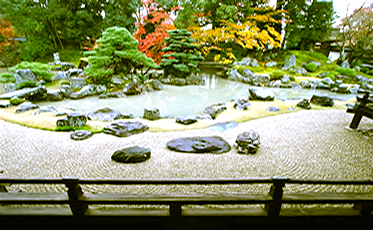
Daigo-ji is a famous temple founded in the Heian Period. This garden is adjacent to Sanpo-in, where the chief monk lives. Although the premises of Daigo-ji was devastated by the Onin-Bunmei War, it was reconstructed after Toyotomi Hideyoshi hosted “Daigo’s Cherry-blossom Viewing.” The garden was made by exceptional gardeners.
cultural property : historic sites and places of scenic beauty as natural monuments
type : places of special scenic beauty, special historical sites
22 Daigohigashiojicho, Fushimi-ku, Kyōto-shi, Kyōto-fu 601-1325
Tel:075-571-0002
Home page : www.daigoji.or.jp/garan/sanboin_detail.html
Daigo-ji is a famous temple that is said to have been founded by Rigen Daishi Shoho, who offered a Kan’on statue at Mt. Kasatori (the spring water from this mountain has been called “Daigo” water) in the Heian Period. The chief monk had resided in Sanpo-in, but the premise of Daigo-ji fell into ruin during the Onin-Bunmei War, which also destroyed Sanpo-in. The devastated Daigo-ji was reconstructed by Gien Jugo under the protection of Toyotomi Hideyoshi. It is told that, prior to 1598, when new Sanpo-in were to be made at the site of Kongorin-in, Toyotomi Hideyoshi himself roped off an area and ordered three gardening magistrates to rebuild the garden. Although Toyotomi Hideyoshi died in August 1598, the garden construction continued under the instruction of Gien, which lasted for 27 years until Gien also died.
The garden has a pond at the center, with three islands and nine bridges. There is a Tsukiyama (artificial hill) to the south and a waterfall to the east. Many ornamental stones are arranged along the pond shore. Fujito stone, a famous stone owned by past rulers, was also placed among them. The site has tall evergreen trees such as Japanese white pines (Pinus parviflora), chinquapins (Castanopsis sieboldii), and Japanese blue oaks (Quercus glauca), creating a magnanimous yet graceful atmosphere.
Jisho-ji Garden
The garden belongs to a Zen temple of the Shokoku-ji school (the Rinzai sect), and is representative of the Higashiyama culture. It was built in 1339 modeled after a garden at Saiho-ji, made by Muso Soseki. The garden has Tsukiyama (artificial hills) and ponds, with mountains, called “Tsukimachi-yama” and “Daimonji-yama” in the background.
cultural property : historic sites and places of scenic beauty as natural monuments
type : places of special scenic beauty, special historical sites
2 Ginkakujichō, Sakyō-ku, Kyōto-shi, Kyōto-fu 606-8402
Tel:075-771-5725
This is a Zen-temple garden that belongs to the Shokoku-ji school of the Rinzai sect and an excellent example of the Higashiyama culture. This is a garden of a mountain villa known as Higashiyama-dono. The villa was built by the 8th Shogun Ashikaga Yoshimasa of the Muromachi Shogunate for his retirement, following the example of Kitayama-dono Kinkaku Rokuon-ji, built by the 3rd Shogun Ashikaga Yoshimitsu. The garden is said to have been modeled after the garden of Saiho-ji designed by Muso Soseki in 1339.
The garden consists of upper and lower levels: A stroll garden with a pond is located on the ground level and a Karesansui (dry landscape) garden on the back hill. The stroll garden has a pond called “Kinkyochi” at the center, and Ginkaku and Togu-do are situated on both sides of the pond. The landscape of these gardens was significantly altered during the renovation in the early Edo Period.
The key garden components are Ginshadan and cone-shaped Kogetsu-dai created from white sand. It is believed that Ginshadan, which depicts the scene of waves at Lake Seiko in China, and Kogetsu-dai, formed to resemble Mt. Fuji, were made with moonlight reflections in mind.
Myoshin-ji Garden
The garden consists of a garden with Hojo (the chief monk’s residence), which is believed to have been made in the Edo Period, and Yoko-en, which was newly built in 1965. The garden with Hojo is in a Karesansui (dry landscape) style that spreads to the west and south of the Hojo. Yoko-en was built when the bamboo forest behind it died off altogether as it reached the end of its life.
cultural property : historic sites and places of scenic beauty as natural monuments
type : places of scenic beauty, historic sites
1 Hanazonomyōshinjichō, Ukyō-ku, Kyōto-shi, Kyōto-fu 616-8035
Tel:075-461-5226
Myoshin-ji is the head temple of the Myoshin-ji school (the Rinzai sect). Its garden consists of a garden with Hojo (the chief monk’s residence), which is believed to have been created in the Edo Period, and Yoko-en, which was newly constructed in modern times. The garden with Hojo is in a Karesansui (dry landscape) style that spreads to the west and south of the Hojo. Yoko-en was built when the bamboo forest behind it died off altogether as the plants reached the ends of their lives.
The western section of the garden with Hojo is believed to have been made by the Muromachi Period painter, Kano Motonobu. It is called “Motonobu’s Garden.” Motonobu is considered to have established the Kano-style painting school.
Yoko-en was newly built in 1965 in the area where the bamboo forest, the Hojo garden’s background, used to grow. The bamboo forest died off in the late 1950s and early 1960s as it reached the end of its natural life. Yoko-en was designed and built by garden expert, Nakane Kinsaku. On the both sides of the site, he created Karesansui gardens named “Yo-no-niwa (Yang Garden)” and “In-no-niwa (Ying Garden).
Gyokuho-in Garden
The garden was built in the mid-Edo Period. It is divided into southern, northern, and eastern sections, with the South Garden, the Mountain Garden, and the Wind and Water Garden respectively. The entire ground of the South Garden is covered with white sand. Japanese white pines (Pinus parviflora) and Japanese black pines (Pinus thunbergii) are planted in rows. Both the Mountain Garden and the Wind and Water Garden have intricate stone arrangements, creating an elegant atmosphere.
cultural property : historic sites and places of scenic beauty as natural monuments
type : places of scenic beauty, historic sites
60 Hanazonomyōshinjichō, Ukyō-ku, Kyōto-shi, Kyōto-fu 616-8035
Tel:075-461-5226
This is the first sub-temple to have been built among 46 sub-temples at the head temple of the Myoshin-ji school (the Rinzai sect). It was constructed by Emperor Hanazono and also called “Gyokuho Zenkyu.” When going through the main gate, visitors can see Kuri (living quarters of monks) in the front. The Hojo and Kaizan-do (a hall where the remains of Myoshin-ji founder, Kanzan Egen, have been entombed) are linked by a corridor, and a garden in the style of the Momoyama Period is situated on the north and south sides of the corridor. The garden was built in the early Edo Period and is divided into three sections – south, north and east. These sections house the South Garden, the Keisokurei (mountain) Garden, and the Fusuisen (wind and water) Garden respectively.
The South Garden’s ground is covered with white sand. Japanese white pines (Pinus parviflora) and Japanese black pines (Pinus thunbergii) are planted.
The Keisokurei Garden has a Tsukiyama on the east side of Kaizan-do with stone arrangements that represent mountains. The Fusuisen Garden is located to the north, and has a dry waterfall, a Horai stone arrangement, and stepping stones. Among these components, a well called “Fusuisen” and a date-shaped basin can be found. Both the Keisokurei Garden and the Fusuisen Garden have skillful stone arrangements.
Fushin-an (Omotesenke) Garden
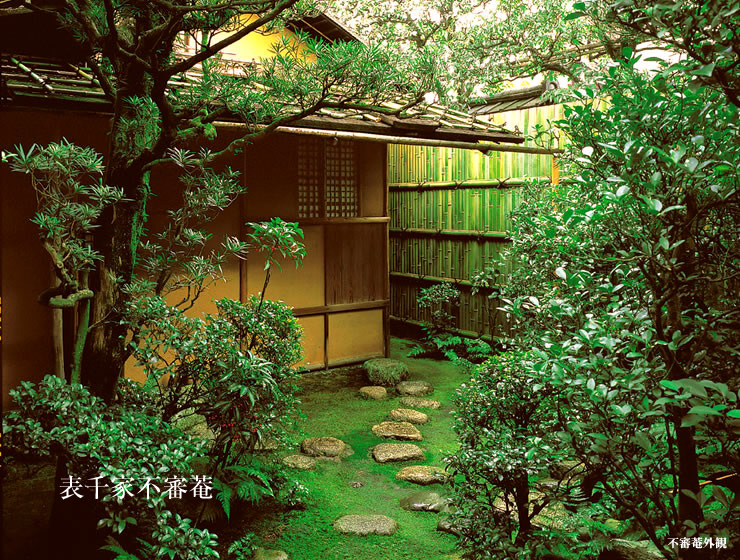
This is a tea garden (Roji) that belongs to Omotesenke, one of the Sansenke tea schools. It consists of an outer tea garden to the west, a tea garden in front of Zangetsu-tei, another in front of the Sodo (mausoleum), and an inner tea garden that belongs to Fushin-an. The inner tea garden of Fushin-an is located at the innermost part of the garden and can be reached by going through the Umemi-mon (plum viewing gate) from the spacious tea garden in front of the Sodo. Although rather small, Fushin-an’s garden recreates the serenity of a secluded mountain.
cultural property : historic sites and places of scenic beauty as natural monuments
type : places of scenic beauty
597 Honpojimae-cho,Ogawa Teranouchi agaru, Kamigyō-ku, Kyōto-shi, Kyōto-fu 602-006
Tel:075-432-2195
This is a tea garden (Roji) that belongs to Omotesenke, one of the Sansenke (three Sen Families) tea schools. It consists of an outer tea garden to the west, one in front of Zangetsu-tei, one in front of the Sodo (mausoleum), and an inner tea garden that belongs to Fushin-an.
A path goes through the outer tea garden on the west side, and through the garden entrance and the small Nakakuguri gate to the inner garden. Visitors will then see a thatched-roof gate to the right to enter Sodo, and stepping stones to the left that continue to Zangetsu-tei. In front of Sodo, there is a spacious tea garden with a Tsukubai (wash basin) and a dry moat.
The path of stepping stones that turns to the left in front of the thatched-roof gate leads to Zangetsu-tei. Visitors can see a well to the right, skillfully arranged stepping stones, Umemi-mon (plum viewing gate), and a tea garden with perfectly balanced plantings. Visitors will finally enter the inner tea garden of Fushin-an once they go through Umemi-mon. In the inner tea garden, there is a bench to the right. Suna Secchin (an ornamental toilet made of sand and stones), Tsukubai, and small stepping stones lead visitors to Nijiri-guchi (a crawl-through entrance). Although the area is small, the inner garden recreates the atmosphere of a secluded mountain, creating serene space.
As the site continued to be passed down over generations, buildings such as a tea room and a practice room were added from other locations or newly built. The tea garden was renovated each time, and resulted in a garden with a complex configuration.
Kon’nichi-an (Urasenke) Garden
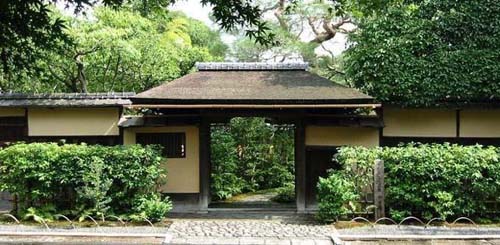
This is a tea garden (Roji) that belongs to Urasenke, one of the Sansenke tea schools. The garden was made along with a tea room built by the third generation Sen Sotan for his retirement residence. In order to reach the tea room, visitors go through Kabuto-mon and the main entrance. They walk by the waiting bench, through the Chumon (middle gate), and into the tea garden. The Chumon functions as a boundary that distinguishes the outer tea garden without particular scenery, and the inner tea garden that creates subtle and profound beauty.
cultural property : historic sites and places of scenic beauty as natural monuments
type : places of scenic beauty
613 Honpojimae-cho,Ogawa Teranouchi agaru, Kamigyo-ku, Kyoto 602-0061
Tel:075-431-3111
Kon’nichi-an is a tea room at the center of Urasenke along with Yuin (also a tea room). Kon’nichi-an started as a tea room of two jo (two tatami mats), built in the retirement residence of Sen Sotan.
In order to reach the tea room, visitors go through tea gardens, which include Kabuto-mon, the main entrance, the waiting bench, and the Chumon (middle gate).
Although the middle gate is extremely simple, it carries significance as a boundary according to the configuration of tea gardens, by distinguishing the outer tea garden and its plain scenery from the inner tea garden and its delicate beauty.
The outer tea garden is devoid of any accessories and is made up of the color of conifers under changing light contrasts created by sunlight filtering through trees.
Guests go through the inner garden before they are invited into the tea room. Entering guests wash their hands in the Yohobutsu-no-tsukubai (wash basin with curved Buddha on all sides), with moss growing on it, obscuring the round outlines of the Buddhas and adding to the delicate beauty of the inner garden.
Nijo Castle Ninomaru Garden
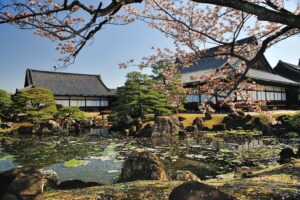
Ninomaru Garden was renovated to prepare for Emperor Gomizuno’o’s visit in 1626 under the instructions of Sakuji Bugyo (Commissioner of Works), Kobori Enshu. The pond in the garden has the Horai Island at the center and the Crane Island on one side and the Turtle island on the other. The pond can be enjoyed from three directions: The great hall of Ninomaru Palace, Kuro-shoin, and the remnant of the Gyoko Palace. The garden is said to be the best example of a garden with Tsukiyama (artificial hills) and ponds found at the currently existing castles.
cultural property : historic sites and places of scenic beauty as natural monuments
type : places of special scenic beauty
541 Nijo-jo-cho, Horikawa-nishi-iru, Nijo-jo-dori, Nakagyo-ku, Kyoto city, Kyoto-fu 604-8301
Tel:075-841-0096
Ninomaru Garden was renovated as a garden facing the palace for Emperor Gomizuno’o’s visit in 1626 under the instructions of the Shogunate’s Sakuji Bugyo (Commissioner of Works), Kobori Enshu. Later, the palace was removed and relocated, but the garden was carefully crafted and renovated so that it can be enjoyed from three directions – the great hall of the Ninomaru Palace, Kuro Shoin, and the remnant of the Gyoko Palace. The pond has curved edges with various characteristics, three central islands (the Horai Island, the Crane Island, the Turtle Island), four natural stone bridges, and a three-level waterfall in the north-western corner. There are also many stone arrangements along the pond edges and shore. The western section of the garden features a background of forests consisting of pines, Japanese nutmeg trees (Torreya nucifera), Kurogane hollies (Ilex rotunda), Japanese blue oaks (Quercus glauca), chinquapins (Castanopsis sieboldii), Japanese pittosporum (Pittosporum tobira), Muku trees (Aphananthe aspera), cherries, maples, etc. The southern part of the garden is a spacious lawn dotted with a well balanced number of pines. The stone arrangements in the garden create an open and bold atmosphere, and are said to be the best example among gardens with Tsukiyama (artificial hills) and ponds of the presently existing castles.
NishiHongwan-ji Daishoin Garden
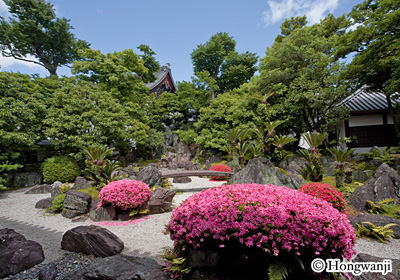
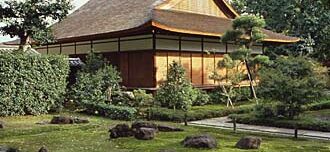
It is a Karesansui (dry landscape) garden of the inner court on the east side of the study, known as “Kokei-no-niwa.” Three central islands of different sizes are situated on white sand. The dry waterfall and rock arrangements are dynamic and strong, which is characteristic of gardens with groves and ponds in front of studies built during the Momoyama Period.
cultural property : historic sites and places of scenic beauty as natural monuments
type : places of special scenic beauty, historic sites
Hanayacho-sagaru, Horikawa-dori, Shimogyo-ku, Kyoto-fu, 600-8501
Tel:075-371-5181
This is the head temple of the Hongan-ji school (the Jodo Shinshu sect founded by Shinran Shonin). Daishoin Garden is a Karesansui (dry landscape) garden of the inner court on the east side of the study, known as “Kokei-no-niwa.”
The garden is flat with a Tsukiyama on the east side. There are many Tateishi (standing stones) and five lanterns. At the center, slightly to the north, there is a magnificent stone arrangement of a dry waterfall. A dry stream represented by cobble stones leads to the ground covered with white sand, recreating a swift current pouring into the ocean. Two central islands are protected by colorful stone edging, and an arched stone bridge and a small bridge made of natural stones connect the islands. Sago palms (Cycas revoluta) planted between stone arrangements are characteristic of study gardens with groves and ponds built in the Momoyama Period. The powerful and dignified stone arrangements and dry waterfall are also great examples of this Period.
NishiHongwan-ji Tekisui-en
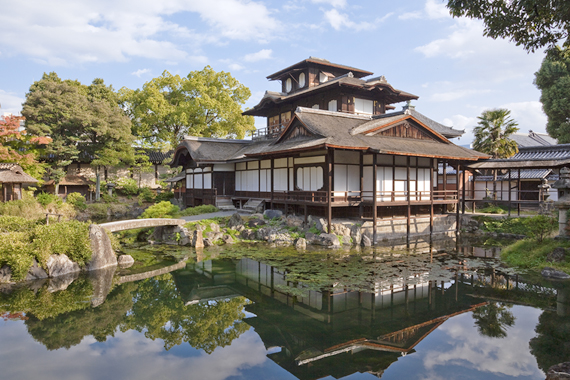
This is the front garden of Hiunkaku. It is believed that the garden was built along with the construction of Hiunkaku and Okakudai. Hiunkaku is a three-story tower, and its bottom floor includes boat access from the pond. Rooms are centered around the pond. Flowering trees such as azaleas and plums are planted, and visitors can see the outstanding stone arrangements of large rocks.
cultural property : historic sites and places of scenic beauty as natural monuments
type : places of scenic beauty
Hanayacho-sagaru, Horikawa-dori, Shimogyo-ku, Kyoto-fu 600-8501
Tel:075-371-5181
Tekisui-en is a front yard for Hiunkaku, which stands at the southeastern corner of Hongwan-ji precinct (Hongwan-ji is the head temple of the Hongwan-ji school of the Jodo Shinshu sect). The garden is believed to have been created during the construction of Hiunkaku and Okakudai. It is believed that Hiunkaku is a remnant of Toyotomi Hideyoshi’s Jurakutei. It is one of the Three Great Pavilions in Kyoto along with Kinkaku and Ginkaku. It is a three-story tower, and its bottom floor includes boat access from the pond.
The garden has a large pond that goes around Hiunkaku from the north side to the west side. The pond is narrower at the center, where a stone bridge is installed. Visitors can cross the bridge to get to Hiunkaku. When looking over the pond from Hiunkaku, visitors can see a bell tower to the side through the tree branches. Flowering trees such as azaleas and plums are planted, and large stones are arranged around the pond. It is believed that the pavilion was named Hiunkaku (“floating cloud pavilion”) since the pond reaches directly under the building and its reflection looks like a floating cloud.
Hiunkaku is not open.
Shosei-en(Higashi Hongan-ji)
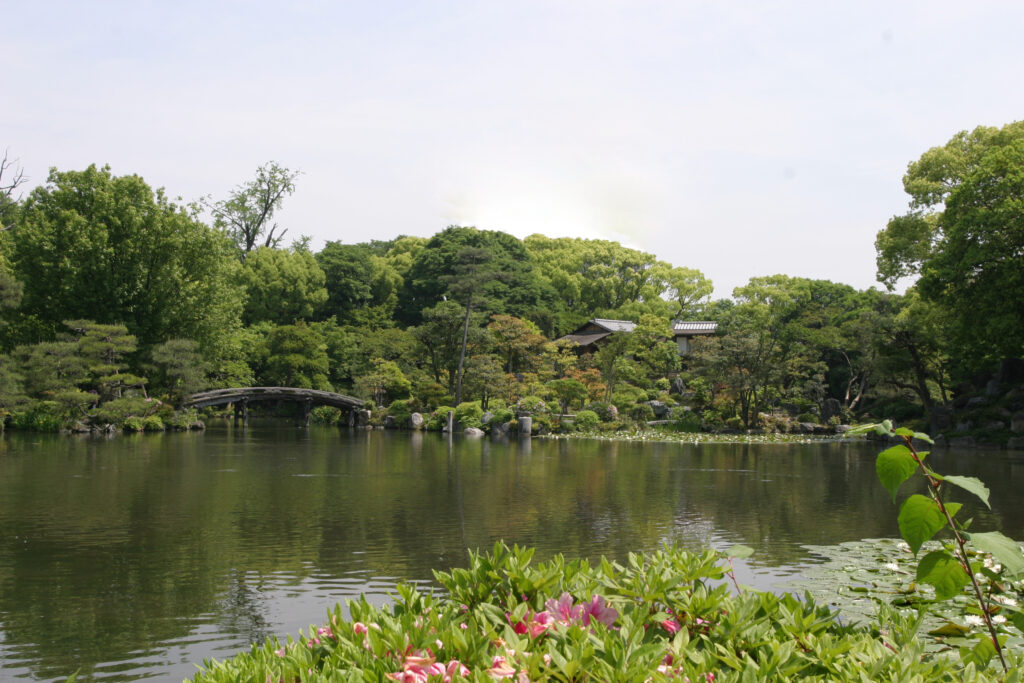
The name “Shosei-en” was taken from a verse found in Gui Qu Lai Ci (Come Away Home), a poem about a life in the countryside by Tao Yuanming. The site is in the shape of a near-perfect square. Since it is 100 ken (approximately 180 meters) on each side, the place was also called Hyakken Yashiki (100 ken mansion). Another name was Kikoku-tei, as “Kikoku” (trifoliate oranges; Poncirus trifoliata) were planted there.
cultural property : historic sites and places of scenic beauty as natural monuments
type : places of scenic beauty
Shomen-dori Ainomachi Higashi-iru, Shimogyō-ku, Kyoto 600-8190
Tel:075-371-9210
This site was donated by the third Shogun, Tokugawa Iemitsu, in 1641, during the era of the 13th head of Higashi Hongan-ji, Sen’nyo Shonin. The garden was created by incorporating the preferences of Ishikawa Jozan (a writer and also expert garden designer at the time).
The name “Shosei-en” was taken from a verse found in Gui Qu Lai Ci (Come Away Home), a poem about a life in the countryside by Tao Yuanming. Various aspects of the garden such as a tea house built partially over the pond water’s surface and a roofed bridge add Chinese elements to the scenery.
The site is in the shape of a near-perfect square. Since it is 100 ken (approximately 180 meters) on each side, the palace was also called “Hyakken Yashiki” (100 ken mansion). Another name was Kikoku-tei, as “Kikoku” (trifoliate oranges; Poncirus trifoliata) were planted there. The garden is highly regarded for its flowers blossoming in all seasons and diverse landscapes known as the “Thirteen Landscapes.”
Although it is a stroll garden with ponds where visitors can walk around the garden, the path does not circle the pond.
Rokuon-ji Garden
Kinkaku-ji has two ponds, Kyokochi that spreads in front of the Shariden (reliquary hall), and Anmintaku that is situated on the north side, which is elevated by one level. Water flows into the pond from Daimonji-yama. Since earth and sand flow in when heavy rain cause a large amount of drainage, Anmintaku functions as a sedimentation basin for Kyokochi.
cultural property : historic sites and places of scenic beauty as natural monuments
type : places of special scenic beauty, special historical sites
1 Kinkakujichō, Kita-ku, Kyōto-shi, Kyōto-fu 603-8361
Tel:075-461-0013
The third Shogun of the Muromachi Shogunate, Ashikaga Yoshimitsu, after passing the title to his son, Yoshimochi, and became a monk, received a mountain villa from the Saionji Family in 1397 and constructed Kitayama-dono at the villa. When Yoshimitsu passed away, Kitayama-dono was turned into a temple according to his will and named Rokuon-ji, honoring his posthumous Buddhist name “Rokuon-in.”
Kinkaku-ji has two ponds, Kyokochi that spreads in front of Shariden (a reliquary hall; Kinkaku), and Anmintaku, situated on the north side, elevated by one level.
Kyokochi is a stroll garden with a pond, and uses many ornamental stones for its shore and central island.
The pond water flows in from Daimonji-yama and receives earth and sand when there is significant amount of drainage due to heavy rain. Therefore, the water is first drawn to Anmintaku, which is located on the highest level and functions as a sedimentation basin, then discharged to Kyokochi. Anmintaku, located in the back of Kinkaku, has fewer ornamental stones and is believed to have been constructed by Saionji Kintsune during the Kamakura Period.
Daisen-in Shoin Garden
The garden was built by Kogaku, a monk who founded Daisen-in. Surrounding the main temple in all four directions, the garden is divided by a roofed bridge, etc. to create space for a mountain, a river and the ocean. It is a masterpiece Karesansui (dry landscape) garden that recreates a mountain-and-water landscape by arranging many rocks in a small area.
cultural property : historic sites and places of scenic beauty as natural monuments
type : places of special scenic beauty, historic sites
54-1 Murasakino Daitokujichō, Kita-ku, Kyōto-shi, Kyōto-fu 603-8231
Tel:075-491-8346
Daisen-in is a sub-temple (built to commemorate the death of a high-ranking Zen monk) that stands in the precinct of Daitoku-ji, the north of Kyoto’s urban area. The temple was founded in 1509 by the 76th Daisho Kokushi, Kogaku Soko. A document preserved at Daisen-in states that the garden was also made by Kogaku himself.
The garden surrounds the main temple in all four directions. The south section represents the ocean with two ceremonial piles of sand on ground covered with white sand at both sides of the entrance. The east garden has a dry waterfall arrangement of large rocks and plantings of camelias and Japanese white pines (Pinus parviflora) to recreate the scenery of a secluded mountain. A stone bridge is installed under the dry waterfall, and a stone that resembles a boat is placed on white sand down the “stream,” to represent a large river flowing to the ocean. In this way, the garden depicts a mountain, a river and the ocean.
The roofed bridge that divides the garden into two was once removed at the end of the Meiji Era, resulting in the “mountain” and the “ocean” becoming connected. In 1960, the bridge was restored, and the garden regained its original state.
Juko-in Garden
Juko-in is a temple that belongs to the Daitoku-ji school of the Rinzai sect and has ties with the Sansenke tea schools (the three Sen Families). The Karesansui (dry landscape) garden at the south of the Hojo (the cheif monk’s residence) is said to have been created by Sen-no-rikyu. The garden is about 165 square meters. All the stones installed in the garden are relatively small, but Tateishi (standing stones) at key locations give accents to the scenery.
cultural property : historic sites and places of scenic beauty as natural monuments
type : places of scenic beauty
58 Murasakino Daitokujichō, Kita-ku, Kyōto-shi, Kyōto-fu 603-8231
Tel:075-492-6880
Juko-in is a temple that belongs to the Daitoku-ji school of the Rinzai sect. It was built by Miyoshi Yoshitsugu in 1566, who invited the 107th head of Daitoku-ji, Shorei Sokin, in order to pray for the repose of his father Nagayoshi. In the precinct, there is a cemetery for the three Sen Families, where Sen-no-rikyu also rests.
The Karesansui (dry landscape) garden at the south of the Hojo (the chief monk’s residence) is said to have been created by Sen-no-rikyu. The garden is about 165 square meters. Due to the number of stone arrangements, it is called “Hyakuseki-no-niwa (Garden of 100 Stone Arrangements).”
The area of the garden covered by moss is separated from the background by hedges, along which two groups of stone arrangements are placed from east to west. The central section is slightly elevated with 石塙. All the stones are small. Tateishi (standing stones) placed at key points give variation to the scenery.
Shofuku-ji Garden
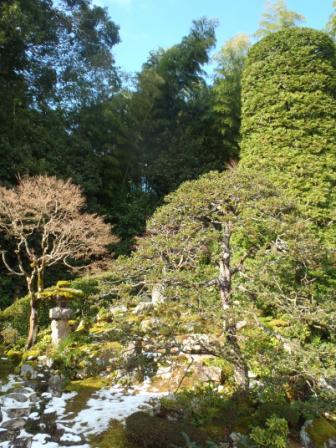
The garden is known as Gansho-tei and located at the north side of the main temple and the study at Shofuku-ji. According to “Gansho-do Kazan-ki,” a historical record, the garden was created by Sensho, chief monk of the temple, in 1843 (the Tenpo Era). Since an old garden is rare in the Ayabe region, Gansho-tei is valuable in terms of having clearly known information about the garden’s creator as well as its year of foundation.
cultural property : historic sites and places of scenic beauty as natural monuments
type : places of scenic beauty
Komaruyama-33 Takanosuchō, Ayabe-shi, Kyōto-fu 629-1263
Tel:0773-46-0185
The garden is known as Gansho-tei and located at the north side of the main temple and the study at Shofuku-ji. The temple has a garden record called “Gansho-do Kazan-ki.” According to this record, the garden was created by the chief monk, Sensho, in 1843.
The temple is located in a picturesque area where the Yura River flows to the north, mountains in the distance can be seen, and a hill lies directly behind the temple.
There is a Tsukiyama (artificial hill) to the back left, where a guardian stone is placed. Next to the Tsukiyama a dry waterfall is arranged with stones. The Tsukiyama slopes gently to the right, and its center at the front has another Tateishi and a dry waterfall. A stone bridge is also installed. Locally produced mountain rocks are used for the stone arrangements. There is a dry pond at the foot of the Tsukiyama, which protrudes to the front to form an island-like shape. Stepping stones placed around the pond link the main temple and the study.
Since an old garden is rare in the Ayabe region, Gansho-tei is valuable in terms of having clearly known information about the garden’s creator as well as its year of foundation.
Nanzen-ji Hojo Garden
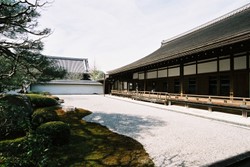
Nanzen-ji was built in 1291 during the Sho’o Era in the Kamakura Period. The garden belongs to a Hojo, where the chief monk resides. It is believed that the garden was created by Kobori Enshu at the beginning of the Edo Period. In contrast to other Japanese gardens that represent Buddhist cosmology with Tsukiyama and large stones, this garden has stones that are placed flat, a style called a flat Karesansui (dry landscape) garden, or more commonly, “young tigers crossing the river.
cultural property : historic sites and places of scenic beauty as natural monuments
type : places of scenic beauty
86 Nanzenji Fukuchicho, Sakyo Ward, Kyoto-shi, Kyoto-fu 606-8435
Tel:075-771-0365
Nanzen-ji is the head temple of the Nanzen-ji school (the Rinzai sect). The Hojo (the chief monk’s residence) is a former Empress’s palace relocated to Nanzen-ji in 1611. It is believed that the garden was created around the same time.
The garden is said to have been made by Kobori Enshu. It is an excellent example of a Karesansui (dry landscape) garden from the early Edo Period. It is a flat garden with white sand sectioned off by the Hojo and Tsuiji-bei (roofed mud wall) into an orderly rectangular shape. When seen from the Hojo, the garden has a principal stone placed in the back left, and a few stones to the right along the wall. The front and right of the Hojo is a spacious area with white sand. Between the ornamental stones, maples, pines, hollies, camelias, and dwarf azaleas trimmed into spheres are planted. The white sand, garden stones, garden trees, and the Tsuiji-bei create harmonious scenery together with pine forests and mountains in the background. The white surface of the Tsuiji-bei has five light-blue parallel lines called “Jogi-suji.” The Jogi-suji signifies that a temple is headed by a monk with a royal background (“Monzeki”), and the number of lines represents the rank of the temple, with five lines representing the highest rank.
Kyu Daijo-in Garden
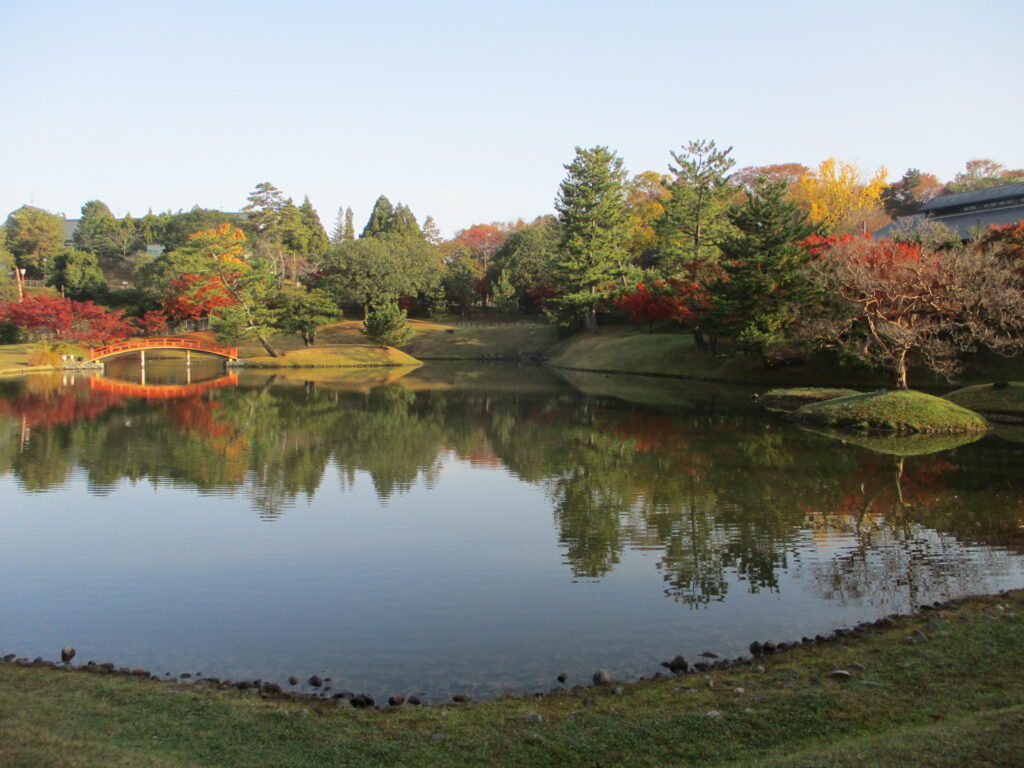
Its origin is thought to be in the Heian Period, but in the mid-Muromachi Period, a Monzeki (monk with a royal background who acceded the proper lineage of a temple) of Daijo-in, Jinson, ordered a gardener Zen’ami to repair the garden. Although the garden became dilapidated in the Meiji Era, the garden as a whole still preserves the land allotment from the Muromachi Period. This is the ruin of a garden made by Zen’ami, the best gardener of the Muromachi Period, when many outstanding gardens were created.
cultural property : historic sites and places of scenic beauty as natural monuments
type : places of scenic beauty
1083-1 Takabatakechō, Nara-shi, Nara-ken 630-8301
Tel:0742-24-0808
Home page : http://www.national-trust.or.jp/protection/index.php?c=protection_view&pk=1491202122
Daijo-in is a Monzeki temple of Kofuku-ji and believed to have been founded in the Heian Period. In the mid-Muromachi Period, Zen’ami and his son were invited by the Monzeki of Daijo-in, Jinson, to repair the garden devastated by Tokusei Ikki, an uprising demanding debt cancellation orders. It is believed that Zen’ami was one of Doboshu (those who were in charge of tea ceremonies, entertainment and miscellaneous duties for Shogun and Daimyo) for Shogun Ashikaga Yoshimasa, and was a master gardener.
In the past, the main allotment of the garden included a large pond in the east and a small pond in the west, with south and north central islands in the east pond. The garden fell into ruin in the Meiji Era, and the west pond and the south central island no longer exist. However, the garden preserves the allotment from the Muromachi Period as a whole, and flowering trees that bloom season by season still decorate the garden. This is the ruin of a garden made by Zen’ami, the best gardener of the Muromachi Period, when the garden was created. (Note: Zen’ami belonged to a social group called Senzui Kawaramono. “Kawaramono” means “people living at riverbeds” and those who were engaged in landscaping were called “Senzui (mountain-and-water) Kawaramono.
Isui-en
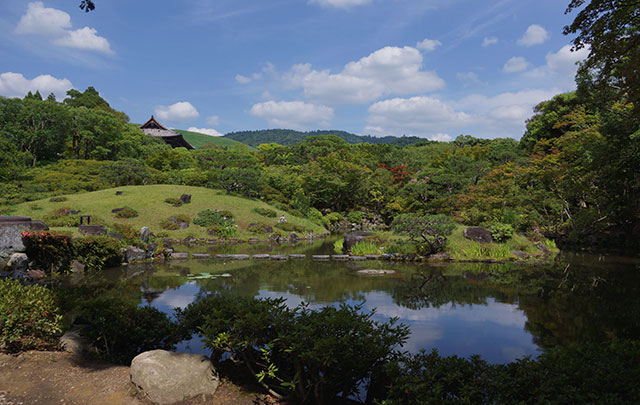
The front garden was made in the Edo Period (the Enpo Era) while the back garden was built in the Meiji Era. The two gardens with their different origins are connected with a stream, and together they are called “Isui-en.” It is an outstanding garden that incorporates the roof of the Todai-ji’s Nandai-mon (Great South Gate) and three mountains, Mt. Wakakusa, Mt. Kasuga and Mt. Mikasa, as borrowed scenery.
cultural property : historic sites and places of scenic beauty as natural monuments
type : places of scenic beauty
74 Suimonchō, Nara-shi, Nara-ken 630-8208
Tel:0742-25-0781
Home page : www.isuien.or.jp
It is located in the west of Nandai-mon (Great South Gate) and to the north of the Yoshiki River. The front garden was created in the Edo Period (the Enpo Era) and the back garden in the Meiji Era. The two gardens with their different origins are connected with a flow of water, and together they are called Isui-en.
The front garden was made by improving the remnant of Sanshu-en, which was a villa owned by a bleacher of the Kiyosumi Family, in Nara. The back garden was built when the site was owned by an affluent merchant, Sekito Jiro, in Nara. This garden uses Mt. Wakakusa, Nandai-mon of Todai-ji, Mt. Kasuga, and Mt. Mikasa as borrowed scenery. The garden also uses stepping stones, shore stepping stones, old temple stones and millstones, as well as plants such as dwarf azaleas and Okamezasa (Shibataea kumasaca), giving typical Meiji characteristics to the garden as a whole. Isui-en, consisting of two gardens, is a stroll garden with ponds and represents Nara Prefecture.
Also, there is the “Neiraku Museum” on the premise, which holds and displays bronzeware from ancient China, porcelain from Goryeo and Yi Dynasties of Korea, and Japanese tea ceremony utensils.
Nara Park
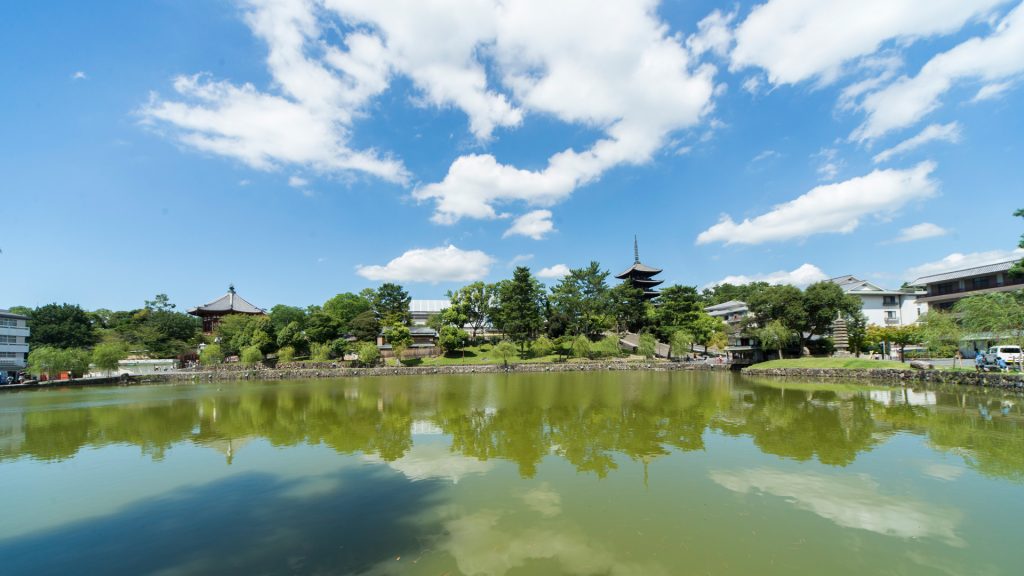
In 1880 (the Meiji Era), Nara Prefecture started managing the former precinct of Kofuku-ji and 14-hectares of the land of Kasuga Taisha as a park. Later, the surrounding forests and the princinct of the Tamukeyama Shrine at Todai-ji were incorporated, and private land necessary for improving the scenery was purchased, becoming the Nara Park. This park is also referred to as the “history” park.
cultural property : historic sites and places of scenic beauty as natural monuments
type : places of scenic beauty
543 Shibatsujichō, Nara-shi, Nara-ken 630-8114
Tel:0742-22-0375
Nara Park was established when the area of approximately 15 ha, including the precinct of Kofuku-ji and Kasugano, were designated as a park in 1880 (the Meiji Era) by a Notice of the Grand Council of State. Later, the park added Mt. Wakakusa and Mt. Kasuga, and was improved as a city park by Nara Prefecture. Nara Park was designated as a Place of Scenic Beauty in 1922 (the Taisho Era) by combining the Nara Prefectural City Park (including Sarusawa-ike, Sagi-ike, Kasugano and Mt. Wakakusa) and the precinct of Todai-ji and Kofuku-ji, which encompasses 524 ha altogether. In the park, there are 1,200 wild deer that are considered the divine messengers of Kasuga Taisha. They are protected as National Natural Monuments. The extensive lawn of Kasugano is a unique landscape sustained by deer grazing. Yamayaki (burning of a mountain) at Mt. Wakakusa every January is Nara’s traditional event that heralds the arrival of early spring. Beside Mt. Wakakusa, Mt. Kasuga is covered with a pristine forest that has not been cut since ancient times. The forest is designated as a Special Natural Monument called “Kasugayama Primeval Forest.” Everywhere in the park, visitors can enjoy landscapes that integrate history, culture and nature, such as Ukimi-do in Sagi-ike, Sarusawa-ike, the five-story pagoda of Kofuku-ji, etc.
Tentoku-in Garden
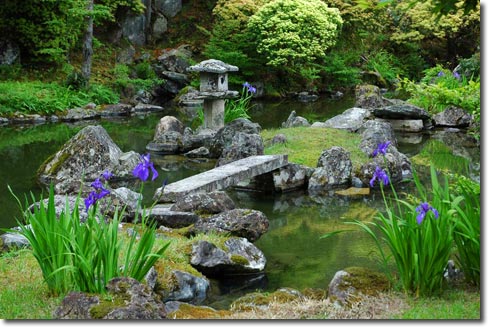
The garden is located at the south of the Tentoku-in Kyakuden (reception hall). It is designed to create a gentle and peaceful atmosphere with a pond at the center. A crane island and a turtle island are situated as central islands in the pond with stone bridges connecting them. The opposite side of the pond has a natural slope, which is used as a Tsukiyama. The main scenery of the garden is a stone arrangement at the shore to the left, representing a dry waterfall.
cultural property : historic sites and places of scenic beauty as natural monuments
type : places of scenic beauty
370 Kōyasan, Kōya-chō, Ito-gun, Wakayama-ken 648-0211
Tel:0736-56-2714
Tentoku-in is said to have been built by the lord of Kaga, Maeda Toshitsune, in 1615 (the early Edo Period), and it is believed that the garden was also created around the same time. Although all the buildings on the premise were burnt down in 1864, in the late Tokugawa Shogunate, the land allotment and the stone arrangements still remain.
The garden is located at the south of Tentoku-in Kyakuden (a reception hall) and designed to create a gentle and peaceful atmosphere. A crane island and a turtle island are situated as central islands in the pond with stone bridges connecting them. The opposite side of the pond is a natural slope, which is used as a Tsukiyama. This Tsukiyama and a stone arrangement at the shore to the left, making up a dry waterfall, are the components of the garden’s main scenery. Tall conifers such as Japanese cedars (Cryptomeria japonica), pines, Sawara cypresses (Chamaecyparis pisifera), and Japanese yews (Taxus cuspidata) form clusters in the back. Japanese pierises (Pieris japonica), rhododendrons, Japanese hollies (Ilex crenata), and azaleas are planted and trimmed low in the area from the foothill to the pond.
The stone arrangements and such retain some degree of devastation, and there are no signs of repair in later years, so visitors can witness a record of the past.
Kokawadera Garden
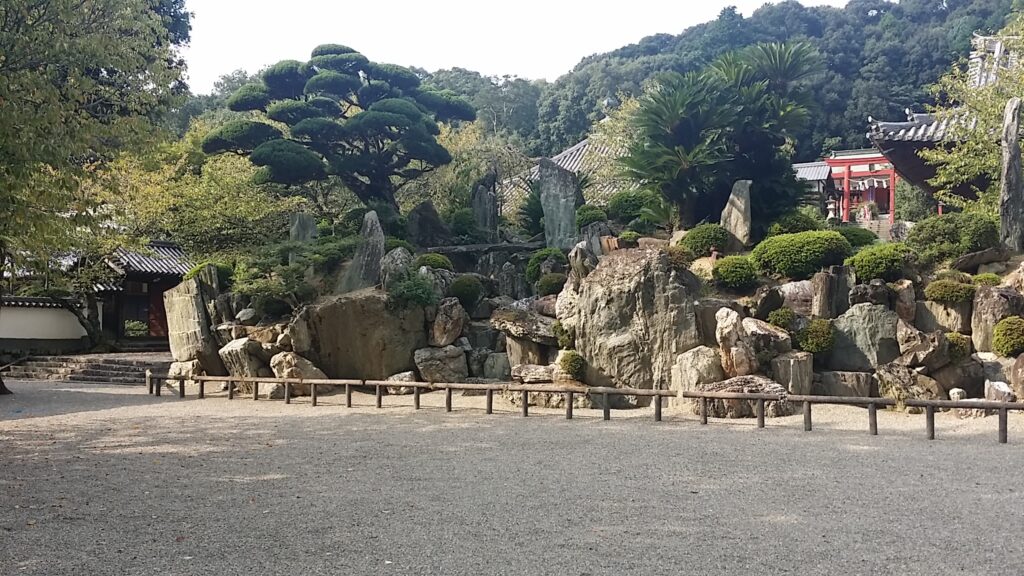
Unique stone arrangements can be seen as large rocks, mainly chlorite schist, are arranged in a strong yet elegant way utilizing a number of diverse techniques. Azaleas grow in the gaps between stones, and Chinese junipers (Juniperus chinensis), weeping cherries (Prunus spachiana), and sago palms (Cycas revoluta) are also planted throughout.
cultural property : historic sites and places of scenic beauty as natural monuments
type : places of scenic beauty
2787 Kokawa, Kinokawa-shi, Wakayama-ken 649-6531
Tel:0736-73-4830
Home page : www.kokawadera.org
Kokawadera is known as one of the sacred sites of Saigoku Junrei (a pilgrimage of 33 temples in the Kinki/Tokai regions). The path for the pilgrimage is the oldest of this sort in Japan. It covers the sacred sites of Kan’non (the Goddess of Mercy) in 7 prefectures of the Kinki and Tokai regions.
The garden is a stone garden of the Momoyama Period. It is located between the main temple and the main gate, on the both sides of stone steps that link the main gate to the main temple, functioning as retaining stone walls. Enormous rocks, mainly of chlorite schist, are arranged in a strong yet elegant way utilizing diverse techniques. Trimmed azaleas are planted in the gaps between stones that are arranged in a diverse way, and Chinese junipers (Juniperus chinensis), weeping cherries (Prunus spachiana), and sago palms (Cycas revoluta) are also planted throughout. The composition of the stone arrangements as a whole has a focus to the left with a dry waterfall, a stone bridge, and crane and turtle islands.
The great diversity of stone arrangements make this a unique stone arrangement garden.
Negoro-ji Garden
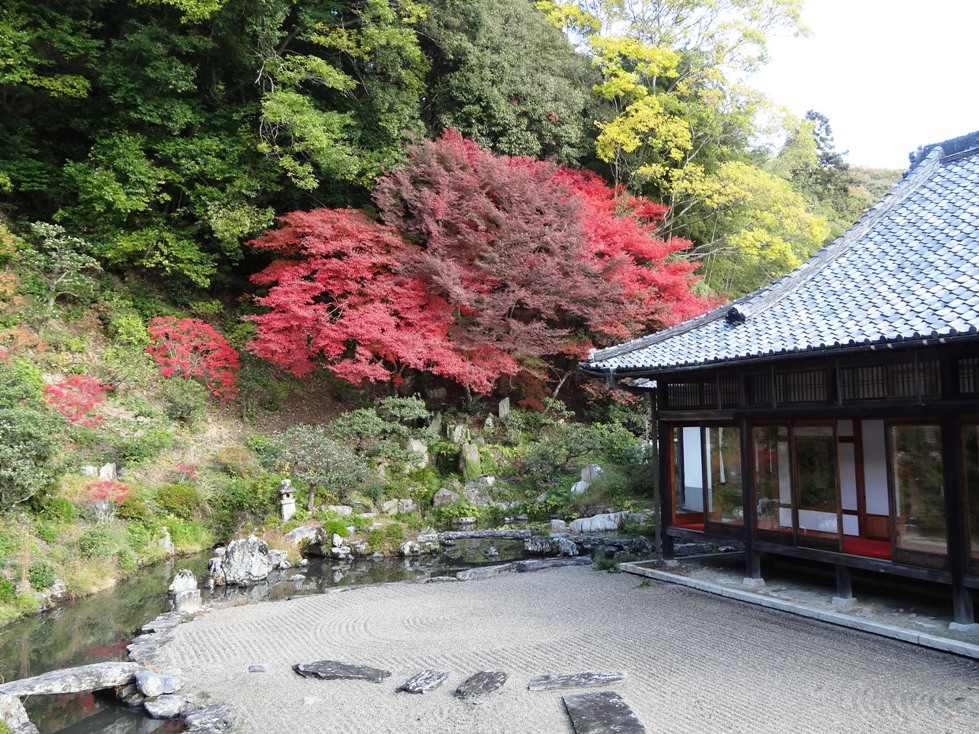
The garden consists of a flat garden, which surrounds Okushoin (a study in the back of a residence) in the north, west, and south, and Shoten-ike in the south of Shoten-do. The area around Shoten-ike is planted with pines and maples, creating rich scenery. In 1800 (the Kansei Era of the Edo Period), the Kishu Tokugawa Family’s Fukiage Palace was relocated and its construction was completed in 1801. The garden was built during this period of construction.
cultural property : historic sites and places of scenic beauty as natural monuments
type : places of scenic beauty
2286 Negoro, Iwade-shi, Wakayama-ken 649-6202
Tel:0736-62-1144
Home page : www.negoroji.org
The garden consists of a flat garden, which surrounds Okushoin (a study in the back of a residence) in the north, west, and south, and Shoten-ike in the south of Shoten-do. A section with a Tsukiyama (artificial hill) and a pond is located to the north and west of Okushoin. The pond is at the foot of the hill in the back with a waterfall arrangement at the north front. The water flows down three levels of the tall stone arrangement. There are two low islands, big and small, with two stone bridges. There is also an Ukishima (detached island), and the islands and the pond edges are protected by flat stones.
The south garden of Okushoin has Tateishi (standing stones) at the south-eastern corner. There are ornamental stones, Japanese red pine (Pinus densiflora) and azaleas all within in this flat garden.
Shoten-ike at the south of Shoten-do has an island at the center to worship Benzaiten (Saraswati). There are some stone arrangements nearby. Pines and maples are planted all around the pond, creating diverse scenery.
Yosui-en
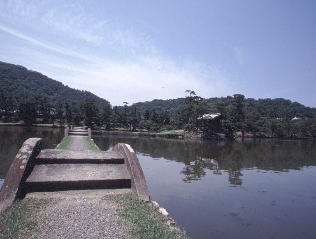
This is a villa of the 10th lord of Kishu, Tokugawa Harutomi, of the Bunsei Era. It occupies part of the Kishu’s Suiken territory next to the Oura Bay, south-west of Wakayama City. This is a Daimyo garden of approximately 33,000m2, with plantings of Japanese black pines (Pinus thunbergii) as well as Japanese red pines (Pinus densiflora), camelias, sweet olives (Osmanthus fragrans), black ridge oaks (Quercus phillyraeoides) and more. The garden has a pond that takes in seawater.
cultural property : historic sites and places of scenic beauty as natural monuments
type : places of scenic beauty
1164 Nishihama, Wakayama-shi, Wakayama-ken 641-0036
Tel:073-444-1430
Home page : www2.odn.ne.jp/cap99810/index.htm
This is a villa of the 10th lord of Kishu, Tokugawa Harutomi, during the Bunsei Era. It occupies part of the Kishu’s Suiken territory next to the Oura Bay, southwest of Wakayama City. It encompasses 33,000m2 of land.
The main feature of the garden is a large pond that stretches from east to west, and a Shoin and space for a tea ceremony are placed on the western side of the pond. The seawater pond curbs gently, and has Tateishi (standing stones) on the northwest corner as well as a central island in the center slightly toward east. The central island is dedicated for Benzaiten (Saraswati) and Inari (deity primarily known as the protector of rice cultivation), and is connected by a hook-shaped Saiko (West Lake in China)-style levee from the north shore, and an arched bridge from the south shore. There is a remnant of Shigure-tei on the south shore, while the western shore has remains of a Funagura (boat house), a Yachiyo-tei and a Baba (horseback riding ground). Behind the garden, there is an embankment that borders the garden and the Suiken River. The embankment has two sluice gates in order to draw seawater to the pond.
The area around the garden is planted with Japanese black pines (Pinus thunbergii), as well as Japanese red pines (Pinus densiflora), camelias, sweet osmanthus (Osmanthus fragrans), and black ridge oaks (Quercus phillyraeoides), which links the garden scenery to outside nature such as Mt. Takozushi and Mt. Yake.
Wakayama Castle Nishinomaru Garden
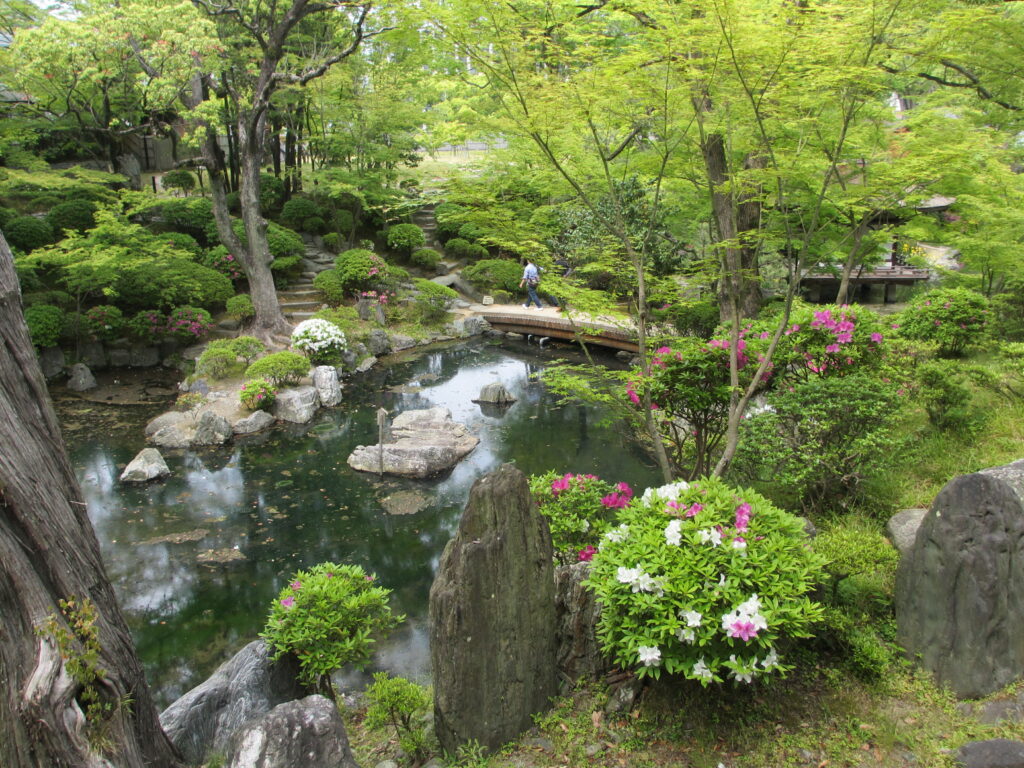
The garden belongs to the Nishinomaru Palace and is located at the northwestern foot of the Wakayama Castle. The date of its creation is not known, but it is believed to be in the early Edo Period. Remnants of surrounding garden feature and a tea room were discovered during the renovation of 1970-1973. This is one of only a few remaining examples of a garden inside a castle.
cultural property : historic sites and places of scenic beauty as natural monuments
type : places of scenic beauty
3 Ichibanchō, Wakayama-shi, Wakayama-ken 640-8511
Tel:073-435-1044
The garden belongs to the Nishinomaru Palace and is located at the northwestern foot of the Wakayama Castle. The date of its creation is not known, but it is believed to be in the early Edo Period. It is a stroll garden with a two-level pond and a waterfall utilizing the slope of Mt. Torafusu. A Tenshukaku, or castle tower, is situated on top of the mountain.
The inner moat of the castle is extended to make it resemble a large pond, where “Willow Island” made of chlorite schist is placed. At the shore of the large pond, there is a building called “Engyo-kaku.” A smaller pond, “Ue-no-ike” (upper pond), is in the west of Engyo-kaku. A stone that resembles a boat with its bow raised is placed in the pond, and the stone is called “Ofuna-ishi.” The upper pond has many bridges including Momiji-bashi (“maple” bridge), an earthen bridge and a stone bridge. Since visitors can enjoy majestic fall colors, the garden is also called “Momiji-dani Garden (maple valley garden).”
During the renovation of 1970-1973, the remnants of the surrounding garden feature and a tea room were discovered. The garden is one of the only few remaining examples of a garden inside a castle.
Kotonoura-onzanso-en
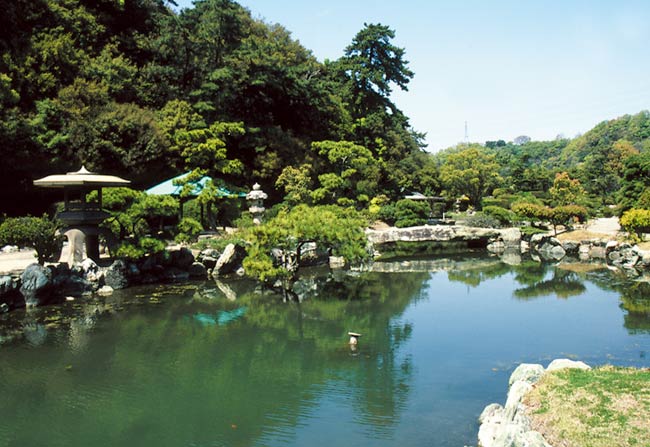
It is a stroll garden with a pond utilizing seawater and was made by Nitta Chojiro, a successful leather business owner, between the early Taisho Era and the beginning of the Showa Era. It has almost 6 ha of space, and the seawater pond features a unique design, composition, and decorative techniques using many imitation stones and woods.
cultural property : historic sites and places of scenic beauty as natural monuments
type : places of scenic beauty
370 Funoo, Kainan-shi, Wakayama-ken 642-0001
Tel:073-482-0201
Home page : http://www.onzanso.or.jp
It is a stroll garden with a seawater pond. It was made by Nitta Chojiro, a successful leather business owner, between the early Taisho Era and the beginning of the Showa Era.
When constructing the garden, an area between Ya-no-shima (an island) and the land was filled, and two ponds that draw seawater were built by burying a water main pipe to take in seawater. Therefore, as the pond surface goes up and down with the tide, shadows of stones and trees at the shore reflected upon the water surface, change in subtle ways.
A tunnel from the garden to the beach was dug into the bedrock of Ya-no-shima to connect the landscape of an artificial pond in the east foothill and the natural beach scenery of the west foothill.
The garden was made with a variety of ideas and by making the most of the location, including a unique technique that often uses concrete-made materials such as imitation rocks and woods, which were rare at the time. The design and technique for garden paths mixing stepping stones with Yori-ishi-jiki (stone pavement) of cement and mortar, are also found in many parts of the garden.
Kyu Ako Castle Garden
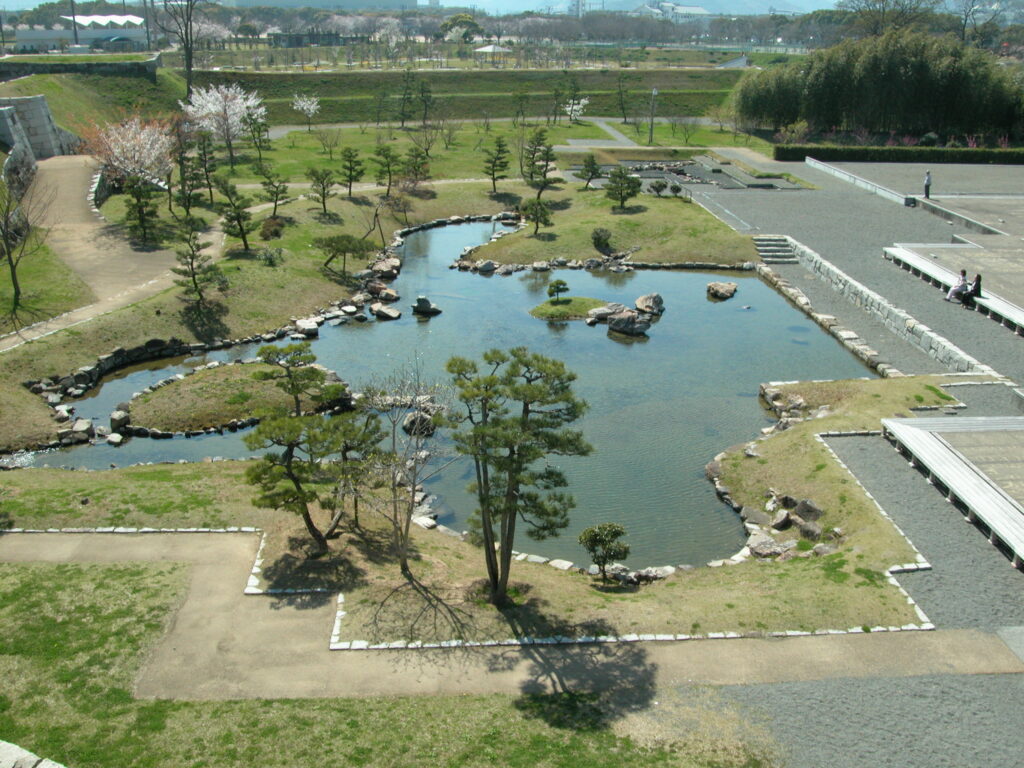
These are Daimyo gardens built in the Honmaru (inner citadel) and Ninomaru (outer citadel) of the Ako Castle. Both of them have ponds that use ample water from the waterworks of the Chikusa River. This is an important example in which the Honmaru and Ninomaru gardens, found during excavation, have been preserved as a whole. Reconstruction work is currently underway, repairing the excavated remnants.
cultural property : historic sites and places of scenic beauty as natural monuments
type : places of scenic beauty
1 Kamikariya, Akō-shi, Hyōgo-ken 678-0235
Tel:0791-43-6962
Home page : www.ako-hyg.ed.jp/bunkazai/akojo/index.html
The gardens at the Ako-jo ruins are Daimyo gardens preserving Honmaru Garden and Ninomaru Garden as a whole. Honmaru Garden has a large pond at the south of Goten (palace), a small pond of a Tsuboniwa (inner garden) at Nakaoku (where Shogun worked and spent his daily life), and another pond at the north-western corner of the Honmaru. The large pond has a cape, an inlet, a central island, and ornamental stones, and its bottom is decorated with geometrically arranged stone slabs and roof tiles, gravel, etc. The small pond at the Nakaoku Tsuboniwa consists of two small water features aligned in east and west. The water from the small pond is connected to the large pond via a covered conduit. The pond in the north-western corner is oval and dug directly in the ground. Pebbles are laid along its shoreline. Ninomaru Garden is a large scale garden with a large pond. The section near the residence is a flow, while the southwestern section is a grand space where the water is deep and boats can be used.
In Ako, water taken from the upper Chikusa River is supplied to the castle and houses in its town. This water was also supplied to the ponds in the castle.
Garden of Mr. Tabuchi
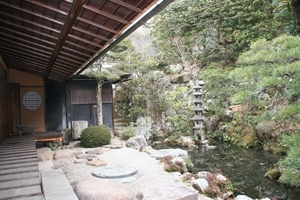
This is a residential garden of Mr. Tabuchi, who built a fortune mainly from the salt-making industry. The residence is located at the foot of Mt. Misaki in Ako Misaki, and the garden is on a hillside that continues behind the residence. The garden has Meien-ro in its upper section, Shun’insai in the middle, and a study and pond at the bottom.
cultural property : historic sites and places of scenic beauty as natural monuments
type : places of scenic beauty
329-1 Misaki, Akō-shi, Hyōgo-ken 678-0215
Tel:0791-42-2225
This is a residential garden of Mr. Tabuchi, who built a fortune mainly from a salt making industry. The residence is located at the foot of Mt. Misaki in Ako Misaki, and the garden is on the hillside that continues behind the residence.
The entry area from the front gate to the entrance of the main house is a Tuboniwa-style garden installed along stepping stones, and has a pond made by excavating the area behind the Shoin. Many Sago palms (Cycas revoluta) and sporadically planted Tsuwabuki (Farfugium japonicum) underneath them stand out among trees in the garden. They indicated that the garden is in a warm area. The opposite side of the pond is a slope, where a waterfall stone arrangement of about 4m is placed. To the right of the waterfall is a stone bridge, and visitors can reach the top of the slope by crossing the bridge. Two-story Mei’en-ro appears to the right around the section where the slope becomes gentle. Wooden fence facing Mei’en-ro has Nakakuguri (a low gate between an outer tea garden and an inner tea garden), and visitors can reach a tea room, Shun’insai and its inner tea garden.
Anyo-in Garden
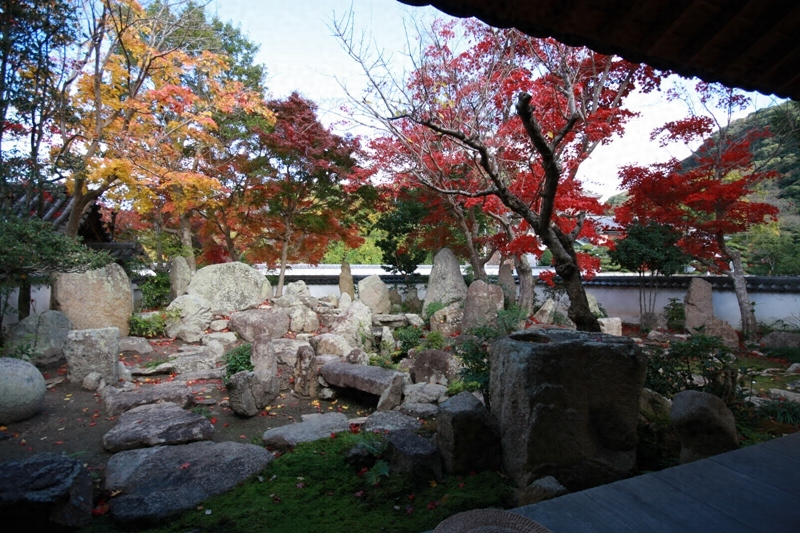
This is a garden made at the shoin of An’yo-in, a sub-temple of Taisan-ji (the Tendai sect). It is a magnificent, elegant garden that uses the old-growth forest of Taisan-ji as borrowed scenery. The landscaping style and the stone arrangement techniques clearly show the characteristics of the Momoyama Period. The old-growth forest of the borrowed scenery is designated as an important area (an ecosystem encapsulating the biological characteristics of a region).
cultural property : historic sites and places of scenic beauty as natural monuments
type : places of scenic beauty
Zenkai-258 Ikawadanichō, Nishi-ku, Kōbe-shi, Hyōgo-ken 651-2108
Tel:078-974-0408
This is a garden at the study of An’yo-in, a sub-temple of Taisan-ji (the Tendai sect). It is a majestic and elegant Karesansui (dry landscape) garden with the old-growth forest of Taisan-ji as borrowed scenery.
Enormous rocks as triad stones are placed at the center, with crane and turtle island stone arrangements are at each side. Inbetween is a valley, and stone are arranged as a Mt. Horai in the back of the valley.
It is a Karesansui garden that uses many large rocks, but its atmosphere is different from sand gardens often seen at typical Karesansui gardens. Taisan-ji was built in the Heian Period, but fires damaged it many times and historical materials that could indicate the date and person who created An’yo-in has been lost. The style and stone arrangement techniques used in the garden are characterstics to the Momoyama Period, indicating that the garden was built in the Period.
The old-growth forest of the borrowed scenery is designated as an important area (an ecosystem indicating the biological characteristics of a region).