
nara」タグアーカイブ

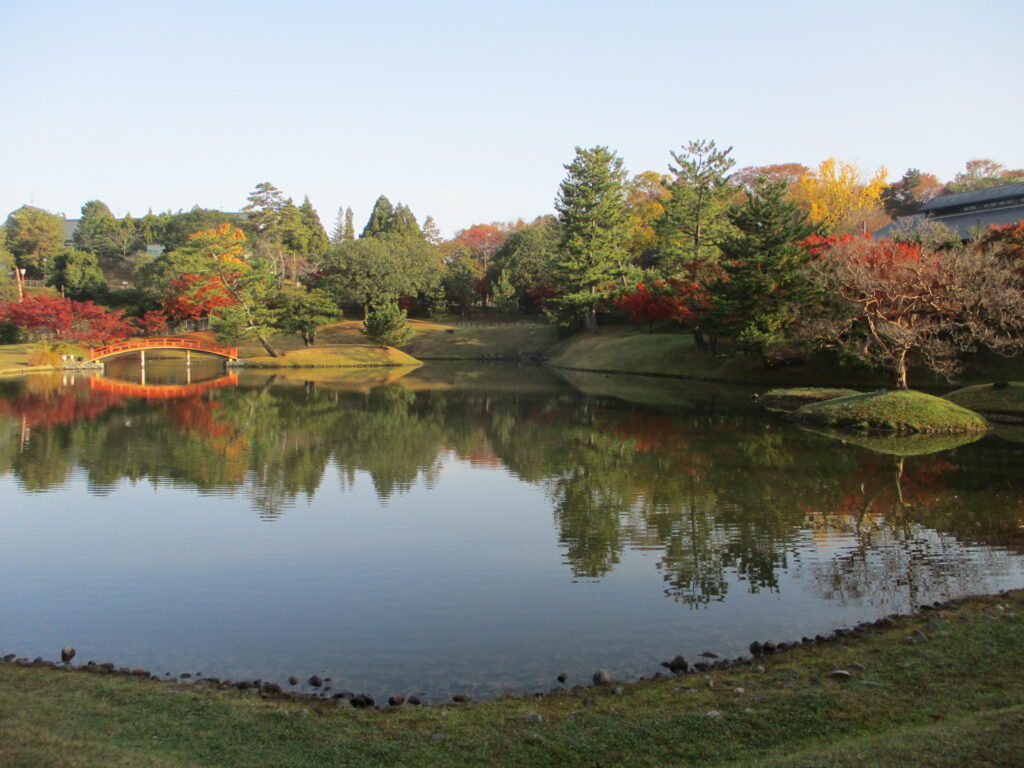
Kyu Daijo-in Garden

Its origin is thought to be in the Heian Period, but in the mid-Muromachi Period, a Monzeki (monk with a royal background who acceded the proper lineage of a temple) of Daijo-in, Jinson, ordered a gardener Zen’ami to repair the garden. Although the garden became dilapidated in the Meiji Era, the garden as a whole still preserves the land allotment from the Muromachi Period. This is the ruin of a garden made by Zen’ami, the best gardener of the Muromachi Period, when many outstanding gardens were created.


cultural property : historic sites and places of scenic beauty as natural monuments 
type : places of scenic beauty

1083-1 Takabatakechō, Nara-shi, Nara-ken 630-8301
Tel:0742-24-0808

Home page : http://www.national-trust.or.jp/protection/index.php?c=protection_view&pk=1491202122


Daijo-in is a Monzeki temple of Kofuku-ji and believed to have been founded in the Heian Period. In the mid-Muromachi Period, Zen’ami and his son were invited by the Monzeki of Daijo-in, Jinson, to repair the garden devastated by Tokusei Ikki, an uprising demanding debt cancellation orders. It is believed that Zen’ami was one of Doboshu (those who were in charge of tea ceremonies, entertainment and miscellaneous duties for Shogun and Daimyo) for Shogun Ashikaga Yoshimasa, and was a master gardener.
In the past, the main allotment of the garden included a large pond in the east and a small pond in the west, with south and north central islands in the east pond. The garden fell into ruin in the Meiji Era, and the west pond and the south central island no longer exist. However, the garden preserves the allotment from the Muromachi Period as a whole, and flowering trees that bloom season by season still decorate the garden. This is the ruin of a garden made by Zen’ami, the best gardener of the Muromachi Period, when the garden was created. (Note: Zen’ami belonged to a social group called Senzui Kawaramono. “Kawaramono” means “people living at riverbeds” and those who were engaged in landscaping were called “Senzui (mountain-and-water) Kawaramono.
Isui-en

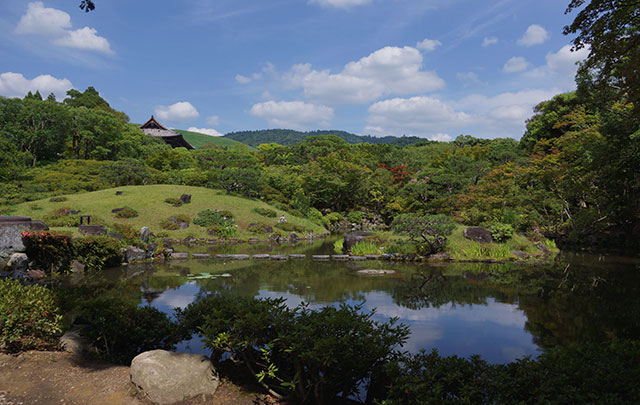
The front garden was made in the Edo Period (the Enpo Era) while the back garden was built in the Meiji Era. The two gardens with their different origins are connected with a stream, and together they are called “Isui-en.” It is an outstanding garden that incorporates the roof of the Todai-ji’s Nandai-mon (Great South Gate) and three mountains, Mt. Wakakusa, Mt. Kasuga and Mt. Mikasa, as borrowed scenery.


cultural property : historic sites and places of scenic beauty as natural monuments 
type : places of scenic beauty

74 Suimonchō, Nara-shi, Nara-ken 630-8208
Tel:0742-25-0781

Home page : www.isuien.or.jp


It is located in the west of Nandai-mon (Great South Gate) and to the north of the Yoshiki River. The front garden was created in the Edo Period (the Enpo Era) and the back garden in the Meiji Era. The two gardens with their different origins are connected with a flow of water, and together they are called Isui-en.
The front garden was made by improving the remnant of Sanshu-en, which was a villa owned by a bleacher of the Kiyosumi Family, in Nara. The back garden was built when the site was owned by an affluent merchant, Sekito Jiro, in Nara. This garden uses Mt. Wakakusa, Nandai-mon of Todai-ji, Mt. Kasuga, and Mt. Mikasa as borrowed scenery. The garden also uses stepping stones, shore stepping stones, old temple stones and millstones, as well as plants such as dwarf azaleas and Okamezasa (Shibataea kumasaca), giving typical Meiji characteristics to the garden as a whole. Isui-en, consisting of two gardens, is a stroll garden with ponds and represents Nara Prefecture.
Also, there is the “Neiraku Museum” on the premise, which holds and displays bronzeware from ancient China, porcelain from Goryeo and Yi Dynasties of Korea, and Japanese tea ceremony utensils.

Nara Park

In 1880 (the Meiji Era), Nara Prefecture started managing the former precinct of Kofuku-ji and 14-hectares of the land of Kasuga Taisha as a park. Later, the surrounding forests and the princinct of the Tamukeyama Shrine at Todai-ji were incorporated, and private land necessary for improving the scenery was purchased, becoming the Nara Park. This park is also referred to as the “history” park.


cultural property : historic sites and places of scenic beauty as natural monuments 
type : places of scenic beauty

543 Shibatsujichō, Nara-shi, Nara-ken 630-8114
Tel:0742-22-0375


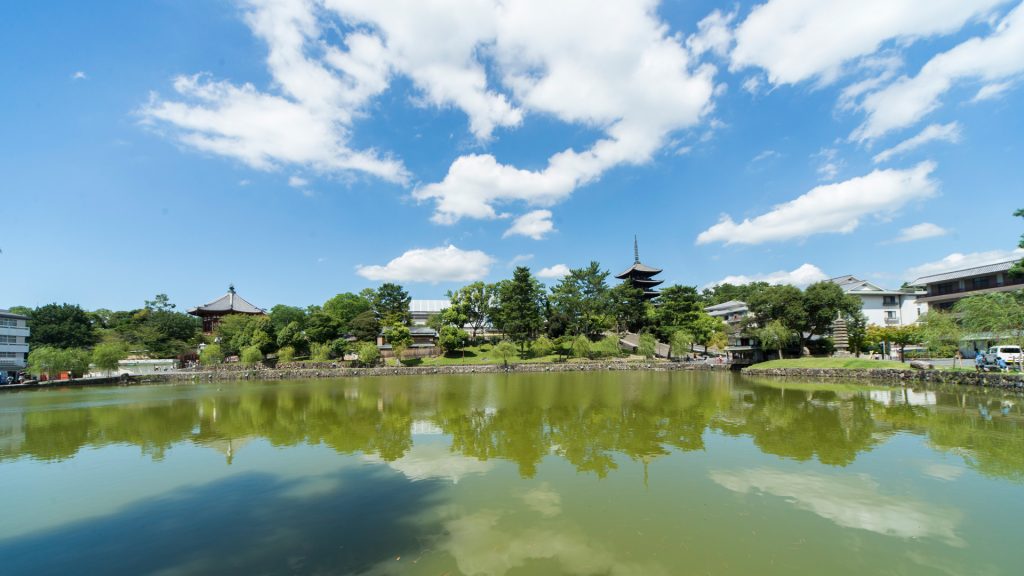
Nara Park was established when the area of approximately 15 ha, including the precinct of Kofuku-ji and Kasugano, were designated as a park in 1880 (the Meiji Era) by a Notice of the Grand Council of State. Later, the park added Mt. Wakakusa and Mt. Kasuga, and was improved as a city park by Nara Prefecture. Nara Park was designated as a Place of Scenic Beauty in 1922 (the Taisho Era) by combining the Nara Prefectural City Park (including Sarusawa-ike, Sagi-ike, Kasugano and Mt. Wakakusa) and the precinct of Todai-ji and Kofuku-ji, which encompasses 524 ha altogether. In the park, there are 1,200 wild deer that are considered the divine messengers of Kasuga Taisha. They are protected as National Natural Monuments. The extensive lawn of Kasugano is a unique landscape sustained by deer grazing. Yamayaki (burning of a mountain) at Mt. Wakakusa every January is Nara’s traditional event that heralds the arrival of early spring. Beside Mt. Wakakusa, Mt. Kasuga is covered with a pristine forest that has not been cut since ancient times. The forest is designated as a Special Natural Monument called “Kasugayama Primeval Forest.” Everywhere in the park, visitors can enjoy landscapes that integrate history, culture and nature, such as Ukimi-do in Sagi-ike, Sarusawa-ike, the five-story pagoda of Kofuku-ji, etc.