
akita」タグアーカイブ

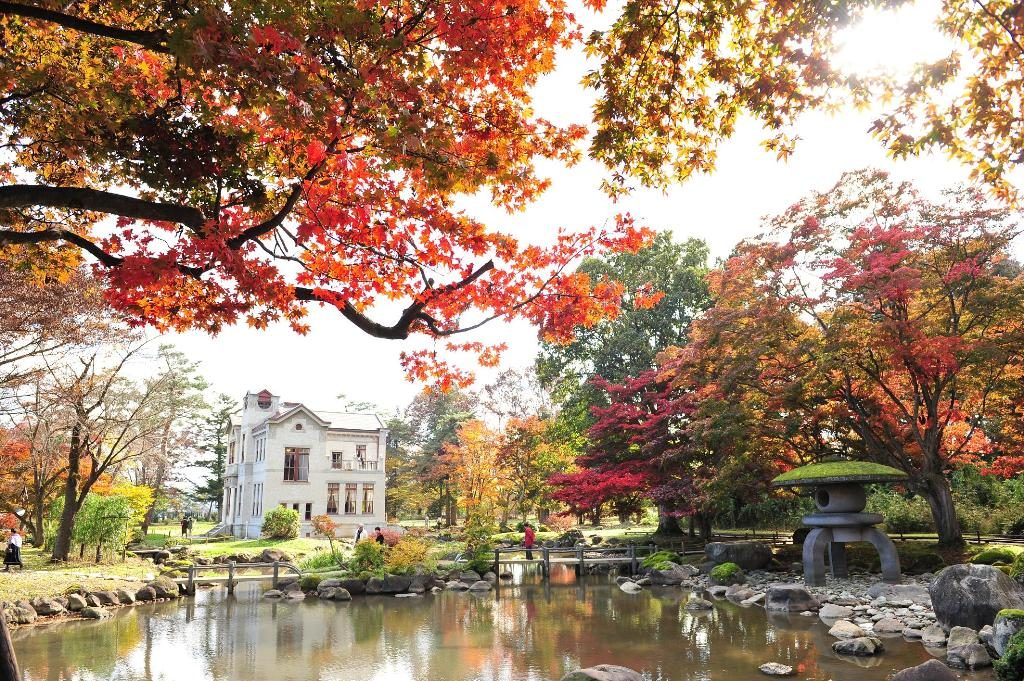
Kyu Ikeda Family Gardens

This garden is located in the countryside of Yokote Basin. Its premises are shaped like a floating island. This garden is regarded to have exceptionally high visual and academic value as a garden designed by Nagaoka Yasuhei, a pioneer of modern landscaping and was designated as the first National Place of Scenic Beauty in Akita Prefecture in February 2004.


cultural property : historic sites and places of scenic beauty as natural monuments 
type : places of scenic beauty

1, Takanashi Aza Ooshima, Daisen-shi, Akita-ken 014-0805
Tel:0187-62-6257

Homepage : www.city.daisen.akita.jp/bunya/ikedashiteien/


The Ikeda Family was the village head of Takanashi, Daisen City, Akita Prefecture, from the mid-Meiji Era until World War II. The family has been known as one of the Three Major Landowners of the Tohoku Region, along with the Honma Family of Yamagata Prefecture and Saito Family of Miyagi Prefecture. When the residence built by the 13th head of the Ikeda Family, Buntaro, collapsed during the earthquake in 1896, the family consolidated and organized their land in cooperation with the government’s farmland consolidation and expanded their residence site. The garden was created with the help of Nagaoka Yasuhei, the founder of modern landscaping, which was completed for the most part during the Taisho Era.
The garden is located in the central section of the Senhoku Plain, surrounded by vast countryside with the Ou Mountains to the east, Mt. Jingu-ji-dake to the west, and Mt. Chokai to the southwest, all of which are visible in the distance from the garden. The main part of the garden has an island at the center and a shallow garden pond with a large Yukimi-doro (legged stone lantern) on its western shore, and water flows around these features to create unique layout of the garden site.
The enormous lantern, 4m high and approximately 4m wide at its top, makes it an impressive main scenic component.  
Kyu Villa of Mr.Satake,Akita Domain (Joshi-tei) Garden

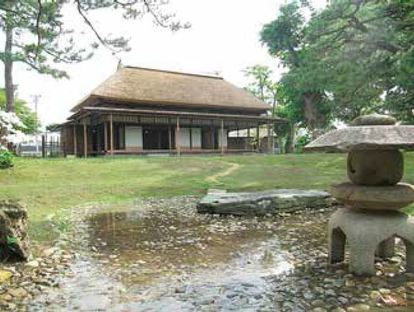
Joshi-tei was originally part of the villa of Satake Yoshizumi, the third lord of the Akita Domain in the Genroku period (1688 – 1704). It is positioned next to the Karamete-mon gate (back gateway) of the Satake Family’s Kubota-jyo Castle. The garden is located in a scenic site, commanding a distant view of the Taihei cordillera. It was designated as a National Place of Scenic Beauty in 2007. It has been restored and improved based on ruins and historical sources since 2014, and was opened to the public in October 2017. 


cultural property : historic sites and places of scenic beauty as natural monuments 
type : places of scenic beauty

2-73, Asahikawaminamimachi, Akita-shi, Akita-ken 010-0834
Tel:018-834-6300

Home page : https://www.city.akita.lg.jp/kanko/kanrenshisetsu/1002685/1013885/1002284.html


This garden was created in a scenic area of the countryside of the Tohoku region during the mid-Edo period. A Tsukiyama (artificial hill) in the garden blends in with the surrounding mountains, creating its own natural features.
The garden was created with the north as its front, commanding a distant view of Shin Shiroyama mountain and the Taihei cordillera. Kankodai, the tallest artificial hill in the garden is located in the northeast of the garden, from which three artificial hills to the south and one to the west continue. A “Gyokukanchi,” a garden pond with shallow streams, is located at the center of the garden premises, featuring Nakajima (the central island) made of a three-meter boulder, “Kyogoto,” at the center of the pond.  Water flowing out of the valley of an eastern artificial hill forms a Tsutai-ochi (water flowing on slopes) waterfall, “Jingensen,” reaches the pond, and again flows out of the pond from its western side, forming a stream. The stream flows along the south side of an ornamental stone, “Kakkoseki,” goes under a stone bridge, “Seikikyo,” forms a mountain stream, and reaches the tea garden of a tearoom, “Seion-tei,” located on a lower level. The stream from the east to the west flows continuously, and the structure of the “15 views in the garden” along with the name of Joshi-tei are unique and are considered to hold high artistic value.