
ibaragi」タグアーカイブ

Kairaku-en

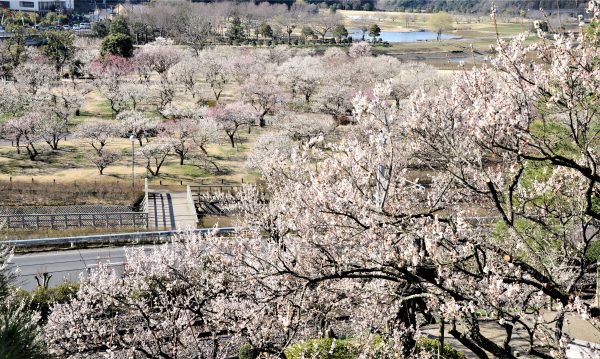
This is one of the Three Great Gardens of Japan along with Kenroku-en in Kanazawa and Koraku-en in Okayama. It was built by the 9th lord of Mito, Tokugawa Nariaki, in 1842. An area of the entire park including Kairaku-en and Senba Park is about 300 hectare and this is the 2nd largest urban park in the world after Central Park in New York City, USA.


cultural property : historic sites and places of scenic beauty as natural monuments, Tangible cultural property
type : places of scenic beauty, historic sites

1-3-3, Tokiwacho, Mito-shi, Ibaraki-ken 310-0033
Tel:029-244-5454


The 9th lord of Mito, Tokugawa Nariaki, built this park to enjoy it with the people in his domain. It is one of the Three Great Gardens of Japan. It is also known as a “plum garden” because there are about 3,000 plum trees of about 100 different varieties.
A vast grove of moso bamboos (Phyllostachys edulis) can be seen when entered from the front gate which is located in the north of the premise. Going down the slope with the large Japanese cedar (Cryptomeria japonica) grove to the right, visitors will find a spring called “Dogyoku-sen.” If they continue to go towards the overlook, they will reach the “Kobun-tei” house. They can see Lake Senba, which is in the southeast of the premise, and surrounding forests from the overlook where the “Kobun-tei” is. The garden is famous for its plum trees but visitors can also enjoy flowers and blossoms all year round as there are azaleas, bush clovers (Lespedeza), and winter cherry blossoms (Cerasus×parvifolia ‘Parvifolia’).
“Kairaku-en” was named after a segment from “The Mencius,” a Chinese classical literature. It reads “elites in ancient times enjoyed with their subjects, therefore their enjoyment was greater.”
Nishiyama-goten-ato historic sites (Seizan-so)

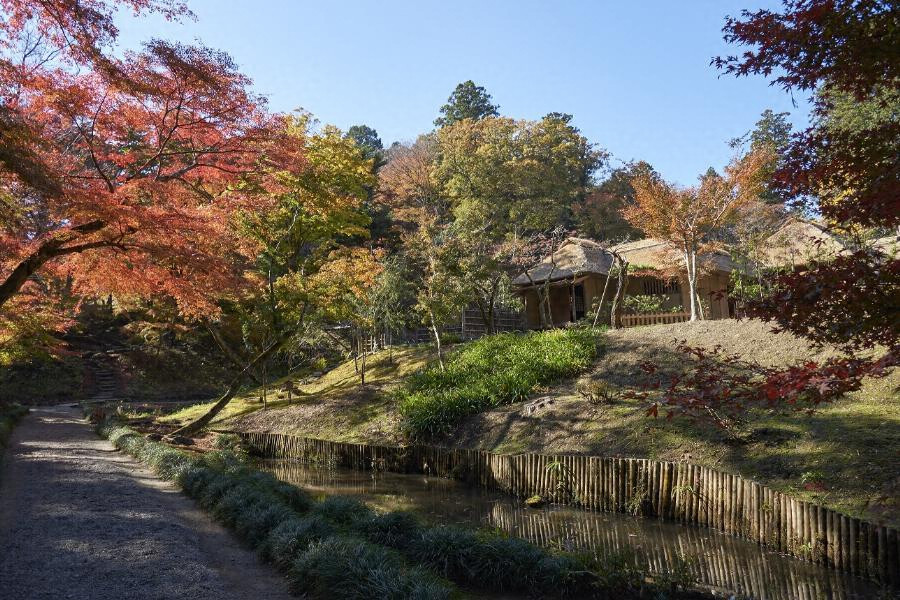
Seizan-so was created inside a residence of the retired 2nd lord of Mito, Tokugawa Mitsukuni, and it is located at the deepest part of the valley of the Genji River in the Kuji River system. It is known that many medicinal plants such as Chinese quince, plum and Veitch’s bamboo were planted according to “Nishiyama-zu” which is a drawing of the entire premise in “Togen-iji” compiled after the death of Mitsukuni.


cultural property : historic sites and places of scenic beauty as natural monuments 
type : places of scenic beauty, historic sites

590 Arajukuchō, Hitachiōta-shi, Ibaraki-ken 313-0007
0294-72-1538


The 2nd lord of Mito, Tokugawa Mitsukuni, retired in 1690 and moved into this mansion. The wooden one-story house is in a Sukiya style with a thatched roof. Roof irises (Iris tectorum) are planted on the ridge of the roof. In old times, roof irises were often planted on the thatched roof because people believed that it would protect the house against the strong wind. According to “Togen-iji”, roof irises were also planted when Mitsukuni resided there.
The garden is located in the south of the mansion. There are the Byakuren-ike pond and the Guren-ike pond and they are connected with a stream. The Byakuren-ike pond is in the southwest part of the mansion and the water flows into the Guren-ike pond which is in the east. There is a remnant of a small waterfall called Ontaki and the water used to flow into the stream between the ponds. A tunnel-shape conduit made of a bored rock was created for Ontaki during the renovation in 1968 and a structure that draws water from Sakurayatsu to the top of the waterfall was confirmed, but currently no water is flowing. A Tsukiyama (artificial hill) called Kangetsuzan is created on the top part of Ontaki and it is said that Mitsukuni held banquets for the moon viewing there.