
kanagawa」タグアーカイブ

Zuisen-ji Garden

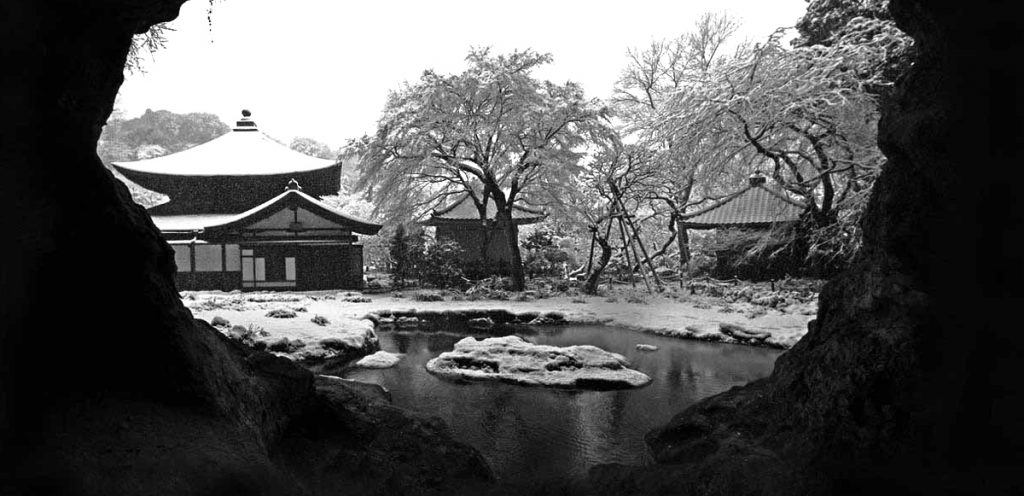
This stone garden was created when Muso Soseki started Zuisen-ji at the end of the Kamakura Period. The entire garden including the pond was buried and dilapidated, but it was excavated and recovered from 1969 to 1970. This garden has an old foundation of Muso Soseki’s early landscaping work and it is considered to be a starting point of gardens with a study. It is the only garden from the Kamakura Period in Kamakura.


cultural property : historic sites and places of scenic beauty as natural monuments 
type : places of scenic beauty

710 Nikaidō, Kamakura-shi, Kanagawa-ken 248-0002
Tel:0467-22-1191


Muso Soseki created this garden when he started Zuisen-ji at the end of the Kamakura Period. A pond that can be seen from the precinct is made with bored tuff rocks and it is very unique. If visitors go up the steep slope from this pond garden, they will reach a gazebo on the top. This gazebo is called Henkai Ichiran-tei. “Henkai” means the entire world and visitors can enjoy a sweeping view of the surroundings from the top of the hill.
The entire temple was buried and dilapidated during the Edo Period, but it was excavated and recovered from 1969 to 1970. This is an early garden work by Muso Soseki who is a well-known monk and gardener. It is a very important garden as this is the only one from the Kamakura Period in Kamakura and is considered to be a starting point of gardens with a study.
Kencho-ji Garden

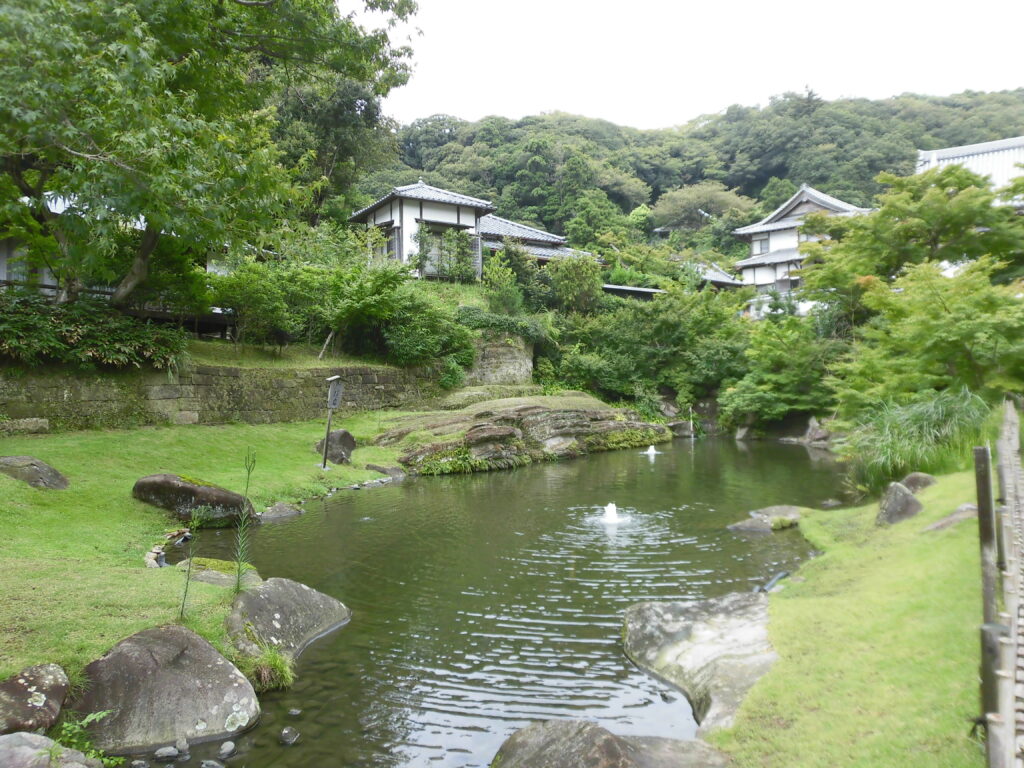
According to the copper monument dated 1692, the current garden was either created or renovated in the beginning of the Tokugawa Shogunate. There is a garden with a pond shaped like the character for “heart (Kokoro)” in the middle, which is located behind the abbot’s chamber, and the Daikakuike garden in Kaishun-in. The Daikakuike pond was created when the temple was built as a regulating reservoir in order to protect the precincts of the temple from flooding.


cultural property : historic sites and places of scenic beauty as natural monuments 
type : places of scenic beauty, historic sites

8 Yamanouchi, Kamakura-shi, Kanagawa-ken 247-0062
Tel:0467-22-0981


This is the head temple of the Kencho-ji school of the Rinzai sect and founded by Hojo Tokiyori in 1253, the fifth year of the Kencho Era. The precincts are symmetrically arranged and Chinese junipers (Juniperus chinensis) are planted in a row in the garden in front of the Buddhist sanctum. The style of gardens with a study can be seen in drawings from 1678. According to the copper monument dated 1692 in the garden, it is presumed that it was either created or renovated in the beginning of the Edo Period. There is a hill running from the east to the north of the garden and a curved pond is at the bottom of the hill. There is a bridge to walk across to Nakajima (the central island) in the pond. Some stones are arranged on the central island here and there along with a lantern. There are dwarf conifer trees such as pines and yew plum pines (Podocarpus macrophyllus) as well as azaleas. A large Japanese black pine (Pinus thunbergii) is towering in the middle of the garden and lush Japanese zelkova (Zelkova serrata) and maple trees can be seen on top of the hill. The garden is simple yet elegant.

Engaku-ji Garden

The pond called Byakurochi is on a path leading to the main gate and the natural landscape around the pond changes every season. There is also an old Chinese juniper (Juniperus chinensis) in front of the Buddhist sanctum. There is a garden near the abbot’s chamber and it is centered around a pond called Myokochi, which is shaped like the character for “heart (Kokoro).” All these places were designated as a National Place of Scenic Beauty in 1932.


cultural property : historic sites and places of scenic beauty as natural monuments 
type : places of scenic beauty, historic sites

409 Yamanouchi, Kamakura-shi, Kanagawa-ken 247-0062
Tel:0467-22-0478


There is a ceremonial release pond called Myokochi at the bottom of the plateau for the reliquary hall behind the Buddhist sanctum. It is said that the garden with Hojo with a pond in the middle was created by Muso Soseki of the Rinzai sect in 1335.
The pond is made of a bored bedrock. A portion of the rock on the north edge of the pond, towards the mountain, is eroded as though waves carved it and it is called “Kotogan (Tiger head rock).”
The original landscape of the garden was lost when the Yokosuka rail line was built and a prefectural highway opened during the Meiji Era, so the plaza is no longer in a square shape but a symmetrical square pond still remains on the other side of the railway in front of the main gate. This pond is called “Byakurochi” and the stone bridge over the pond is called “Komabashi.” The stone bridge is connected to the straight path leading to the main gate. The path is surrounded by a thick forest of aged Japanese cedars (Cryptomeria japonica) which preserve the appearance of the old days.

Sankei-en

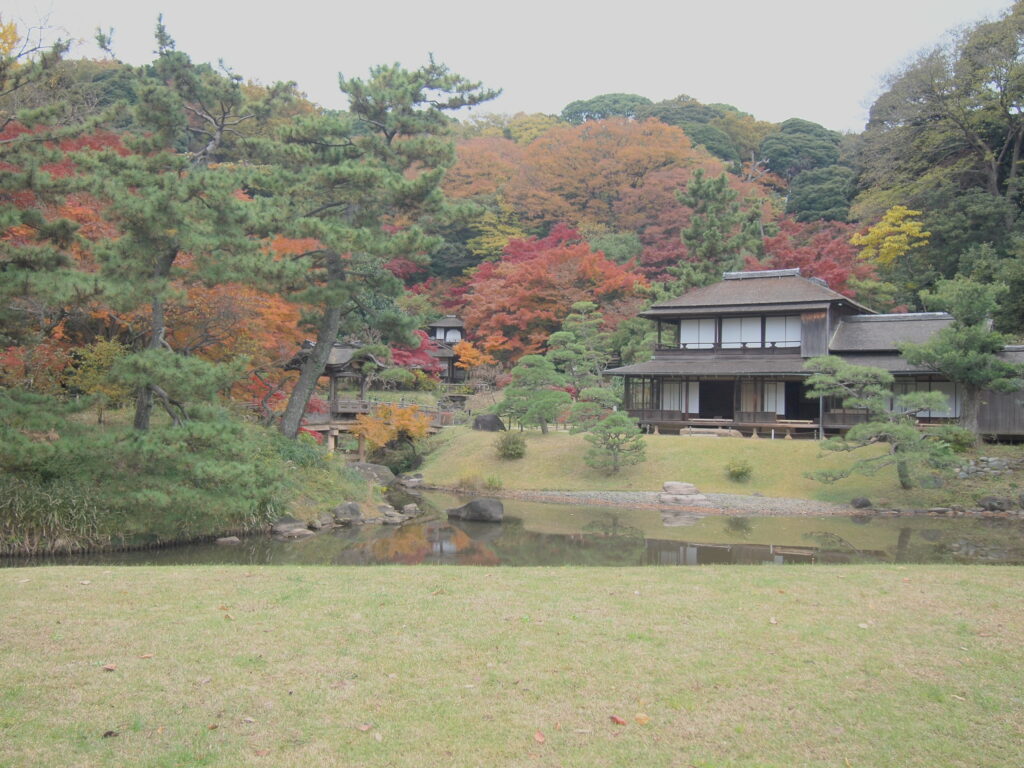
This garden was made in the valley called San’notani which faces the Tokyo Bay by Hara Sankei, Yokohama’s number-one businessman in modern times. There is an outer garden which opened to the public in 1906 and an inner garden which was used as a private garden. It is famous for an amazing harmony of historical buildings collected from Kyoto and Kamakura and the natural view from season to season.


cultural property : historic sites and places of scenic beauty as natural monuments 
type : places of scenic beauty

58-1 Honmokusannotani, Naka-ku, Yokohama-shi, Kanagawa-ken 231-0824
Tel:045-621-0634

Home page : www.sankeien.or.jp


The garden was made in the area with a varied topography with hills and valleys in the southeast of Yokohama City by Hara Sankei (born Tomitaro), Yokohama’s number-one businessman in modern times. Sankei inherited the family estate in 1899 and started the construction with his own ideas shortly thereafter. In 1902, Kakusho-kaku was newly added, and Kyu Tenzui-ji Juto Oido (a protective structure for the old Tenzui-ji grave tablet) and Kangetsu-an, a tearoom, were relocated. Their gardener was sent to various gardens in the Kansai region to observe and study in 1905. The outer garden, which we can see today, was completed in the following year and opened to the public in May 1906. It was a landmark effort to open a private garden publicly at that time. The construction continued even after the opening and was finally completed in 1922 with a relocation of Choshu-kaku. It is very rare for a large garden in a big city to have the urban characteristics of the modernized city in the surrounding area mostly invisible from the garden.
Some of the most scenic spots in this garden are: a large pond, Rinshun-kaku and Choshu-kaku. On the opposite side of the large pond, there is a three-storied pagoda of former Tomyo-ji on top of the hill. There is a pond in front of Rinshun-kaku and the reflection of the building with a green hill in its background is beautiful. An exquisite contrast of Choshu-kaku and a stream bordered by lush foliage is also remarkable.