
tottori」タグアーカイブ

Garden of Mr. Osaki

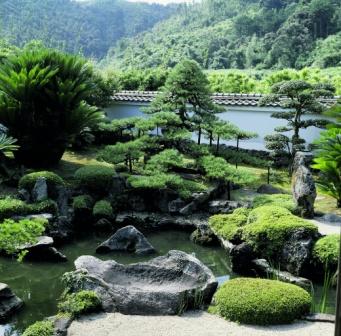
The garden’s main scenery is a pond that stretches from the east to the south of the Shoin. It uses a pine forest outside the garden as borrowed scenery, and has stone arrangements at the top of a waterfall, a Horai island, and pond edges. The garden preserves the scenery style of the early Edo Period, indicating how landscaping techniques evolved in the Hoki region.


cultural property : historic sites and places of scenic beauty as natural monuments 
type : places of scenic beauty

1518 Uno, Yurihama, Tohaku District, Tottori 682-0701
Tel:0858-35-2003


The Osaki Family was a village headman responsible for temples, shrines and their religious administration for the Tottori Domain in the Edo Period.
During the time of the 5th chief, Kiyo’emon, the family moved to the current location and newly constructed the main residence, a Buddhist alter, a few cellars, and a Mon-nagaya (Nagaya-mon).
The garden is in the southeast of the main residence with a thatched roof. A pond stretches from east to south, and to the left, a dry waterfall is arranged in a triad-stone style. A Chozubachi (water basin) made of a natural stone is placed in the front riht corner. Mature trees of Japanese black pines (Pinus thunbergii) and sago palms (Cycas revoluta) grow on the other side of the pond with approximately 30 varieties of other plants such as dwarf azaleas (Rhododendron indicum) and cleyeras (Ternstroemia gymnanthera).
The garden preserves the scenery of the early Edo Period, indicating how landscaping techniques had evolved in the Hoki region.
Shozen-in Garden

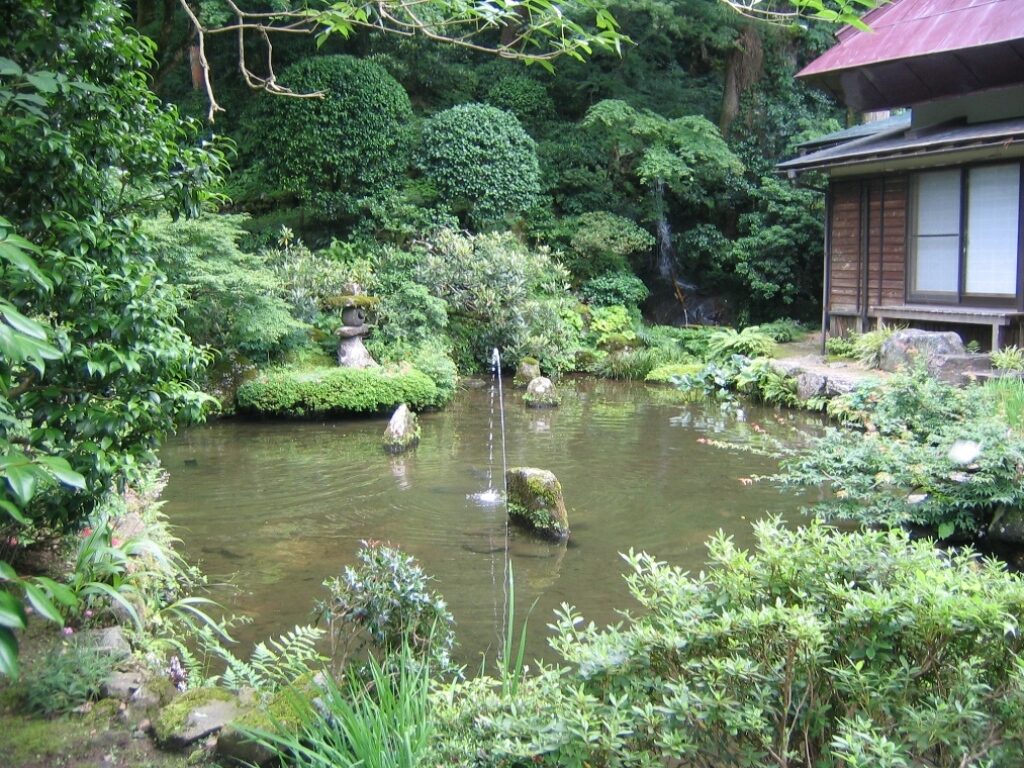
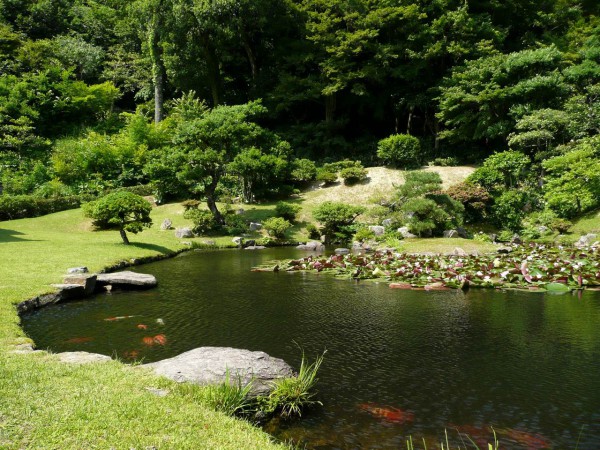
Mitokusan Sanbutsu-ji is a mountain temple situated in Mt. Mitoku (900m). Shozen-in is one its three temples. Shozen-in has a garden with Hojo (the chief monk’s residence) and a garden with a pond facing a tatami room of the Shoin. The view from the tatami room of the Shoin consists of a pond in the front, a wooded area in the middle, and Monju-do as borrowed scenery.


cultural property : registered monuments 
type : registered monuments

1013 Mitoku, Misasa-chō, Tōhaku-gun, Tottori-ken 682-0132
Tel:0858-43-2668


Mitokusan Sanbutsu-ji is a mountain temple situated in Mt. Mitoku. Shozen-in is one of its three temples. Shozen-in has a garden in front of a Hojo (the chief monk’s residence) and a garden with a pond facing a tatami room of the Shoin.  
It consists of three Tsukiyama utilizing the slope. Water from a hill behind the garden is drawn to form a waterrall, flowing to the pond. The pond also has central islands, which are arranged to resemble a crane and a turtle, and a loose rock. The view from the tatami room of the Shoin facing the pond consists of the pond in the front, a wooded area in the middle, and Monju-do as borrowed scenery.  
The northern slope of Mt. Mitoku is extremly steep and most of it consists of precipitous cliffs. The mountain is covered with forests mainly of broad leaved evergreen trees, and the moutain as a whole is considered as a key feature of the landscape. The mountain temple Sanbutsu-ji is also an important landscape component.  
The main building of Shozen-in was lost by a fire in 2012, but recovery construction has been ongoing since 2015.

Kannon-in Garden

A Tsukiyama uses a natural slope from the south-east to the west of the Hojo. The pond at the bottom of the Tsukiyama occupies half of the garden. The waterfall arrangement, a central island, and garden trees create an elegant landscape. This is a good example of the localization of Kyoto-style gardens in the late Edo Period.


cultural property : historic sites and places of scenic beauty as natural monuments 
type : places of scenic beauty

162 Uemachi, Tottori-shi, Tottori-ken 680-0015
Tel:0857-24-5641


Kan’non-in is one of the 8 prayer halls of the Ikeda Family of the Tottori Domain. It is told that the Lord, Ikeda Mitsunaka, completed the temple spending 10 years, and it is considered to be one of the localized Kyoto-style gardens in the late Edo Period.
A Tsukiyama arranges a natural slope from the south-east to west of the Hojo. The pond at the bottom of the Tsukiyama occupies half of the garden. When viewing the pond from the Hojo, visitors can see a forest expanding on the mountain slope behind a Tsukiyama (artificial hill), creating scenery with depth. The pond has stone arrangements of a crane island, a turtle island, and a waterfall, which remain the same as they were in the Genroku Era. The garden skillfully utilizes wild plants native to the area to create beautiful landscape. During spring when cherry trees blossom, the garden becomes a regional tourist destination.
“Sho-kanzeon-bosatu,” the principal image of the temple, is called “Shusse Kan’non (Kan’non of eminance) since it was moved to a bigger temple everytime its alter was changed.