
hiroshima」タグアーカイブ

Shukkei-en

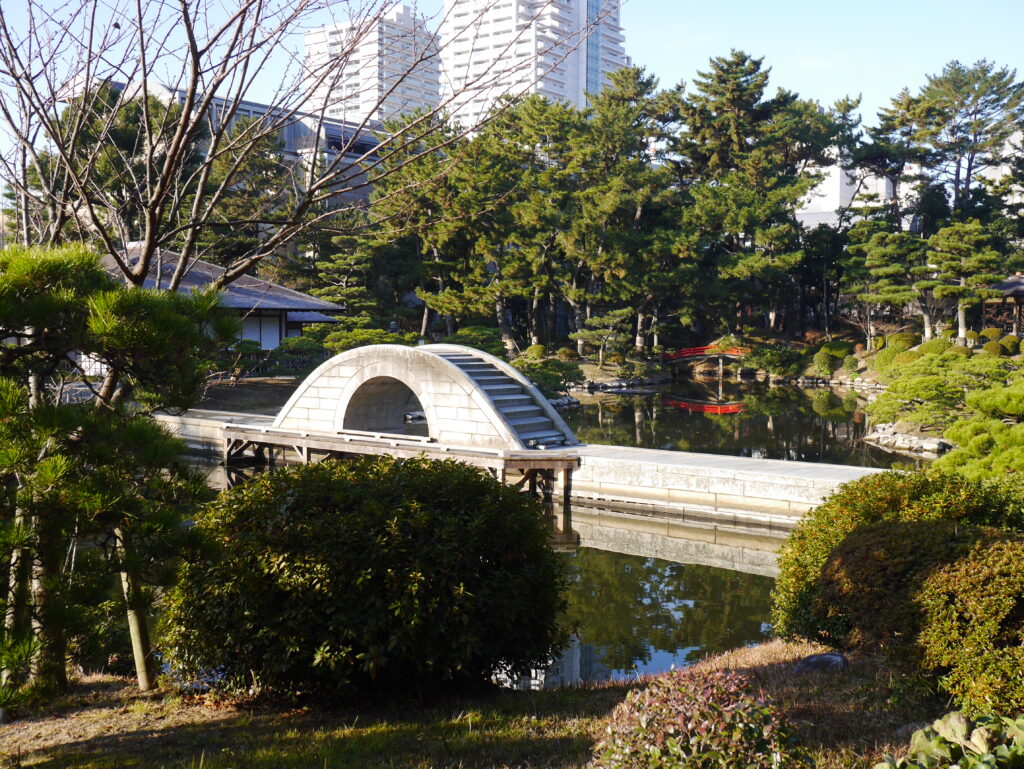
It was created as a garden in the villa of the 1st lord of the Asano Domain in Hiroshima, Asano Naga’akira, in 1620. Ueda Soko, who was a principal retainer and a famous tea master, landscaped this garden. The name, Shukkei-en (a garden with shrank scenery), was derived from the fact that the garden represents many famous scenaries in reduced sizes. It is also said that this garden imitates the West Lake, a famous scenic spot in China.


cultural property : historic sites and places of scenic beauty as natural monuments
type : places of scenic beauty

2-11 Kaminoborichō, Naka-ku, Hiroshima-shi, Hiroshima-ken 730-0014
Tel:082-221-3620

Home page : shukkeien.jp


It was created as a garden in the villa of the 1st lord of the Asano Domain in Hiroshima, Asano Nagaakira, in 1620. Ueda Soko, who was a principal retainer and a famous tea master, landscaped this garden. There is a pond called Takuei-chi in the center of the garden and there are more than 10 islands of various sizes. A Tsukiyama, valley, tea room, bridge and arbor are beautifully arranged and visitors can stroll along the paths around the garden. A Sukiya style tea room, called Seifu-kan, is in the center of the garden and its western side is in a style of Shoin-zukuri. There is a window called Kato-mado in the east side of the tea room and a bridge called Koko-kyo in the middle of the pond can be seen through the window.
The name, Shukkei-en (a garden with shrank scenery), was derived from the fact that the garden represents many famous sceneries in reduced sizes. It is also said that this garden imitates the West Lake, a famous scenic spot in China.
The garden suffered devastating damage from the atomic bomb in 1945, but after that it was restored over a 30-years time span and it is now a place of recreation and relaxation for many people from inside and outside Japan.
Jodo-ji Garden

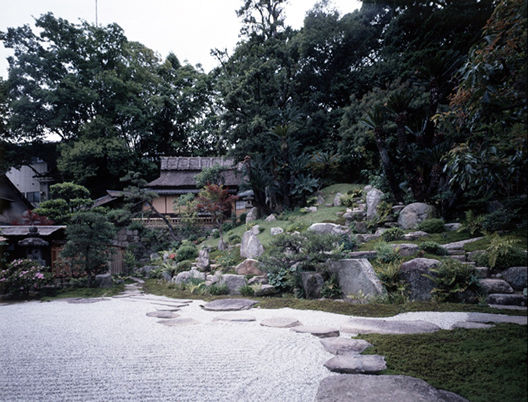
It is a garden with a Tsukiyama (artificial hill) and a pond. It is located in the northwest part of the precincts of Jodo-ji and there is Hojo (the chief monk’s residence) and a Kuri (living quarters for monks) in the southeast of the garden. A natural mountain ridge is used as a Tsukiyama in this garden and there is a narrow pond between the Tsukiyama and white sand in the foreground. Many stones are also arranged around the Tsukiyama. The stone arrangement for the waterfall in the center is especially elaborate.


cultural property : historic sites and places of scenic beauty as natural monuments 
type : places of scenic beauty

20−28 Higashikubochō, Onomichi-shi, Hiroshima-ken 722-0043
Tel:0848-37-2361

Home page : www.ermjp.com/j/temple/index.html


It is a garden with a Tsukiyama (artificial hill) and a pond. It is located in the northwest of the precincts of Jodo-ji and there is a Hojo (the chief monk’s residence) and a Kuri (living quarters of monks) in the southeast of the garden. A natural mountain ridge is used as a Tsukiyama in this garden and there is a narrow pond between the Tsukiyama and white sand in the foreground. Many stones are also arranged around the Tsukiyama. The stone arrangement for the waterfall in the center is especially elaborate.
According to the temple’s old drawing, Hasegawa Senryu, who is Sesshu’s descendant 13 generations later, created this garden in, the so-called, Tsukiyama of Gyo (semi-formal) style in 1806. The date and landscaper of the gardens, that were created before the Edo Period, are often unknown, therefore it is very rare that both are clear for this garden.
A tea room called Roteki-an and its garden were created behind the Tsukiyama in 1814. In later years, important stone arrangements such as the main Honzon stone became invisible due to the overgrowth of plants including azaleas, but it was known that the original layout and stone arrangements were well preserved based on the drawing.
The renovation was completed in 1999 and now the original garden is restored.