
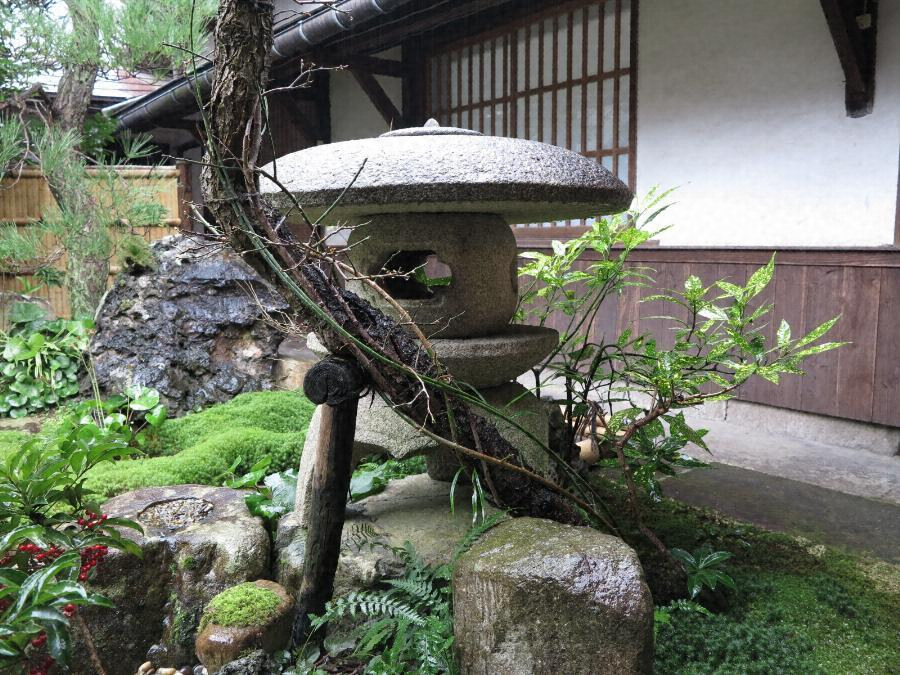
In a castle town of the former Tsuwano Domain, this garden was created in the residential area for the townspeople which prospered from the end of the Edo Period to the mid-Meiji Era. As for the design and structures of the garden, there are some common characteristics with the small courtyards of the early modern times to recent modern times. This garden demonstrates the development of the landscaping culture in the modern Tsuwano and it has a trace of a merchant’s house from the early modern period.
cultural property : registered monuments
type : registered monuments
ro190 Ushiroda, Tsuwano-chō, Kanoashi-gun, Shimane-ken 699-5605
Tel:0856-72-0021
Fundo-ya (Tsubaki-ya) manufactured and sold Japanese candles, hair oil, rapeseed oil, camellia oil, etc. in the current location beginning in 1596, during the Keicho Era. (They shifted their business to petroleum energy in 1947.) According to “the drawing of the townscape of the Tsuwano Domain” which was created by the order of the Tokugawa Shogunate in 1703, Fundo-ya Hanbei already existed in the same location on the drawing. He was considered to be one of “the top eight fellows” of the Tsuwano Domain and, in recognition, he was given a brass flower bowl (Usubata) with a family crest of the trade name from the lord and it still remains until today.
The building was constructed shortly after the great fire of the castle town of Tsuwano in 1853. It was difficult to procure lumber because it was right after the fire, so they used recycled lumber and sills that were salvaged from the fire.
It appears to be crude, but a typical merchant’s house and Machiya-style from the Edo Period still remain intact even today and it is designated as a registered Tangible Cultural Property of Japan.
The courtyard (Tsubaki Garden) is designated as a Registered Monument. Although it is unknown exactly when during the Edo Period it was created, marks of the great fire of 1853 (the sixth year of the Kaei Era) such as burnt marks and cracks were found in the shoe-removing stone in the stone arrangements. The courtyard was very common in the Machiya-style architecture during the Edo Period because lighting was not enough and ventilation was necessary. Haircap moss (Polytrichum) covers the entire area between stepping stones. This garden is simple yet refined.